
HOTLINE: +91 851-114-2701
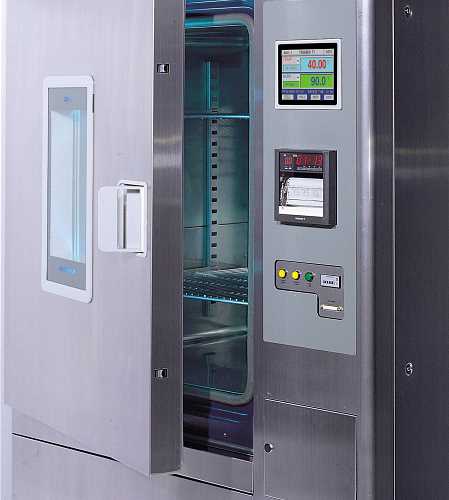
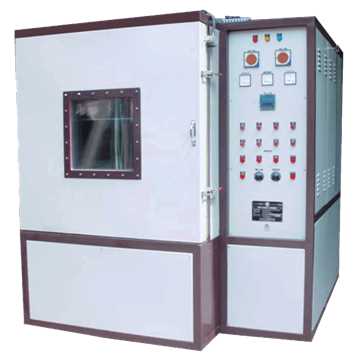
An Altitude Test Chamber is a specialized environmental testing equipment designed to simulate high-altitude conditions including low pressure, low temperature, and varying humidity levels. These chambers are essential for aerospace, defense, automotive, electronics, and research industries to evaluate the performance, durability, and reliability of products under extreme atmospheric conditions.
The chamber works by creating a controlled low-pressure environment that replicates high altitudes, along with temperature and humidity controls when required. This testing ensures components and devices operate efficiently, safely, and reliably at high altitudes, preventing failures in real-world applications.
Core Purpose & Applications
• Altitude Simulation – Recreates high-altitude conditions to test equipment & components
• Product Reliability Testing – Ensures operational safety in aerospace & defense applications
• Environmental Qualification – Tests electronic, automotive, and mechanical systems under low-pressure conditions
• Research & Development – Supports innovation and material selection for high-altitude performance
• Industrial Compliance – Confirms products meet international testing and quality standards
Types of Altitude Test Chambers
2. Based on Pressure & Altitude Capacity
• Low-Altitude Chamber (Up to 10,000 ft / 3,048 m) – Suitable for basic altitude testing
• Medium-Altitude Chamber (10,000 – 30,000 ft / 3,048 – 9,144 m) – Ideal for electronics & automotive components
• High-Altitude Chamber (Above 30,000 ft / 9,144 m) – Designed for aerospace and defense applications
3. Based on Machine Design
• Benchtop Altitude Test Chamber – Compact, ideal for labs and small-scale testing
• Floor-Mounted Altitude Test Chamber – Heavy-duty, suitable for industrial & large components testing
Common Technical Specifications
• Altitude Range: Sea level to 50,000 ft (customizable)
• Pressure Accuracy: ±1%
• Temperature Range: -70°C to +180°C (if climatic control included)
• Material: High-strength steel with corrosion-resistant interior
• Control System: PLC-based touchscreen or digital interface
• Safety Features: Overpressure protection, emergency stop, alarms
Optional Add-ons:
– Programmable altitude & temperature profiles
– Data logging & reporting software
– Vacuum-assisted high-altitude simulation
Why Choose Us as Your Altitude Test Chamber Manufacturer?
As trusted Altitude Test Chamber Manufacturers, we provide machines engineered for precision, reliability, and repeatable performance. Each chamber is designed to meet international standards and undergoes strict calibration to ensure consistent results.
• High-precision pressure & temperature control
• Robust, durable, and low-maintenance construction
• Easy operation with digital or PLC controls
• Manual & programmable options available
• Customizable altitude & temperature ranges
Perfect for:
Aerospace • Defense • Automotive • Electronics • R&D Labs • Industrial Testing
Popular Searches
Altitude Test Chamber | Altitude Test Chamber Manufacturers | Environmental Test Chamber | Climatic Test Chamber | High Altitude Simulation Chamber | Aerospace Testing Chamber | Thermal & Altitude Chamber | Vacuum Altitude Chamber | Programmable Altitude Test Chamber | Manual Altitude Chamber | High-Precision Altitude Chamber | Industrial Altitude Test Chamber | Laboratory Altitude Chamber | Environmental Simulation Chamber | ISO Altitude Test Chamber
Everything you need to know about altitude test chamber
Chambers usually simulate conditions from sea level down to pressures equivalent to altitudes above 30,000 meters.
Many altitude chambers combine temperature cycling with vacuum control, allowing dual-condition simulations in one unit.
Yes, certain models support rapid decompression testing, ideal for aviation safety protocols and cargo containment evaluation.
Electronics, aerospace parts, fuel systems, and sealed packaging are often tested to ensure they don’t fail, deform, or leak in reduced pressure.
A. Testing of avionics or other aerospace devices in order to simulate real-world environments.
B. High-altitude environments, such as those found in mountainous areas, are simulated.
A Cabinet which is made up of stainless steel with dye checked and welded, Welded external or internal pressure member construction, it has Cooling system with low or zeroes ozone depletion refrigerants, it has optional chamber accessories with electrical setup unit where all wiring meets NEC standards and high-temperature limit safety, balanced with a load on 3 phase power, it also has heavy-duty vacuum system.
The benefits of Altitude Test Chambers are, It is easy to operate, It has dual purpose usage for greater ROI, It is provided with a Robust Vaccum system for reliability, Heavy Duty construction for harsh tests.