
HOTLINE: +91 851-114-2701
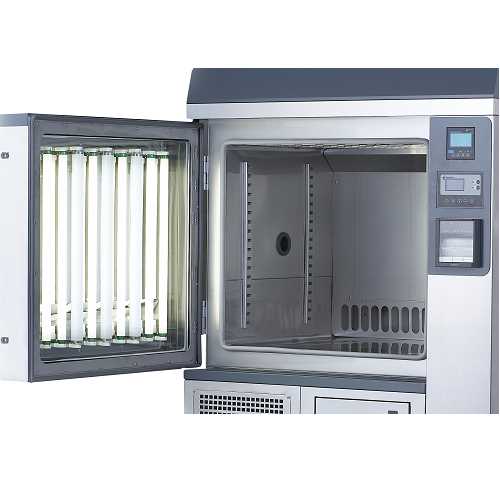
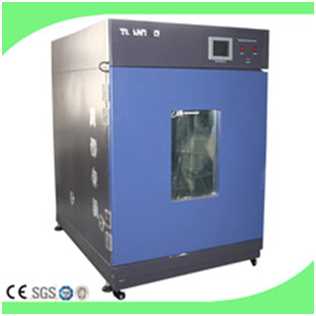
HALT (Highly Accelerated Life Testing) and HASS (Highly Accelerated Stress Screening) Chambers are advanced environmental test chambers designed to identify product weaknesses, improve durability, and ensure reliability under extreme conditions. Widely used in electronics, automotive, aerospace, consumer products, and industrial equipment, these chambers help manufacturers detect design flaws early, reduce failure rates, and enhance product life. They comply with MIL-STD, IEC, ISO, and JEDEC standards for accelerated stress testing.
By subjecting products to extreme temperature variations, vibration, and combined environmental stresses, they allow manufacturers to simulate real-world operational conditions in a compressed timeframe, enabling rapid product improvement and cost-efficient quality assurance.
Core Functions and Purpose
Product Types & Specifications
Based on Application
Based on Size & Capacity
Common Specifications
Our chambers are customizable to meet specific product and industry requirements, featuring advanced multi-axis vibration, rapid thermal cycling, and intelligent PLC-based controls for automated testing. Backed by nationwide delivery, competitive pricing, and expert after-sales service, Indian Tread Bird ensures consistent, reliable, and long-term performance for every testing application.
Chamber Manufacturer | HASS Chamber| Accelerated Stress Test Chamber | Thermal & Vibration Testing Equipment | Walk-in HALT/HASS Chamber | Benchtop HALT/HASS Chamber | Electronics HALT Chamber | Automotive Stress Screening Equipment
Everything you need to know about halt and hass chamber
Yes, many models offer power-on testing with real-time monitoring of device performance.
Most chambers operate from -100°C to +200°C with rapid thermal cycling.
They are widely used in electronics, aerospace, automotive, telecom, and medical device industries.
HALT is used during product development to find design flaws, while HASS is for screening production batches for hidden defects.
A HALT and HASS Chamber is a testing system used to apply extreme thermal and vibration stress to products, helping detect design or manufacturing defects early.
There are many benefits of performing HALT/HASS Tests :
It helps to reduce product development and design time. It helps to ensure product quality & reliability. It helps to boost customer confidence. It helps to speed up time in the market. It helps to increase profit margins. It reduces warranty costs.
HALT tests are performed to find product design weaknesses which help to make products more rugged.
HASS is used to find flaws and defects during production for monitoring the quality and consistency of a particular manufacturing process.
A statistical strength distribution exists for any product. Where the Product Strength and Field Stress Curves intersect in red, failures will occur. HALT/HASS tests can cause the weaker components in the chamber to fail. The Commodity Intensity curve will be moved to the right by HALT and HASS. HALT/aim HASS's is to create a wide design margin or distance between the two curves, resulting in fewer field failures and a more reliable product.
A highly accelerated life test (HALT), is a stress testing methodology for enhancing product reliability. ... HALT can be effectively used multiple times over a product's life time. During product development, it can find design weakness when changes are much less costly to make.