
HOTLINE: +91 851-114-2701
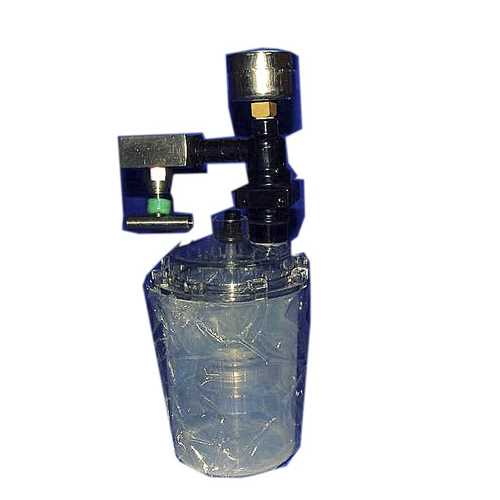
Density Testing Equipment
Density testing equipment is used to determine the mass per unit volume of various materials, which is a fundamental physical property important for material identification, quality control, and product specification.
Types of Density Testing Equipment
Hydrometers: For liquids.
Pycnometers: For liquids and solids (powdered or granular).
Specific Gravity Balances/Kits: For solids (using Archimedes' principle).
Density Meters (Digital): Automated instruments for liquids.
Gas Pycnometers: For porous solids and powders using gas displacement.
Bulk Density Testers: For powders and granules (e.g., tap density testers).
Soil Density Testers: Nuclear density gauges, sand cone method.
Applications in Various Industries:
Chemicals: Quality control of raw materials and finished products, concentration determination.
Petroleum: Measuring the density of oils, fuels, and lubricants.
Pharmaceuticals: Tablet density, powder flow properties, quality control of excipients.
Food & Beverage: Sugar concentration (Brix), alcohol content.
Materials Science: Characterization of new materials, porosity analysis.
Civil Engineering: Soil compaction testing, aggregate density.
Technology:
Peltier temperature control for precise temperature regulation, vibrating U-tube technology (for digital density meters), precise weighing scales, automated sample handling, data logging.
Material Selection Considerations: