
HOTLINE: +91 851-114-2701
7 listings from verified sellers across India
 Premium
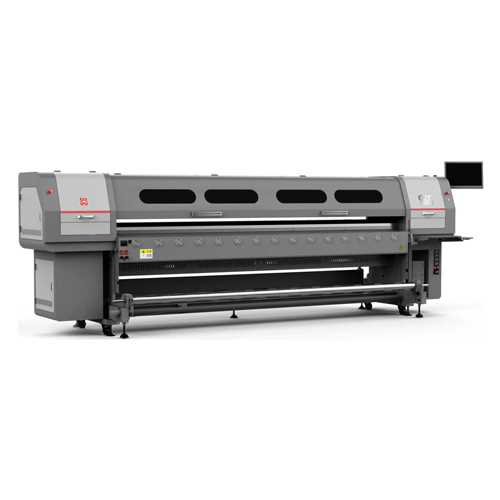
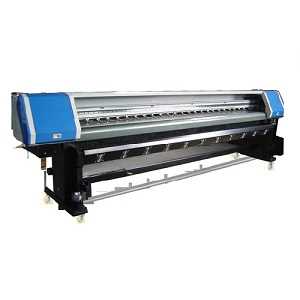
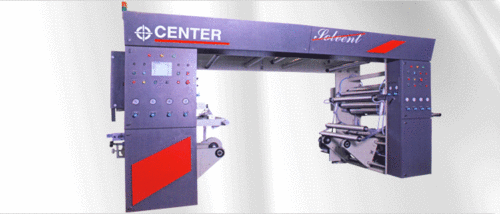
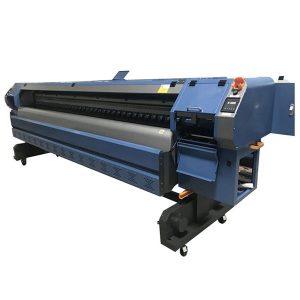
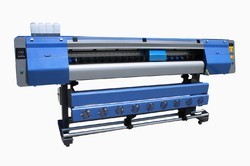
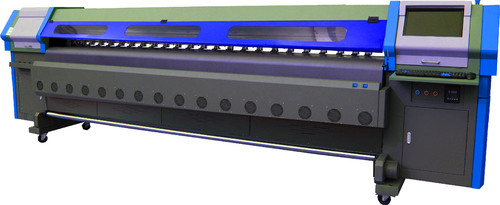
ECO Solvent Machine
An ECO solvent machine, typically a large-format inkjet printer, refers to a printing device that uses "eco-solvent" inks. These inks are formulated with a lower concentration of volatile organic compounds (VOCs) and milder solvents compared to traditional "solvent" inks. ECO solvent machines are widely used in the sign, graphics, and textile industries for producing vibrant, durable prints on a variety of flexible media, offering a balance between print quality, outdoor durability, and environmental responsibility.
Types of ECO Solvent Machine
Roll-to-Roll Printers:
The most common type, feeding flexible media (vinyl, banner, canvas) from a roll, printing, and then winding it onto another roll.
Entry-Level/Desktop Eco Solvent Printers: Smaller width, lower production speed, for small businesses or prototyping.
Mid-Range Production Eco Solvent Printers: Wider formats (e.g., 54", 64"), higher print speeds, common for sign shops.
High-Volume/Industrial Eco Solvent Printers: Very wide formats (e.g., 100"+), multiple printheads, high speeds, integrated heating and drying systems for continuous production.
Printhead Technology:
Piezoelectric Printheads (e.g., Epson, Konica Minolta, Ricoh): Most common in eco-solvent printers. These printheads generate droplets by applying an electric current to a piezoelectric material, which flexes and expels ink. They offer precise droplet control, good resolution, and compatibility with various ink types.
Drying Systems:
Integrated Heaters: Pre-heaters, platen heaters, and post-heaters to facilitate solvent evaporation and ink curing.
IR (Infrared) Heaters: Some machines may use IR for more efficient drying.
Fan-Assisted Drying: Forced air for faster drying.
Ink Configuration:
CMYK: Standard Cyan, Magenta, Yellow, Black.
CMYK + Lc Lm: Light Cyan and Light Magenta for smoother gradients and wider color gamut.
CMYK + White/Metallic: For printing on colored or transparent media, or for special effects.
Applications in Various Industries
Signage & Graphics Industry:
Applications: Outdoor banners, indoor signs, vehicle wraps, window graphics, billboards, pop-up displays, exhibition graphics, wall murals.
Technology: High-resolution inkjet printing, durable eco-solvent inks (UV and water-resistant), precise color management (RIP software), media handling systems for various flexible substrates, integrated cutting/contour cutting (print-and-cut solutions).
Vehicle Wrapping Industry:
Applications: Full and partial vehicle wraps for cars, trucks, buses, boats.
Technology: High-flexibility inks that conform to complex curves, scratch and abrasion resistance, high-quality resolution for intricate designs.
Textile Industry:
Applications: Custom apparel (T-shirts, hoodies), flags, soft signage, home decor fabrics, specialized fabrics.
Technology: Direct-to-fabric printing or transfer printing (sublimation for polyester), specialized eco-solvent inks compatible with textiles, heat presses for curing.
Decor & Interior Design:
Applications: Custom wallpapers, canvas prints, fine art reproductions, wall decals.
Technology: High-fidelity color reproduction, durable finishes, ability to print on various textured media.
Advertising & Marketing:
Applications: Point-of-sale displays, posters, promotional materials, event backdrops.
Technology: Fast print speeds for high-volume production, consistent color output across multiple prints.
Material Selection Considerations
Printheads:
Ink Delivery System (Tubes, Pumps, Dampers):
Rollers & Pinch Rollers:
Heater Elements:
Frame & Chassis:
Ink Tanks/Cartridges:
Wiper Blades/Maintenance Station Components:
Eco-Solvent Inks: