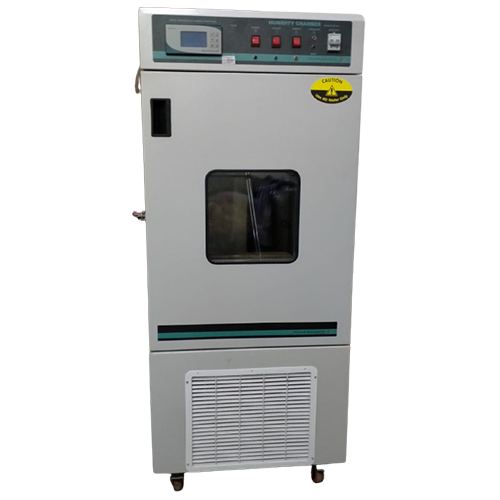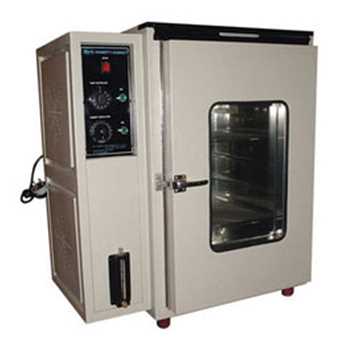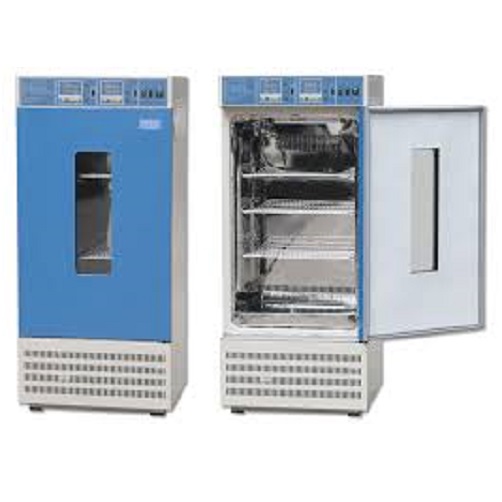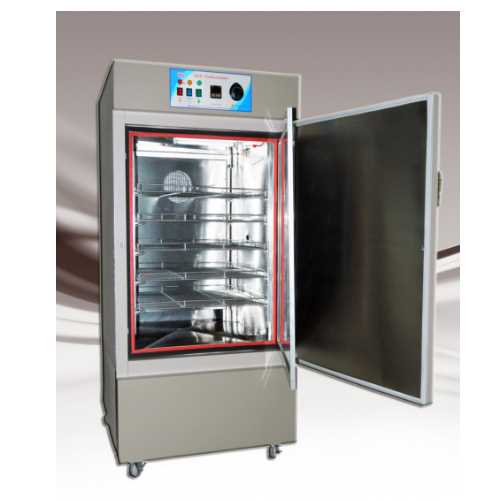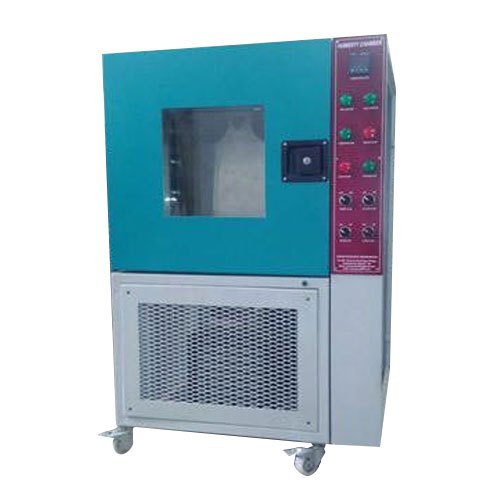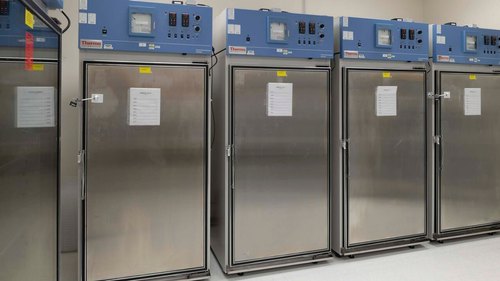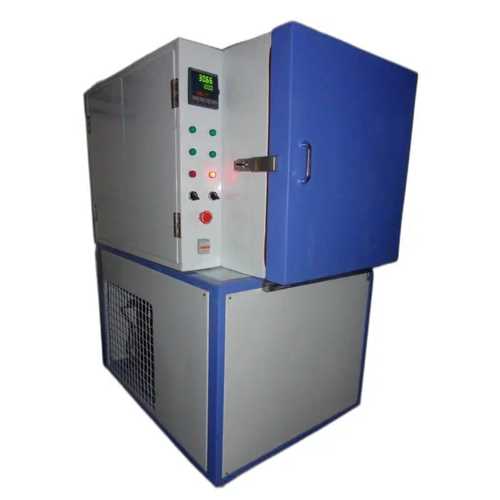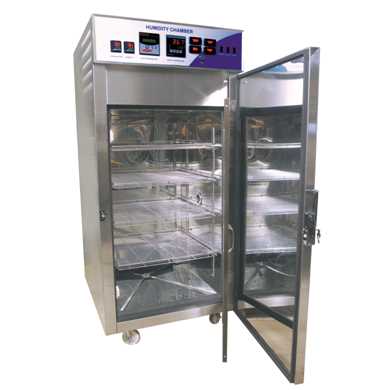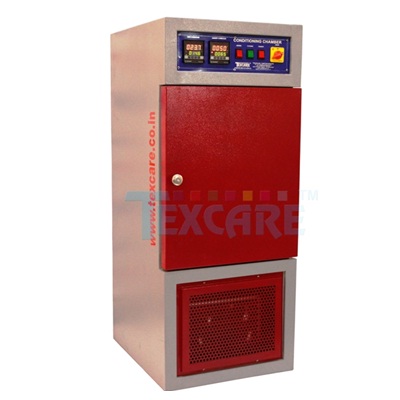
Humidity chambers are specialized environmental testing enclosures designed to simulate and control specific humidity and temperature conditions for accurate product evaluation. By recreating real-world moisture exposure, these chambers help manufacturers test the durability, stability, and performance of materials, components, and finished products before they reach the market. Used extensively in electronics, automotive, aerospace, pharmaceuticals, biotechnology, packaging, textiles, and material sciences, humidity test chambers ensure that products remain corrosion-resistant, mold-free, and functionally stable under varying moisture conditions. Whether for R&D laboratories, production facilities, or quality control departments, these chambers are essential for precision-driven product validation. Core Functions and Purpose • Humidity Regulation – Maintains accurate relative humidity levels from 10% to 98% RH Product Types & Specifications • Standard Humidity Test Chamber – For routine stability and performance tests. 2. Based on Brick Type • Benchtop Models – Compact and portable for laboratory use. 3. Based on Operating Mechanism • Manual Control – User-adjustable settings for simple applications. Common Specifications • Humidity Range: 10% to 98% RH. Humidity chambers are precision-built for stability, accuracy, and durability, ensuring reliable test results across a wide range of industrial and laboratory applications. Designed with premium-grade materials, high-performance humidification systems, and intelligent control interfaces, they offer low maintenance requirements and long operational life. We provide custom-built solutions to meet specific industry needs, from small benchtop units to large walk-in chambers capable of simulating extreme humidity and temperature conditions. Every chamber undergoes rigorous quality testing to meet international standards such as ISO, ASTM, IEC, and JIS. Backed by an extensive supply network and technical support team, we ensure timely delivery, competitive pricing, quick installation, and dependable after-sales service. Investing in our humidity chambers means investing in long-term performance, testing precision, and peace of mind. Humidity Test Chamber | Temperature-Humidity Combined Chamber | Walk-in Humidity Chamber | Benchtop Humidity Chamber | Environmental Test Chamber | Climatic Test Chamber | Stability Test Chamber | Accelerated Aging Chamber | Humidity Chamber Manufacturers | Humidity Chamber Suppliers | Humidity Chamber Exporters | Industrial Humidity Test Chamber | Laboratory Humidity Test Chamber | Custom Humidity Chamber | Automatic Humidity Chamber | Programmable Humidity Test Chamber | High-Precision Humidity Chamber | Humidity Chamber for Sale | Humidity Chamber Price | Buy Humidity Chamber OnlineHumidity Test Chambers for Industrial & Laboratory Use
• Temperature Control – Simulates hot, cold, or fluctuating temperatures to assess thermal stability.
• Moisture Exposure Testing – Evaluates how materials react to dampness, condensation, and humidity shifts.
• Corrosion & Mold Resistance Testing – Helps ensure products remain intact under prolonged moisture.
• Accelerated Aging Tests – Predicts lifespan under high humidity and heat conditions.
1. Based on Automation Level
• Temperature-Humidity Combined Chamber – Simulates both temperature and humidity fluctuations.
• High-Precision Humidity Chamber – Ideal for research requiring strict environmental accuracy.
• Walk-in Chambers – Large-scale chambers for bulk or oversized product testing.
• Semi-Automatic – Digital display with partial automation.
• Fully Automatic – Programmable PLC-based operation with data logging.
• Temperature Range: -20°C to +80°C (customizable).
• Capacity: From 50 liters to several thousand liters.
• Material: Stainless steel inner chamber with insulated outer body.
• Controller: Touchscreen interface with programmable logic control (PLC).Popular Search
FAQ's
Which types of Humidity Chambers are available on Indian Trade Bird? Indian Trade Bird offers benchtop, walk-in, cyclic, constant, and high-humidity chambers, including models with advanced automation and remote monitoring.
How do I choose the right Humidity Chamber for my business? Consider factors like product size, required test conditions, industry standards (like ICH or ASTM), and space availability. Indian Trade Bird listings provide detailed specs to help choose the right model.
What are the key features of a standard Humidity Chamber? Most models offer temperature ranges from -70°C to +180°C, RH from 10% to 98%, programmable controls, safety alarms, and data logging capabilities.
What industries commonly use Humidity Chambers?
They are widely used in pharmaceuticals, electronics, packaging, automotive, and material testing labs for product validation and compliance.
What is a Humidity Chamber and why is it important?
A Humidity Chamber simulates temperature and humidity conditions to test product durability. It ensures quality and reliability across industries like pharma, electronics, and automotive.
How is a test chamber used to assess product quality? There are various methods to assess the quality of something we want to test. Whether it consists of metals, electronic components, plastics, etc. Among the most usual determination of quality is how long an object lasts before it breaks down, corroding or rusting, or maybe due to ti wear and tear or any environmental effects. Quality and other necessary standards must be considered and based on this which process are repeatable. This assures that whatever is estimated is done accurately. There are a variety of testing procedures that helps to evaluate and estimate the durability for whatever will be exposed to such climatic conditions as coatings, finishes, or samples. This results from these provided tests for you with enhancement subjected to lifespan.
What is a humidity and test chamber and how does it work? Humidity Test Chambers also known as Climate Chambers or Climatic Chambers, in this humidity chambers stimulated effects of the weather by pumping in the air which may be hot, warm, or cold. This temperature range is typically quite broad. For occurrence, these test chambers create conditions that can be as frigid as 94 degrees say below zero Fahrenheit, or may even rise as high as 356 degrees, well everything all above the boiling point. The broad categories of testing mechanisms used here and processed to be applied at any products help to determine the structural integrity of whatever is under consideration.
How do you control humidity in a chamber ? Humidity determines how much moisture is in the air, whereas temperatures and humidity are associated measures that affect one another. As the temperature rises, water vapor, which is the building block of humidity, is more readily captured by the air. In general, the warmer the environment, the more likely it is to be humid, but the balance can be managed in a variety of ways during testing or part screening. Some environment chambers, for example, are fitted with steam generators that generate large quantities of moisture to assist in increasing the amount of moisture in the air. Atomizers are a different way to go about this. These pressurized nozzles produce a fine mist that atomizes the spray and converts it to droplets.