Magnetic Lifters Manufacturers, Suppliers & Exporters
Magnetic lifters are specialized material-handling devices that use magnetic force to pick up, hold and move ferrous (iron-containing) loads without mechanical clamps, slings or hooks. They range from small hand-operated permanent lifters used to lift individual steel plates in workshops, to large electro-permanent or electromagnetic crane magnets used for moving bundles of plate, steel billets or scrap in heavy industry. Their core purpose is to simplify and speed up handling of steel components while improving operator safety and reducing damage to parts compared with mechanical gripping.
Historically, magnetic lifting began as simple electromagnets in mills and shipyards; advances in permanent magnet materials (rare-earth magnets) and electro-permanent designs have expanded capacities and made devices safer and more energy efficient. Today’s market blends decades-old industrial use with modern automation and safety integration.
Core functions and purpose
- Provide fast, non-destructive attachment to ferrous loads for lifting, rotating and positioning.
- Replace slings and clamps for repetitive sheet/plate handling — reducing cycle time.
- Integrate with cranes, hoists or robotic grippers to automate handling lines.
- Offer adjustable lift strengths (in some models), built-in safety interlocks, and fail-safe designs (electro-permanent types retain magnetization without continuous power).
Product types & specifications
Magnetic lifters are typically classified by magnetic technology, capacity and mechanical design:
By technology
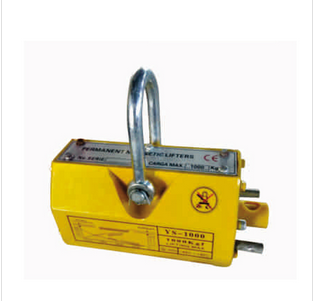
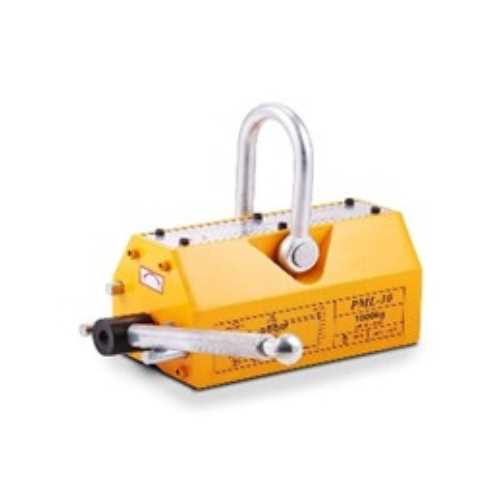
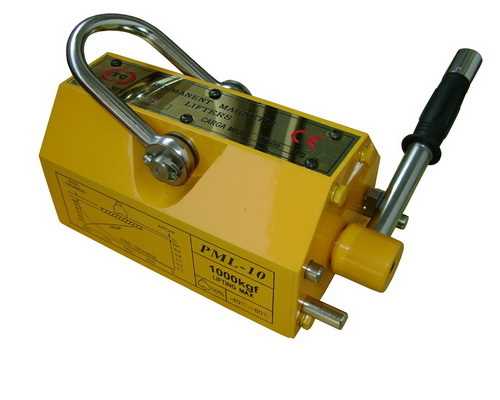
- Permanent magnetic lifters (manual): Use permanent magnets (often rare-earth) and a mechanical on/off lever to engage the magnetic circuit. No power required during hold. Good for workshop loading/unloading and lower-cycle applications.
- Electromagnets: Require continuous electrical supply to create a magnetic field; they are common on cranes for heavy duty tasks like scrap handling because power can be switched quickly and field strength varied.
- Electro-permanent (EPM) lifters: Combine permanent magnets with a short electrical pulse to toggle the field state - no continuous power needed to maintain the hold. Favoured when safety and energy efficiency are required with frequent switching.
By capacity & design
- Hand-held plate lifters: Capacities from ~50 kg up to a few tonnes; often used in fabrication shops.
- Multi-pole plate lifters: Designed to lift single or multiple plates with thin cross-sections; capacities from 0.5 t to several tonnes.
- Crane-mounted lifting magnets: Large electromagnets/EPMs for bulk handling (5 t to 50+ t).
- Tilting and rotating lifters: Provide mechanical tilt/rotation for plate positioning or machine loading.
- Custom/automation grippers: Magnetic end-effectors for robots and pick-and-place systems.
Typical specs buyers compare: rated safe working load (SWL), factor of safety (FOS), minimum plate thickness for safe lift, pole configuration, activation method (manual/electric), and duty cycle.
Available variants and market models
Manufacturers offer model lines differentiated by capacity, pole layout (single vs multi-pole), on/off mechanism, and certifications (e.g., CE, ISO). Many suppliers provide bespoke designs for oversized plates, high-temperature operation, or integration with automation. Model capacities commonly span 100 kg, 500 kg, 1 t, 2 t, 5 t and upward with modular multi-magnet arrays for very large loads.
Applications & use cases
Primary industries
- Steel mills & plate yards: quick handling of plates, sheets and coils.
- Shipbuilding and heavy fabrication: moving large steel plates and assemblies.
- Automotive & press shops: machine loading/unloading, die handling (EPM quick change systems).
- Foundries and forging: handling castings and blocks where slings are impractical.
- Recycling & scrap handling: electromagnets on cranes to pick up bulk scrap.
- Warehousing and logistics: safe, fast palletizing or sorting of ferrous goods.
Common scenarios
- Single-operator plate pickup to feed cutting or punching machines.
- Crane-mounted electromagnets for rapid loading/unloading of barges, trucks or rolling mills.
- Robotic magnetic grippers on automated lines for pick-and-place of ferrous components.
- Die change systems in presses where electro-permanent clamps reduce changeover time.
Benefits & efficiencies
- Faster cycle times and lower labour costs vs manual slings.
- Reduced damage to component edges and surfaces (no crushing by clamps).
- Improved safety — fewer manual handling incidents when used correctly.
- Energy savings with EPMs vs continuous-current electromagnets.
- Easier automation and integration with cranes/robots.
Popular Searches
Magnetic Lifter Manufacturers | Magnetic Lifter Suppliers | Magnetic Lifter Exporters | Permanent Magnetic Lifter | Electro-Permanent Magnet Lifter | Lifting Magnet | Crane Electromagnet | Plate Lifting Magnet | Industrial Magnetic Lifters