
HOTLINE: +91 851-114-2701
6 listings from verified sellers across India
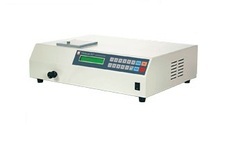
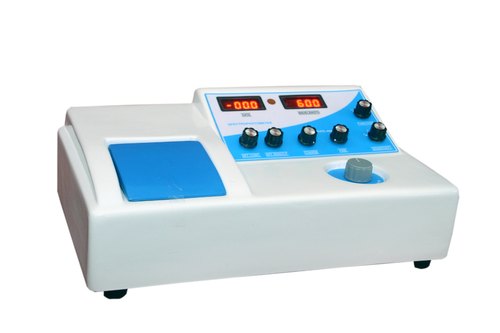
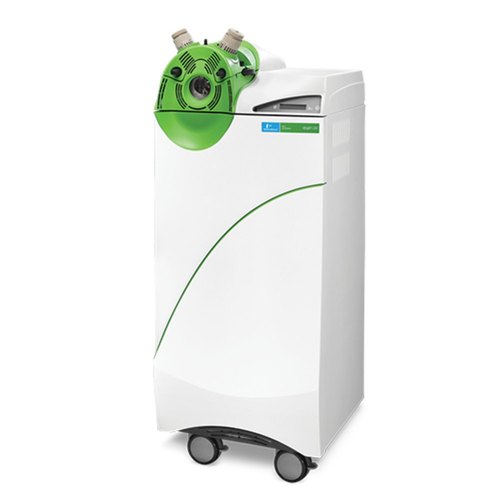
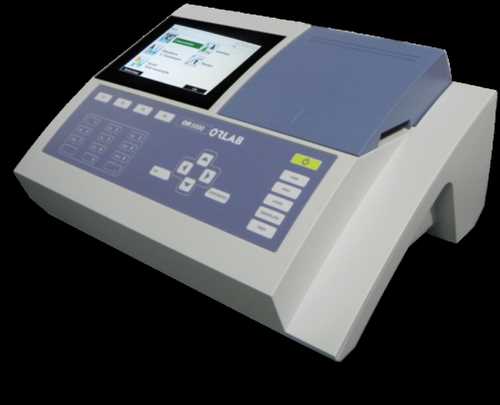
Spectrophotometer
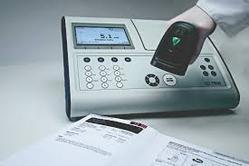
A spectrophotometer is an analytical instrument used to measure the intensity of light as a function of its wavelength. It precisely measures the amount of light absorbed, transmitted, or reflected by a sample, providing quantitative and qualitative information about the sample's composition, concentration, and properties.
Types of Spectrophotometer
UV-Vis Spectrophotometers (Ultraviolet-Visible):
Most common, measure absorption/transmission in the ultraviolet and visible regions of the electromagnetic spectrum (typically 190-1100 nm). Used for liquid samples.
Single Beam: Measures sample and reference sequentially.
Double Beam: Measures sample and reference simultaneously for greater stability and accuracy.
Scanning: Scans a range of wavelengths.
Fixed Wavelength: Measures at one or a few specific wavelengths.
IR Spectrophotometers (Infrared):
Measure absorption in the infrared region, revealing information about molecular vibrations and functional groups (used for organic compound identification).
FTIR (Fourier Transform Infrared): Modern IR spectrophotometers that use an interferometer for rapid, high-resolution measurements.
Atomic Absorption Spectrophotometers (AAS):
Measure the absorption of light by free atoms in a flame or furnace, used for elemental analysis (metals).
Fluorescence Spectrophotometers:
Measure the light emitted by a sample after it absorbs light, used for detecting and quantifying fluorescent compounds.
NIR Spectrophotometers (Near-Infrared):
Measure absorption in the near-infrared region, often used for quality control in agriculture, food, and pharmaceuticals.
Raman Spectrometers:
Measure Raman scattering of light, providing information about molecular vibrations and chemical structure, often used for non-destructive analysis.
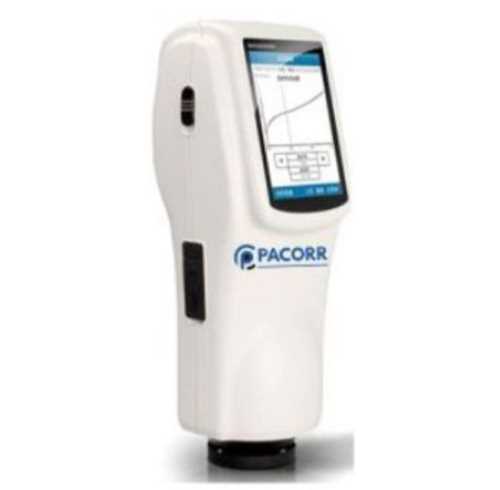
Portable/Handheld Spectrophotometers:
Compact versions for field use or quick measurements.
Applications in Various Industries
Chemical Industry: Quantitative analysis of chemical reactions, purity testing, concentration determination, quality control.
Pharmaceutical Industry: Drug analysis, quality control of raw materials and finished products, stability testing, dissolution testing.
Food & Beverage: Quality control, concentration of ingredients (e.g., sugar, protein), color analysis, authenticity testing.
Environmental Monitoring: Water quality analysis (pollutants, nutrients), air quality monitoring.
Biotechnology & Life Sciences: DNA/RNA quantification, protein concentration, enzyme kinetics.
Clinical Diagnostics: Blood analysis, clinical chemistry.
Material Science: Color measurement, thin film analysis, material characterization.
Forensics: Analysis of unknown substances.
Technology:
Light Source: Deuterium lamp (UV), Tungsten-Halogen lamp (Vis/NIR), Globar/Nichrome wire (IR), Lasers (Raman).
Monochromator: Disperses light into its constituent wavelengths (e.g., diffraction grating, prism) to select a specific wavelength.
Cuvette/Sample Holder: To hold the liquid or solid sample.
Detector: Converts light intensity into an electrical signal (e.g., Photomultiplier Tube - PMT, Photodiode Array - PDA, CCD array).
Electronics & Software: Signal processing, data acquisition, display, and analytical software for calibration, spectral analysis, and report generation.
Material Selection Considerations
Optical Components: