
HOTLINE: +91 851-114-2701
.jpg)
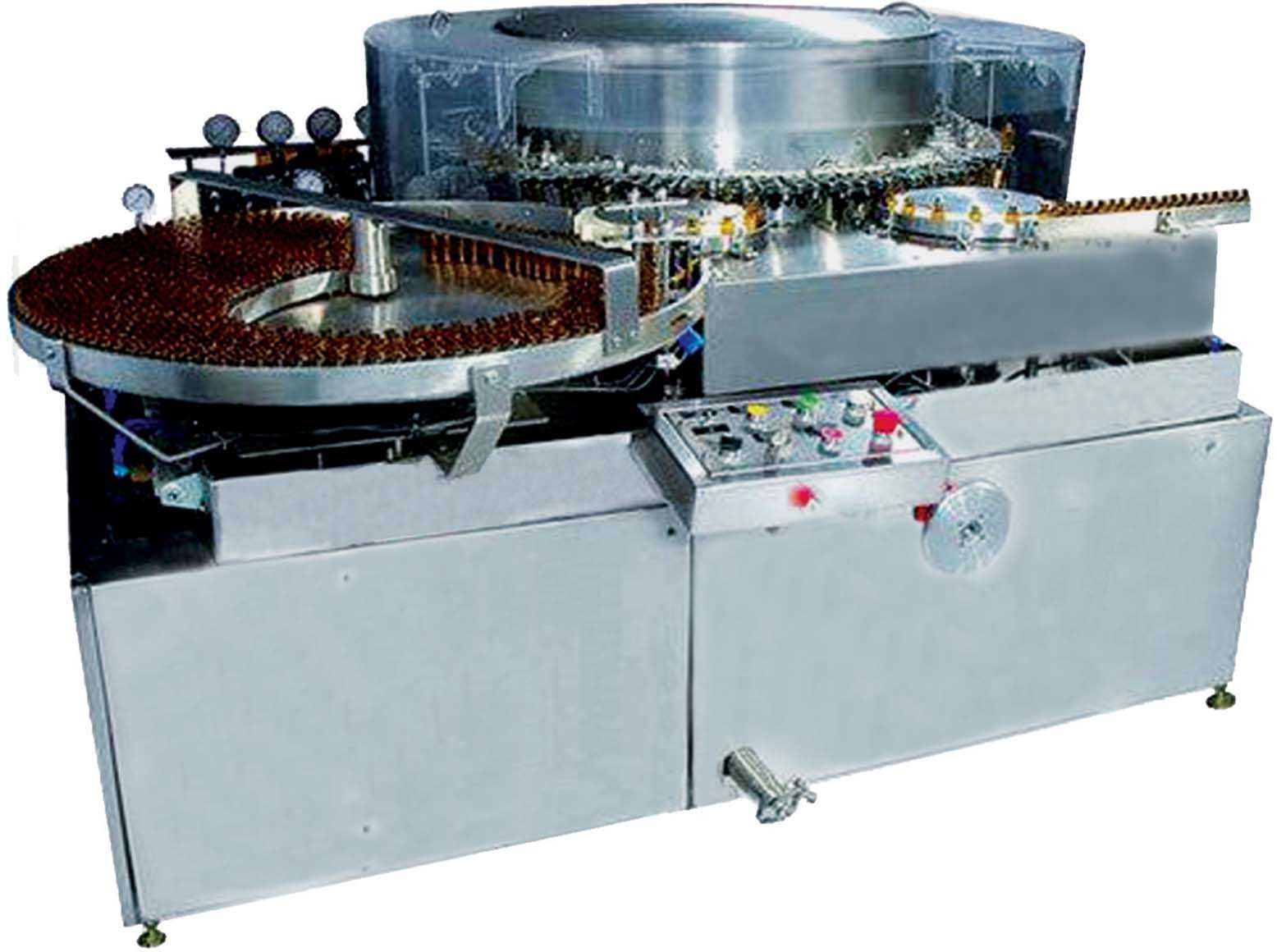
As a trusted Ampoule Filling Machine Manufacturer and Supplier In Ahmedabad, we provide advanced solutions for sterile, accurate, and efficient filling of liquid medicines, vaccines, and injectable formulations. Ampoule filling machines are designed to ensure precise dosage, contamination-free filling, and full compliance with GMP, WHO, and FDA standards. These machines integrate automation, high-speed performance, and advanced engineering to reduce manual effort, optimize production, and maintain strict hygiene. Widely used in pharmaceutical companies, vaccine production facilities, biotech labs, and research organizations, ampoule filling machines are indispensable for modern sterile liquid packaging.
1. Automatic Ampoule Filling Machines
Fully automated systems with multiple filling stations, programmable logic control (PLC), and sensors for precise filling. Ideal for large-scale production with minimal human intervention.
2. Semi-Automatic Ampoule Filling Machines
Designed for medium-scale operations, these machines allow operator-assisted loading and unloading while maintaining accurate filling. Cost-effective for moderate batch production.
3. Rotary Ampoule Filling Machines
Featuring rotary motion for smooth ampoule handling, these machines deliver high-speed filling, uniform volume, and minimal product loss. Widely used in high-volume injectable production.
4. Linear Ampoule Filling Machines
Ampoules move in a straight line through the filling stations, suitable for small batches, laboratories, and contract manufacturing facilities. Flexible for different ampoule sizes and liquid volumes.
• Ensures precise and uniform filling of ampoules, maintaining accurate dosage for injectable products.
• Reduces manual labor while increasing production speed and supporting continuous operation.
1. Pharmaceutical Companies
Used for filling injectable drugs, ensuring precise dosage and sterile packaging.
2. Vaccine Manufacturers
Ideal for high-speed, contamination-free filling of vaccine ampoules for large-scale distribution.
3. Biotech Firms
Supports filling of serums, diagnostic reagents, and specialized liquid formulations.
4. Contract Manufacturing Organizations (CMOs)
Enables flexible batch production of ampoules for multiple clients with varied specifications.
5. Research Laboratories
Used for small-scale ampoule filling with high precision, especially in pilot batches or experimental formulations.
6. Specifications of Machines
Automatic machines feature multiple filling stations, PLC controls, and sensors for accurate volume filling. Semi-automatic models allow operator-assisted loading while maintaining precise dosing. Rotary machines ensure high-speed uniform filling, and linear machines provide flexibility for small batches or varying ampoule sizes. Stainless steel construction, sterilizable components, and compatibility with different ampoule volumes are standard. Advanced models may include integrated washing, drying, and capping systems for end-to-end processing.
Primary Users
Pharmaceutical companies, vaccine manufacturers, biotech firms, and contract manufacturing organizations rely on ampoule filling machines for high-volume, sterile liquid filling.
Small-Scale & Research Labs
These machines are also used in research laboratories and small pharmaceutical units for pilot batches and experimental formulations.
Global Demand Trends
The global increase in injectable drugs, vaccines, and serum production drives adoption, especially in emerging markets and regions with expanding healthcare industries.
Geographical Consumption
High demand exists in Asia-Pacific, Europe, and North America due to growing healthcare infrastructure and pharmaceutical manufacturing capabilities.
Ampoule filling machines are indispensable for pharmaceutical and biotech production lines, ensuring accurate, sterile, and efficient filling of liquid medicines. Automation improves production speed, reduces labor dependency, and maintains compliance with stringent regulatory and hygiene standards. These machines minimize contamination risks, product loss, and downtime, making them a critical investment for modern pharmaceutical operations. By choosing advanced, energy-efficient, and high-precision ampoule filling machines, manufacturers can enhance workflow efficiency, maintain product quality, and meet growing domestic and international market demands reliably.
Popular Searches
Ampoule Filling Machine Manufacturer | Ampoule Filling Machine Supplier | Ampoule Filling Machine Price | Semi-Automatic Ampoule Filling Machine | GMP Compliant Ampoule Filler | High-Speed Ampoule Filling Machine for Pharma | Ampoule Filling Machine for Vaccine Production | Industrial Ampoule Filling Equipment Exporter | Laboratory Ampoule Filling Machine | Customized Ampoule Filling Machine for Pharma Plants | Ampoule Filling Machine In Ahmedabad | Best Ampoule Filling Machine for Injectable Manufacturing
Everything you need to know about ampoule filling machine