
HOTLINE: +91 851-114-2701
5 listings from verified sellers across India

.jpg)
.jpg)
Industrial Vessel
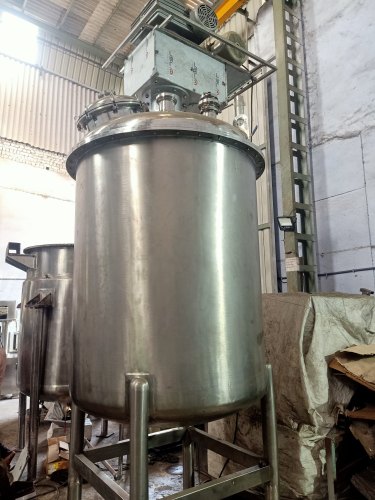
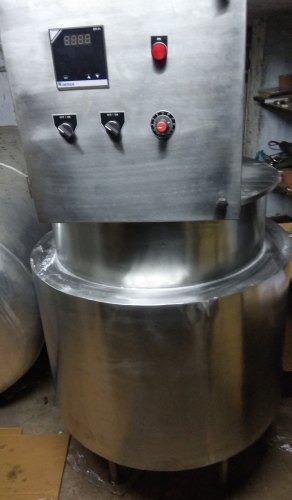
An industrial vessel (or process vessel) is a container designed to hold, process, or store liquids, gases, or solids under specific operating conditions, often involving elevated pressures, temperatures, or corrosive environments. These vessels are integral to chemical, petrochemical, oil and gas, food and beverage, pharmaceutical, and other heavy industries, forming the core components of reaction, separation, and storage processes. They are designed and constructed to stringent safety codes to ensure integrity and prevent failures.
Types of Industrial Vessel
By Function:
Reactors: Where chemical reactions occur (e.g., stirred tank reactors, catalytic reactors, fermenters).
Storage Tanks: For storing raw materials, intermediate products, or finished goods (e.g., atmospheric tanks, low-pressure tanks, cryogenic tanks).
Separation Vessels: (e.g., distillation columns, absorption columns, strippers, flash drums, separators for oil/gas/water).
Heat Exchangers: (though often considered separate, their shells are pressure vessels).
Filters/Cyclones: Vessels housing filtration media or used for centrifugal separation.
Accumulators/Receivers: For holding fluids, often downstream of condensers or compressors.
Drums: Various types of collection or surge vessels.
By Shape:
Cylindrical: Most common for pressure vessels (vertical or horizontal).
Spherical: For high-pressure gas storage.
Conical/Dished Bottom: For draining or mixing.
Rectangular/Square: For atmospheric storage or specific processing.
By Operating Conditions:
Atmospheric Vessels: Operate at or near ambient pressure.
Pressure Vessels: Designed to operate at pressures significantly different from atmospheric pressure.
Vacuum Vessels: Operate under vacuum.
High-Temperature/Cryogenic Vessels: Designed for extreme temperature ranges.
Applications in Various Industries:
Oil & Gas: Separators, scrubbers, reboilers, fractionating columns, storage tanks for crude oil, natural gas, and refined products.
Chemical & Petrochemical: Reactors for chemical synthesis, distillation columns, storage tanks for acids, solvents, and polymers.
Food & Beverage: Fermenters, blending tanks, storage silos, pasteurization vessels (often stainless steel for hygiene).
Pharmaceuticals: Bioreactors, mixing vessels, storage tanks for high-purity water, often glass-lined or highly polished stainless steel.
Power Generation: Boilers, steam drums, condensers, feed water heaters.
Water Treatment: Filtration vessels, clarifiers, storage tanks for treated water.
Mining & Metallurgy: Leaching tanks, ore processing vessels.
Pulp & Paper: Digesters, bleaching towers.
Technology:
ASME Boiler & Pressure Vessel Code (BPVC): The primary standard for design, fabrication, inspection, and testing of pressure vessels globally. Other codes like EN 13445 (Europe), PD 5500 (UK).
Finite Element Analysis (FEA): Used for detailed stress analysis and optimization of vessel designs.
Welding Technologies: Advanced welding techniques (GTAW, SMAW, SAW, Orbital welding) and non-destructive testing (NDT) (radiography, ultrasonic testing, magnetic particle testing) for weld integrity.
Corrosion Protection: Internal linings (glass, rubber, plastic, ceramic), coatings, cathodic protection, and material cladding (e.g., stainless steel or nickel alloy clad carbon steel).
Agitation Systems: Impellers and baffles designed for specific mixing requirements within reactors.
Insulation: Thermal insulation (mineral wool, perlite, foam glass) for temperature control and energy efficiency.
Safety Devices: Pressure relief valves, rupture discs, emergency vents.
Instrumentation: Level sensors, pressure transmitters, temperature sensors, flow meters for process monitoring and control.
Material Selection Considerations:
Most Common Materials:
Linings & Claddings: