
HOTLINE: +91 851-114-2701
1 listings from verified sellers across India
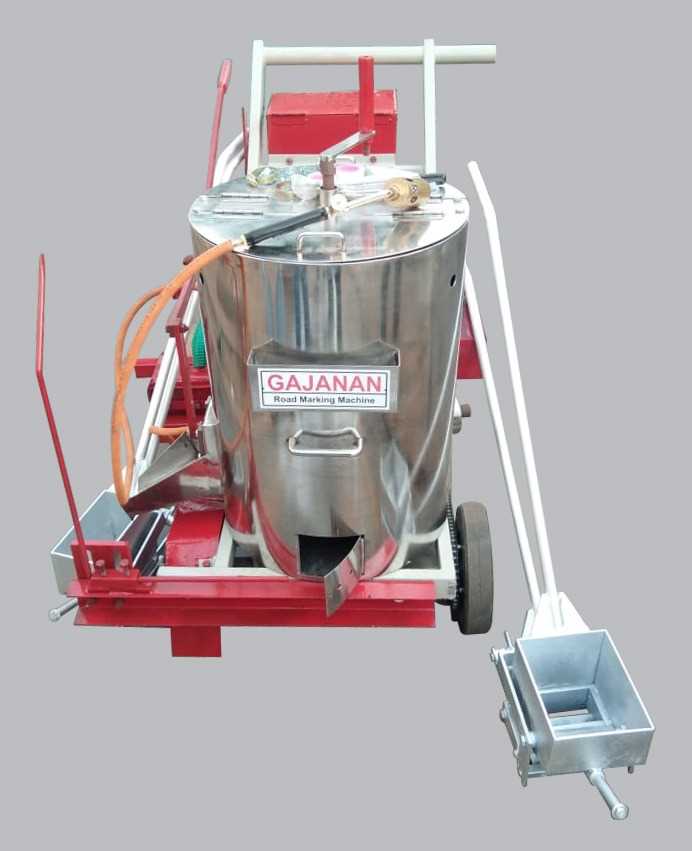
Thermoplastic Road Marking Machine
Thermoplastic road marking machines apply hot-melt thermoplastic material (typically a resin mixed with glass beads) onto road surfaces to create long-lasting traffic paint lines and symbols. The thermoplastic is heated in a melting pot on the machine until fluid, then extruded or sprayed through nozzles onto the pavement. Upon cooling, it hardens into durable markings. Unlike cold paint, thermoplastic provides high visibility (especially with beads) and years of wear resistance.
Type of Thermoplastic Road Marking Machine
Hand-Pushed Trolley Markers: Small machines for line striping on pavements and parking lots; they melt granules and extrude them on the go.
Truck-Mounted Markers: Larger machines mounted on vehicles, capable of high volume and width; often used for highway marking.
Extrusion vs. Spray: Some machines apply molten plastic through an extrusion shoe (flat line), others use pressurized air sprayers for freehand application.
Electric vs. Gas: Heating can be electric (for smaller, indoor use) or propane/gas burners (for high output).
Applications in Various Industries
Used by highway and road maintenance crews, airport runway marking, parking lot striping, and special pavements (speed breakers, pedestrian crossings). In India, municipal corporations and road agencies use them extensively for pavement markings and lane demarcation. Globally, thermoplastic marking is standard in countries with high traffic speeds, due to its longevity.
Material Selections Considerations
The machines are built with stainless steel or coated steel kettles to resist corrosion by molten resin and water spray. Heating elements and burners must withstand continuous high heat. Wheels and chassis materials prioritize stability and precise control; lightweight aluminum parts may be used for portability in small machines. Safety (heat shields) and uniform heating (thermostats) are critical for consistent coating quality.