HOTLINE: +91 851-114-2701
Centrifugal Pumps
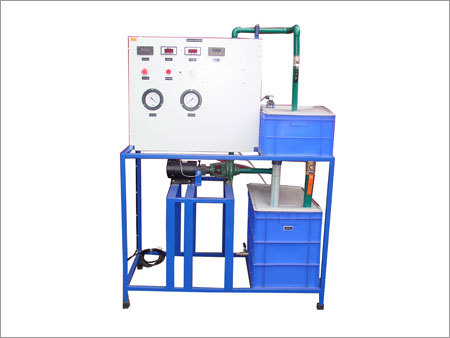
A centrifugal pump is a mechanical device that moves fluid by converting rotational kinetic energy into the hydrodynamic energy of the fluid flow. It achieves this by using a rotating impeller to accelerate liquid outwards from the center of rotation, generating velocity and pressure to discharge the fluid.
Types of Centrifugal Pumps
Volute Pumps: The most common type, where the impeller discharges into a gradually widening spiral casing (volute) that converts velocity to pressure.
Diffuser Pumps: Utilize fixed diffuser vanes surrounding the impeller to convert velocity energy to pressure energy more efficiently, often used in multi-stage high-pressure applications.
Submersible Pumps: (As discussed previously) Where the entire pump and motor assembly is submerged in the fluid.
Close-Coupled Pumps: Impeller directly mounted on the motor shaft, compact design.
Long-Coupled (Frame-Mounted) Pumps: Impeller on its own shaft, connected to the motor via a coupling, allowing for standard motors and easier maintenance.
Multi-Stage Pumps: Contain multiple impellers in series to achieve higher discharge pressures.
Self-Priming Pumps: Designed to draw liquid into the pump without requiring external priming.
Vertical In-Line Pumps: Motor and pump arranged vertically, space-saving.
End Suction Pumps: Fluid enters axially through the suction nozzle and exits radially through the discharge nozzle.
Double Suction Pumps: Fluid enters from both sides of the impeller, balancing axial thrust.
Applications in Various Industries
Water & Wastewater: Pumping potable water, sewage, industrial wastewater, irrigation.
Oil & Gas: Transfer of crude oil, refined products, hydrocarbons, drilling fluids.
Chemical Processing: Moving various chemicals, acids, bases, slurries.
HVAC Systems: Circulating hot and cold water in heating and cooling systems.
Power Generation: Boiler feed water, cooling water circulation.
Food & Beverage: Transfer of liquids, juices, dairy products (sanitary pumps).
Mining: Slurry transfer, dewatering.
Technology:
Key components include the impeller (open, semi-open, closed types based on solids handling), casing (volute, diffuser), shaft, bearings, and seals (mechanical seals, packing). Modern pumps often incorporate variable frequency drives (VFDs) for energy efficiency, intelligent controls for flow and pressure regulation, computational fluid dynamics (CFD) for optimized impeller design, and condition monitoring systems for predictive maintenance.
Material Selection Considerations
FAQ's
What is Centrifugal Pump? Centrifugal pumps are used to transport fluids by the conversion of rotational kinetic energy to the hydrodynamic energy of the fluid flow.