
HOTLINE: +91 851-114-2701
1 listings from verified sellers across India
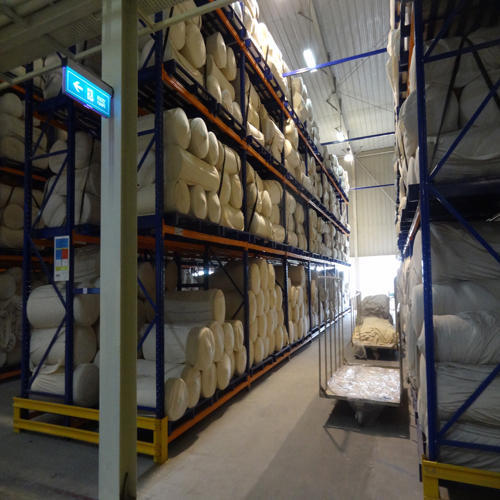
Heavy Duty Racks
Heavy duty racks are robust storage systems designed to organize and store large, heavy, or bulky items in warehouses, factories, and industrial facilities. They are engineered to safely support significant loads, optimizing vertical space utilization and facilitating efficient material handling.
Types of Heavy Duty Racks
Pallet Racking: Most common, designed to store palletized goods.
Selective Pallet Racking: Most versatile, allows access to every pallet.
Drive-In/Drive-Thru Racking: High-density, for storing homogenous products, uses LIFO/FIFO principles.
Push-Back Racking: High-density, uses nested carts to store pallets that push back previous ones.
Pallet Flow Racking: High-density, uses sloped rollers for gravity-fed FIFO storage.
Cantilever Racking: Designed for long, bulky items like lumber, pipes, or sheet metal.
Very Narrow Aisle (VNA) Racking: Maximizes storage density by using specialized narrow-aisle lift trucks.
Shelving Racks: For manually loaded goods, heavier duty versions can support significant weight.
Longspan Shelving: For hand-picked bulky items.
Boltless Shelving: Easy assembly, no bolts.
Mezzanine Racks: Structural systems that create elevated storage platforms within a warehouse, effectively adding another floor.
Rack-Supported Buildings: The racking system itself forms the structural support for the building's roof and walls.
Mobile Racking: Racks mounted on mobile bases, opening and closing aisles as needed for high-density storage.
Specialized Racks: For specific items like tires, carpet rolls, drums, coils.
Applications in Various Industries
Warehousing & Logistics: Primary application for storage and organization of inventory in distribution centers.
Manufacturing: Storing raw materials, work-in-progress, and finished goods on the production floor.
Automotive Industry: Storing parts, engines, and tires.
Retail (Backroom/Warehouse): Bulk storage of products.
Cold Storage: Specialized racks for refrigerated or freezer environments.
Archive & Records Management: For long-term storage of documents.
Technology
Structural Engineering: Design adheres to stringent engineering standards (e.g., RMI, FEM) to ensure load-bearing capacity, stability, and seismic resistance.
Material Science: Use of high-strength structural steel.
Roll Forming & Fabrication: Precision roll forming for uprights and beams, followed by welding and connection hole punching.
Modular Design: Enables easy assembly, disassembly, and reconfiguration.
Safety Features: Beam safety clips, column protectors, row spacers, guardrails, load capacity labels.
Automation Integration: Designed to integrate with automated storage and retrieval systems (AS/RS), AGVs (Automated Guided Vehicles), and robotic forklifts.
Material Selection Considerations
Structural Steel: The primary material for upright frames, beams, and bracing.
Decking/Shelving: