
HOTLINE: +91 851-114-2701
2 listings from verified sellers across India
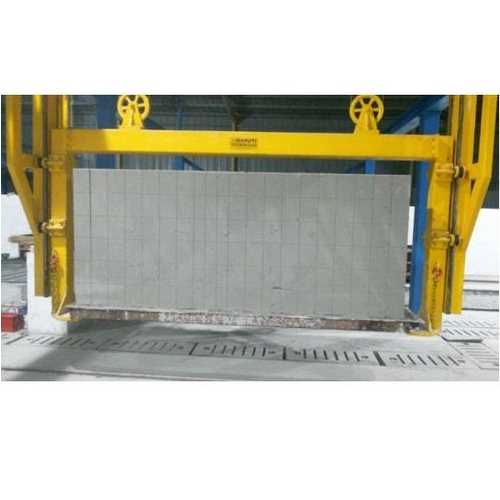
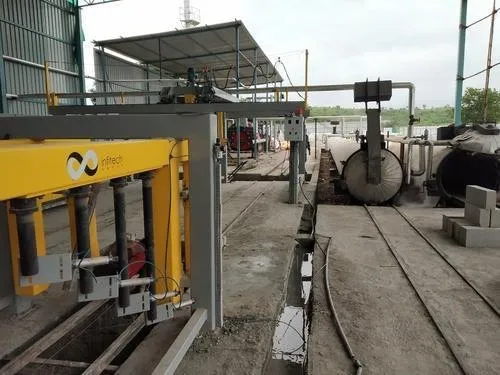
AAC Block Manufacturing Plant
AAC (Autoclaved Aerated Concrete) blocks are lightweight, precast concrete building materials made from cement, lime, water, and fine aggregate (often fly ash), with aluminum powder as a foaming agent
An AAC block plant is a production line that mixes these ingredients, allows them to expand (via hydrogen gas from aluminum), molds the green concrete, then cures it under high-pressure steam in autoclaves
The result is aerated blocks/panels (~80% air by volume) that are used in wall construction.
Types of AAC Block Manufacturing Plant
Automation: Ranges from small manual plants (batch mixing by hand) to semi-automatic (mechanical mixers, manual pouring) to fully automatic (PLC-controlled lines with conveyors and automated molds).
Capacity: Mini-plants (e.g. ~20–30 m³/day) for small builders, up to large industrial plants (100+ m³/day) for mass production.
Raw Material Basis: Many plants use fly ash (a by-product of coal power, 50–65% silica) as the main fine aggregate
while others use sand. Plants may be built near fly ash sources (power plants) to cut cost.
Product Form: Some plants produce only blocks; others can make wall panels or lintels using the same mix
Applications in Various Industries
AAC blocks and panels are used in residential, commercial, and industrial buildings as a lightweight, thermally efficient alternative to brick or conventional concrete blocks. They provide good insulation, fire resistance, and lighter structural loads. In India and China, AAC is popular for low-cost housing and high-rise walls. Applications include partition walls, load-bearing walls (up to moderate heights), and cladding panels
Material Selection Considerations
Key ingredients (cement, lime, gypsum, fly ash, aluminum powder) are chosen for cost and function. Fly ash is inexpensive waste, reducing costs and improving sustainability