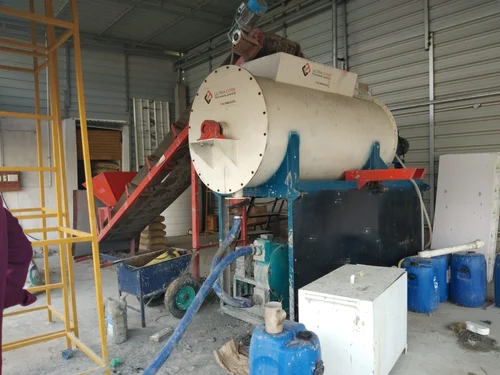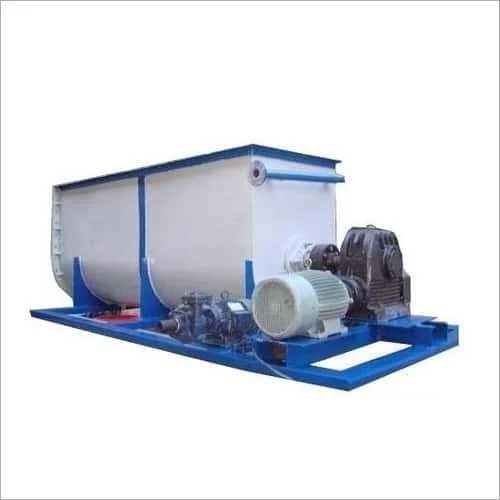
CLC Block Making Plant Manufacturer

A CLC (Cellular Lightweight Concrete) Block Making Plant is an advanced manufacturing system designed to produce lightweight, aerated concrete blocks using cement, fly ash, water, and a foaming agent. These blocks are known for their low density, thermal insulation properties, and eco-friendly composition. The plant typically includes machinery for mixing, foaming, casting, cutting, and curing the blocks.

CLC technology utilizes pre-formed foam mixed with a cementitious slurry, resulting in air-entrained concrete that is lighter yet strong enough for construction purposes. Compared to traditional clay bricks or solid concrete blocks, CLC blocks offer superior workability, reduced dead load on structures, and cost-effective walling solutions.

Core Functions and Purpose

The primary function of a CLC Block Making Plant is to manufacture lightweight, high-strength, and thermally efficient building blocks used in modern construction. The plant’s operations involve:

  • Preparation of slurry by mixing cement, fly ash, and water.
  • Generation and blending of foam into the slurry to create aerated concrete.
  • Moulding and curing of the mixture into blocks of different sizes and densities.

The purpose of these plants is to replace conventional heavy building materials with more sustainable, energy-efficient alternatives. CLC blocks help in reducing overall structural load and enhance the thermal comfort of buildings, making them ideal for both commercial and residential projects.

Product Types & Specifications

Classification Based on Capacity

CLC Block Making Plants can be broadly classified by their production capacity:

  1. Small-Scale / Mini Plants – Production up to 10–20 m³ per day; suitable for small builders or local projects.
  2. Medium-Scale Plants – Capacity ranging between 30–60 m³ per day; commonly used by mid-sized manufacturers.
  3. Large-Scale / Automatic Plants – High-output systems capable of 100–150 m³ or more per day; used in industrial-scale production.

Design and Technology Variants

CLC plants vary based on design configuration and level of automation:

  • Manual Plants: Involve semi-automatic processes with manual foam addition and block casting.
  • Semi-Automatic Plants: Include mechanical mixers, foam generators, and limited automation in moulding and curing.
  • Fully Automatic Plants: Feature PLC-controlled systems, automated batching, foaming, and material handling, ensuring precision and high productivity.

Key Specifications

Typical parameters for CLC block production include:

  • Density Range: 400 to 1800 kg/m³
  • Compressive Strength: 2.0 – 7.5 N/mm²
  • Block Sizes: 600×200×100/150/200 mm (standard)
  • Foaming Agent Type: Protein-based or synthetic
  • Mix Ratio: Cement : Fly Ash : Foam : Water (variable as per density requirement)

Available Variants / Models

The market offers different plant models such as:

  • CLC Mini Plant (Portable Type) – Compact, mobile units for on-site block production.
  • Batch Type CLC Plant – Operates in discrete mixing cycles; suitable for medium-scale operations.
  • Continuous Type CLC Plant – Uses continuous mixers and conveyors for uninterrupted production.
  • Automatic Cutting System Plants – Incorporate advanced cutting machines for precise block dimensions.

Applications & Use Cases

CLC Block Making Plants serve a wide range of sectors, primarily within the construction and infrastructure industry. These include:

  • Residential and commercial building projects
  • Industrial sheds and warehouses
  • Educational and institutional buildings
  • Green and sustainable construction projects
  • Precast construction units

Common Usage Scenarios

  • Walling Material: Used in partition and external walls for buildings due to lightweight and insulation properties.
  • Roof and Floor Insulation: Applied as a lightweight filler or insulating layer in roofs and floors.
  • Soundproof Structures: Utilized in auditoriums, studios, and commercial spaces for sound absorption.
  • Rehabilitation and Retrofitting: Ideal for adding walls or partitions in existing structures without increasing load.

Benefits and Efficiencies

CLC block plants contribute multiple advantages to construction and manufacturing sectors:

  • Lightweight Construction: Reduces load on foundation and structural components.
  • Thermal & Acoustic Insulation: Enhances energy efficiency and soundproofing.
  • Eco-Friendly: Utilizes fly ash and reduces dependence on fired clay bricks.
  • Cost Efficiency: Minimizes transport and mortar usage due to larger block size.
  • Versatility: Suitable for load-bearing and non-load-bearing applications.
  • Speed of Construction: Easy handling and uniform shapes ensure faster wall construction.

We have the best deals for CLC Block Making Plant at Indian Trade Bird. We are the leading manufacturer, supplier, exporter, and retailer Concrete Paver Block Machine like Block Making Machine, Paving Block Making Machine, Concrete Block Making Machine, Interlocking Block Making Machine, Hydraulic Paver Block Making Machine, Concrete Paver Block Machine, Hydraulic Paver Block Making Machine, Used Block Making Machine, Vibration Block Making Machine, Egg Laying Block Making Machine High, Pressure Paver Block Machine, AAC Block Manufacturing Plan and many more. Our products are of superior quality and are highly appreciated by our clients owing to its low maintenance and rugged construction. It is used for increased bulk density. CLC Block Making Plant Block Machine are highly demanded in the market due to their optimum efficiency, utility, and durability. The machine manufactured is assembled from the top quality component and advanced technology. These machines are highly beneficial as it provides complete automation, excellent performance, high production rates, and the best quality production. The material is model into a solid compact sheet or flakes of ingredients as the volume decreases through the maximum pressure field. We have excellent distribution channels that enable us to make timely deliveries of all orders. Furthermore, the machine offered is examined on several quality parameters to deliver hassle-free products.

Popular Search:- 

CLC Block Making Plant | Automatic CLC Block Making PlantSemi Automatic CLC Block Making Plant | Manual Concrete Paver Block Machine | Industrial CLC Block Making Plant |  Fully Automatic CLC Block Making Plant | Mini CLC Block Making Plant

FAQ's

What are the raw materials required for CLC block production?

The primary raw materials are cement, fly ash, foam, and water. The foaming agent can be either protein-based or synthetic, depending on the required block properties.

What are the key components of a CLC Block Making Plant?

A complete plant includes a foam generator, mixer, conveyor system, molds, cutting machine, and curing setup. Some advanced setups also include an automatic dosing and control system for precise mixing.

How does a CLC Block Making Plant work?

The process involves preparing a slurry of cement, fly ash, and water in a mixer. A foam generator produces stable foam, which is then mixed into the slurry. The foamed concrete is poured into molds, allowed to set, and then cured to form lightweight blocks.

What is a CLC Block Making Plant?

A CLC (Cellular Lightweight Concrete) Block Making Plant is equipment used to produce lightweight concrete blocks by mixing cement, fly ash, foam, and water. These blocks are known for their low density, thermal insulation, and eco-friendly nature, making them ideal for modern construction.

Scroll to Top