
HOTLINE: +91 851-114-2701
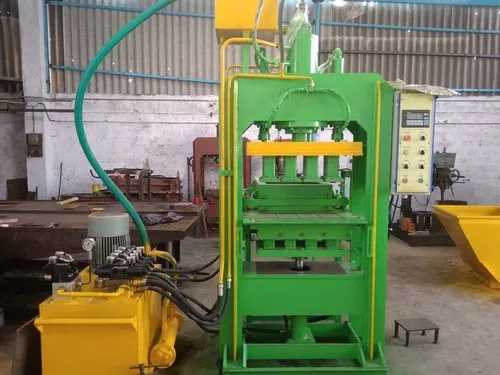
A High Pressure Paver Block Machine is an advanced construction equipment used for manufacturing high-quality interlocking concrete paver blocks. These machines utilize hydraulic pressure to compress raw materials like cement, sand, and aggregates into durable paver blocks. The resulting blocks are uniform in shape, density, and strength, suitable for both commercial and residential paving projects.
Unlike conventional paver block machines, high-pressure variants employ vibration and hydraulic compression techniques, ensuring greater density, superior surface finish, and higher load-bearing capacity. These machines are often automated to varying extents, improving production efficiency and minimizing manual intervention.
Core Functions and Purpose
The primary purpose of a high-pressure paver block machine is to produce strong, precise, and long-lasting concrete paver blocks efficiently. Core functions include:
The machine caters to industries requiring high-volume and high-quality paving solutions, such as urban infrastructure projects, industrial complexes, roads, and highways.
Product Types & Specifications
High-pressure paver block machines are classified according to:
Production Capacity:
Design Type:
Technology Used:
Available Variants or Models in the Market
High-pressure paver block machines are available in multiple variants depending on:
Manufacturers typically provide customization options, such as adjustable molds, automatic curing systems, and energy-efficient hydraulic systems.
Applications & Use Cases
High-pressure paver block machines are essential in:
Common Usage Scenarios
Benefits and Efficiencies
We have the best deals for High Pressure Paver Block Machine at Indian Trade Bird. We are the leading manufacturer, supplier, exporter, and retailer of High Pressure Paver Block Machine like Block Making Machine, Paving Block Making Machine, Concrete Block Making Machine, Interlocking Block Making Machine, Hydraulic Paver Block Making Machine, Concrete Paver Block Machine, Hydraulic Paver Block Making Machine, Used Block Making Machine, Vibration Block Making Machine, Egg Laying Block Making Machine, AAC Block Manufacturing Plan and many more. Our products are of superior quality and are highly appreciated by our clients owing to its low maintenance and rugged construction. It is used for increased bulk density High Pressure Paver Block Machine are highly demanded in the market due to their optimum efficiency, utility, and durability. The machine manufactured is assembled from the top quality component and advanced technology. These machines are highly beneficial as it provides complete automation, excellent performance, high production rates, and the best quality production. The material is model into a solid compact sheet or flakes of ingredients as the volume decreases through the maximum pressure field. We have excellent distribution channels that enable us to make timely deliveries of all orders. Furthermore, the machine offered is examined on several quality parameters to deliver hassle-free products.
High Pressure Paver Block Machine | Automatic E High Pressure Paver Block Machine | Semi Automatic High Pressure Paver Block Machine | Manual High Pressure Paver Block Machine | Industrial High Pressure Paver Block Machine | Fully Automatic High Pressure Paver Block Machine | Oil High Pressure Paver Block Machine | 40 Ton High Pressure Paver Block Machine