HOTLINE: +91 851-114-2701
3 listings from verified sellers across India
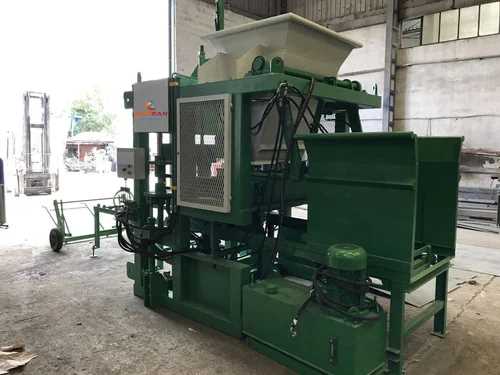

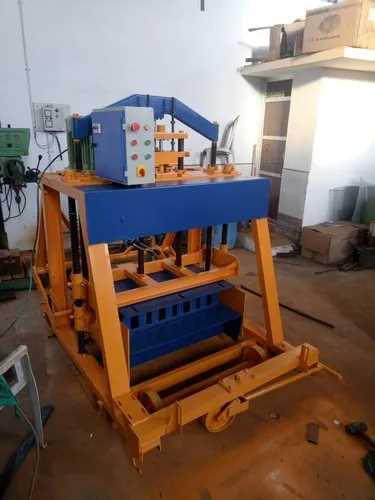
A Hydraulic Concrete Block Making Machine is industrial equipment that forms concrete blocks, pavers, hollow blocks, and other masonry units by applying hydraulic pressure to a moulded mix of cement, sand, aggregates and (optionally) fly ash. Compared with mechanical or fully-vibratory systems, hydraulic machines use hydraulic pumps and cylinders to deliver consistent, high compaction force — producing dense, dimensionally accurate blocks that meet modern construction standards.
Core functions include dosing/mixing feedstock, pressing the mould under controlled hydraulic pressure, ejecting finished blocks and (on automated lines) demoulding and stacking. Typical aims are high compressive strength, tight tolerances, repeatable productivity, and flexible mould-change capability for different block profiles.
Hydraulic models range from semi-automatic shop-floor machines aimed at small manufacturers, to fully automatic, PLC-controlled plants for high-volume producers and turnkey block production lines for exporters and large contractors.
These machines are designed for efficiency, consistency, and scalability, helping manufacturers meet growing demand in infrastructure, housing, road construction, and urban development. They offer a sustainable and cost-effective solution for producing blocks in varying shapes and sizes—paving blocks, hollow blocks, solid blocks, interlocking blocks, and more.
Core Functions and Purpose
Hydraulic machines are preferred over traditional manual methods due to their precision, speed, and ability to handle large production volumes without compromising on quality. They are commonly used in both small-scale operations and fully automated block production plants.
Product Types & Specifications
Hydraulic Concrete Block Making Machines are categorized based on production capacity, automation level, mold type, and block type. They range from small-scale manual feeders to high-output fully automatic machines integrated with PLC systems.
1. Based on Capacity
Small-Scale Machines:
Medium-Scale Machines:
High-Capacity or Industrial Machines:
2. Based on Design and Automation
3. By Block Type or Mold Compatibility
4. Common Specifications
Manufacturing & Industry
In India, Gujarat (Ahmedabad region), Tamil Nadu (Coimbatore/Chennai), Maharashtra (Pune/Mumbai), Karnataka (Bengaluru), and Punjab (Ludhiana) are well-known centres for block machine manufacturing, parts, and allied heavy engineering. Ahmedabad in particular hosts multiple block machine manufacturers and exporters. Internationally, suppliers and OEMs can also be found across China, Turkey and parts of Europe. Regional directories and trade listings consistently show clusters in the cities named.
Hydraulic Concrete Block Making Machine | Hydraulic Concrete Block Machine | Hydraulic Block Making Machine | Hydraulic Concrete Brick Making Machine | Hydraulic Block Machine Concrete | Hydraulic Concrete Block Making Machine | Hydraulic Block Making Machine Price | Hydraulic Concrete Block Making Machine Manufacturer | Capacity 500 Blocks Hour | Hydraulic Hollow Block Making Machine | Hydraulic Solid Block Making Machine | Hydraulic Interlocking Paver Block Making Machine