Manual Concrete Block Making Machine Manufacturer
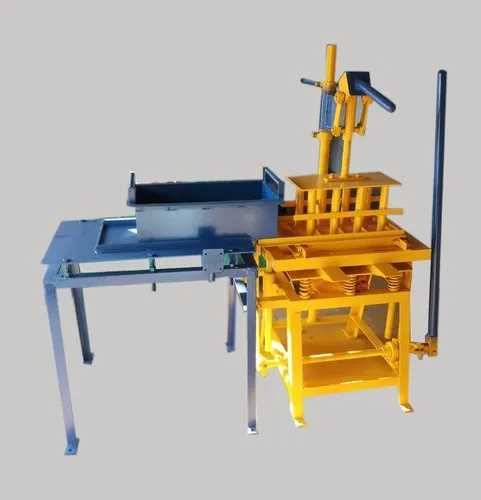
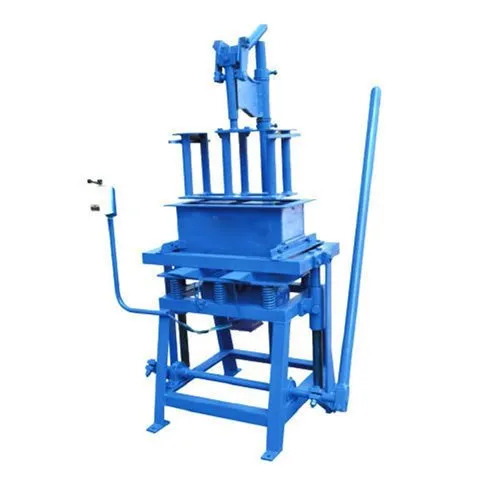
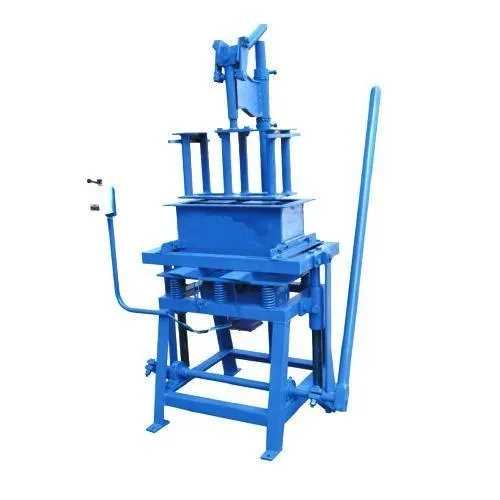
A manual concrete block making machine is a mechanical device used to produce solid and hollow concrete blocks using a manually operated mechanism. It does not rely on electric or hydraulic power, making it ideal for rural, semi-urban, and economically challenged regions where power supply may be inconsistent or expensive. The machine utilizes molds to shape concrete mixtures into uniform blocks that can be used for construction purposes.
It is one of the most basic yet efficient tools in the construction sector. Operated by hand, it requires human force to fill the mold, compact the concrete, and release the formed block. Despite its simplicity, it can deliver a high level of precision and consistency, making it a cost-effective solution for small to medium-scale production units.
Product types & specifications
Classification by capacity
- Small-capacity (hand-operated): 200–1,000 blocks per 8-hour shift depending on operator skill and block size. Ideal for microenterprises and on-site construction.
- Medium-capacity (lever-assisted with trolley): 1,000–3,000 blocks per shift. Often includes mechanical compaction aids and faster demoulding.
- High-output manual hybrids: Advanced manual presses with multiple moulds or twin-station set-ups can approach small semi-automatic line productivity (3,000–5,000 blocks per shift) while retaining low power requirements.
Classification by design & technology
- Press-type (hydraulic/hand lever): A plate compresses the mix. Some variants offer small hydraulic assists while remaining largely manual.
- Vibrating mould type: Incorporates a manually-operated vibrating table or an optional electric vibrator to improve compaction and surface finish.
- Interlocking block machine: Special mould geometry produces blocks that lock together, reducing mortar needs and speeding installation.
- Hollow-core machine: Produces hollow blocks (lightweight with good insulation) using core pins in the mould.
- Mobile/portable frames: Foldable or trailer-mounted frames for shifting between sites.
Common specifications (typical ranges)
- Block size compatibility: Standard sizes (e.g., 190×190×390 mm) and custom sizes via mould changes.
- Mould cavities per cycle: 1–4 in most manual units; higher counts increase throughput but require more manual handling.
- Cycle time: 20–90 seconds per cycle depending on compaction method and operator.
- Material & construction: Heavy-gauge steel frame, hardened steel moulds or alloy moulds for longevity; welded construction or bolted for portability.
- Weight & footprint: From 100–1,000+ kg; compact footprints for small workshops.
Applications & use cases
Primary industries / sectors
- Construction contractors & masons: On-site block production reduces transport cost and ensures timely supply.
- Small manufacturers & brick entrepreneurs: Local production for neighbourhood markets, construction materials shops, and supply to housing projects.
- Rural development & affordable housing projects: NGOs and government initiatives often use manual machines to create livelihoods and provide low-cost building materials.
- Landscaping & municipal works: Pavers, kerbstones, and special blocks for hardscaping and drainage projects.
Common usage scenarios
- Remote or rural sites: Produce blocks near the construction site to avoid expensive logistics.
- Seasonal production cycles: Small plants that ramp up production during building seasons and downsize otherwise.
- Skill-development & employment programs: Machines are used in vocational training to teach masonry and small-scale manufacturing.
- Disaster-relief & reconstruction: Rapid local production of masonry elements for rebuilding.
Benefits & efficiencies
- Low capital cost: Much cheaper than semi-automatic or fully automatic plants.
- Energy independence: Many models operate without electricity; useful where power is unreliable.
- Flexible production: Quick changeover of moulds allows diverse product ranges.
- Maintenance simplicity: Easy to repair with basic workshop skills and widely available spare parts.
- Local economic impact: Encourages micro-enterprises, reduces unemployment, and retains value within local economies.
Manufacturing & industry data
Manufacturing hubs for manual concrete block machines are typically located near industrial belts and regions with strong metalworking and machine-tool clusters. In many countries these include:
- Regional industrial cities and states/provinces with foundries, fabrication shops and small engineering firms. In India this often maps to clusters in states with heavy small-scale engineering sectors (for example, Gujarat, Maharashtra, Tamil Nadu, Uttar Pradesh, and Rajasthan).
- Export-oriented manufacturing towns that host numerous small machine shops and OEMs serving regional markets.
Key company types & market players
- Local OEMs (original equipment manufacturers): Small-to-medium engineering firms that design, build and service manual machines. They often supply moulds, spare parts and after-sales support.
- Distributors & agents: Regional dealers provide sales, installation, and operator training.
- Exporters: Firms that adapt machines for export markets with different mould standards and certifications.
- Complementary suppliers: Mould makers, vibration-unit manufacturers, and concrete mix equipment suppliers who together form an ecosystem.
Specialization & regional strengths
- Customization capability: Regions with strong sheet-metal and foundry shops excel at custom moulds and bespoke machine variants.
- After-sales support density: Areas with many small manufacturers often have better local service, faster spare part supply, and informal networks of repair technicians.
- Cost competitiveness: Local production hubs can offer machines at lower price points due to economies of scale in steel sourcing and labor.
Popular Search
Manual Concrete Block Making Machine | Concrete Block Brick Making Machine | Manual Concrete Block Making Machine Price | Automatic Cement Block Making Machine Price | Manual Concrete Block Making Machine In India | Manual Concrete Block Making Machine For Sale | Manual Block Making Machine Price | Fully Automatic Block Making Machine Price