
HOTLINE: +91 851-114-2701
1 listings from verified sellers across India
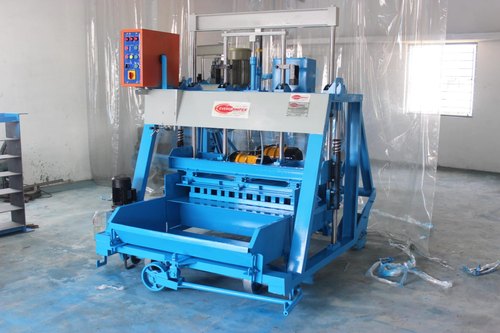
Cement Brick Making Machine
A cement brick making machine, also known as a block making machine or paver making machine, is used to manufacture bricks, blocks, pavers, and other concrete products from a mixture of cement, sand, aggregates (like gravel or crushed stone), and water. These machines compact the mixture under high pressure and vibration to form durable construction elements.
Types of Cement Brick Making Machine
Manual/Hand-Operated Machines:
Simple, low-cost, low-volume, often used for small-scale production or remote areas.
Semi-Automatic Machines:
Require manual loading of raw materials and manual removal of finished products, but automate compaction and vibration.
Automatic Machines:
Fully automated, handling material feeding, mixing, compaction, demolding, and often stacking.
Hydraulic Block Machines: Use hydraulic pressure for compaction, suitable for various block types and high density.
Vibration Block Machines: Rely primarily on vibration for compaction, often combined with some pressure.
Stationary Machines:
Fixed in one location, typically high-capacity automatic plants.
Mobile/Egg-Laying Machines:
Can move on a concrete floor, laying blocks directly on the ground as they move, suitable for large production areas.
Hollow Block Machines:
Produce hollow concrete blocks.
Solid Block/Paver Machines:
Produce solid bricks, pavers, or interlocking blocks.
Curbstone Machines:
Specialized for making concrete curbstones.
Applications in Various Industries
Construction Industry: Manufacturing foundational blocks, wall bricks, paving stones for roads, sidewalks, driveways, retaining walls, and landscaping.
Housing & Infrastructure Development: Providing essential building materials for residential, commercial, and public infrastructure projects.
Road Construction: Producing interlocking pavers for durable road surfaces.
Technology:
Mixing: A concrete mixer prepares the precise blend of cement, sand, aggregates, and water.
Molding: The prepared mix is fed into molds.
Compaction & Vibration: The core technology. A combination of hydraulic pressure and high-frequency vibration ensures the mix is densely compacted, removing air voids and achieving high strength.
Demolding: Automated systems push the formed blocks out of the molds.
Curing: After molding, blocks undergo a curing process (air curing or steam curing in chambers) to gain full strength.
Automation: PLC-based control systems for managing mixing ratios, vibration intensity, pressing force, and conveying.
Material Selection Considerations