
HOTLINE: +91 851-114-2701
5 listings from verified sellers across India

Stabilizers
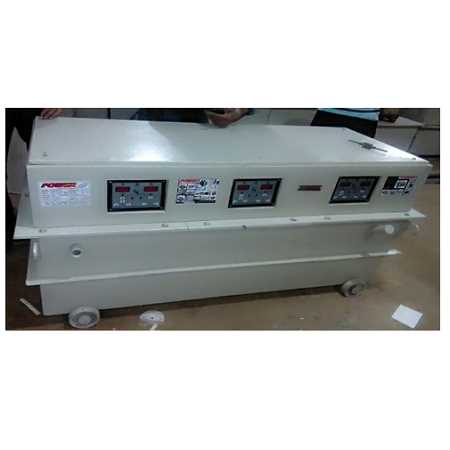
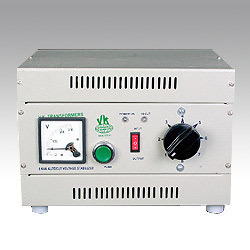
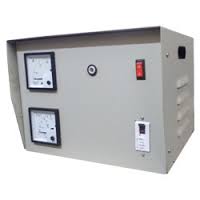
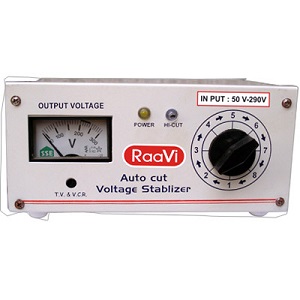
In the context of electrical equipment, a stabilizer (more specifically, a voltage stabilizer or automatic voltage regulator - AVR) is a device that provides a constant output voltage to electrical equipment despite fluctuations in the input voltage from the main power supply. It ensures that sensitive electronic and electrical devices receive a stable power supply, protecting them from damage caused by voltage sags, surges, or brownouts, and ensuring their optimal performance and longevity.
Types of Stabilizers
By Technology:
Relay-Type Stabilizers: Use a series of relays to switch between different taps on an auto-transformer to regulate voltage. Common for home appliances, cost-effective but slower response and step-wise voltage correction.
Servo-Controlled Voltage Stabilizers: Use a servo motor to drive a carbon brush on an auto-transformer to continuously adjust the output voltage. Offers very precise and smooth voltage regulation, faster response, and higher efficiency. Ideal for sensitive industrial equipment.
Static Voltage Stabilizers (SVS): Use semiconductor power electronic devices (e.g., SCRs, IGBTs) to regulate voltage. Very fast response, high efficiency, and no moving parts, but generally more expensive.
Ferroresonant Stabilizers (Constant Voltage Transformers - CVT): Utilize a ferroresonant transformer for voltage regulation. Offers excellent surge suppression and isolation, but less efficient and sensitive to frequency changes.
Digital/Microprocessor-Controlled Stabilizers: Modern stabilizers (can be relay, servo, or static based) controlled by microprocessors, offering advanced features, monitoring, and precise control.
By Output Type:
Single-Phase Stabilizers: For single-phase electrical loads.
Three-Phase Stabilizers: For three-phase industrial and commercial loads.
By Application/Capacity:
Home Appliance Stabilizers: For refrigerators, ACs, TVs, washing machines (typically 1-5 kVA).
Commercial Stabilizers: For offices, small shops (5-50 kVA).
Industrial Stabilizers: For entire factories, machinery, medical equipment, CNC machines (50 kVA up to MVA ranges).
Applications in Various Industries:
Residential: Protecting home appliances like refrigerators, air conditioners, televisions, computers from voltage fluctuations common in many regions.
Commercial Establishments: Stabilizing power for offices, retail stores, elevators, and critical lighting systems.
Industrial Manufacturing: Protecting sensitive machinery like CNC machines, PLCs, industrial robots, motor drives, and production lines from power quality issues, preventing downtime and damage.
Medical & Healthcare: Ensuring stable power to critical medical equipment (X-ray machines, MRI, CT scanners, laboratory instruments) for accurate diagnosis and patient safety.
IT & Data Centers: Stabilizing power to servers, networking equipment, and communication systems to prevent data loss and system failures.
Telecommunications: Protecting communication infrastructure.
Textile Industry: Ensuring stable power for textile machinery.
Technology:
Auto-Transformers: The core component that varies voltage taps (in relay type) or provides a variable output (in servo type) to correct input voltage.
Relay Switching: (In relay type) Electromechanical relays switch transformer taps based on voltage sensing.
Servo Motor & Carbon Brush: (In servo type) The servo motor precisely moves a carbon brush along the transformer winding to achieve continuous voltage adjustment.
SCR/IGBT Control: (In static type) High-speed switching of semiconductor devices to rapidly correct voltage.
Microprocessor Control: Modern stabilizers use microprocessors for precise voltage sensing, control algorithms, fault detection, and display.
Voltage Sensing Circuits: Accurately measure input and output voltage to determine necessary correction.
Protection Features: Overload protection (circuit breakers), short-circuit protection, high/low voltage cut-off, time delay (for ACs, refrigerators).
Bypass Switch: Allows bypassing the stabilizer if needed (e.g., for maintenance).
Display & Monitoring: Digital displays for input/output voltage, current, load, fault indicators.
Material Selection Considerations: