
HOTLINE: +91 851-114-2701
2 listings from verified sellers across India
Fiber Laser Cutting Machine
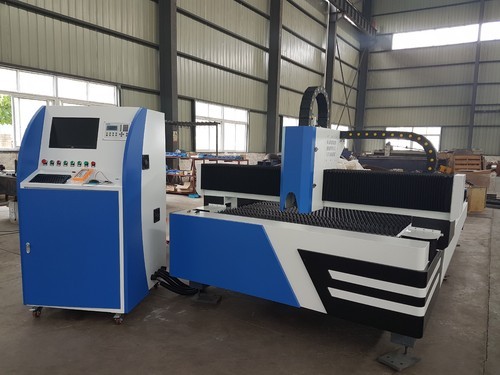
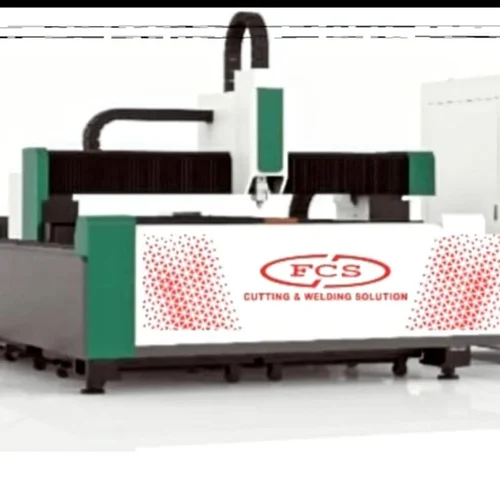
A Fiber laser cutting machine uses a Fiber-optic laser source to cut materials, most commonly metals. The laser beam is generated in a doped Fiber and delivered to the workpiece, where its high intensity melts or vaporizes the material. Fiber lasers emit light around 1070 nm (invisible infrared) with excellent beam quality. These machines excel at cutting reflective metals and are extremely efficient. As with other laser cutters, they offer the “unmatched precision, speed, and efficiency” mentioned for laser cutting generally, with particular advantages for metal.
Type of Fiber Laser Cutting Machine
Fiber laser cutters vary by configuration:
Power Rating: From ~1000 W for thin metal cutting to 10+ kW for heavy industrial cutting (thick plates). Higher power enables faster cutting of thicker materials.
Mode: Typically continuous-wave operation for steady cutting; some include pulsed capabilities for specialized tasks (e.g. engraving).
Machine Build: Usually large CNC-controlled gantry machines. The laser source (fiber) is separate or integrated into the machine housing, with fiber cable guiding the beam to the cutting head.
Automation: Many have auto-focus heads, automatic nozzle changers, and full enclosures for safety. Some systems are designed for parts marking/engraving as well.
Applications in Various Industries
Fiber laser cutting is especially used for metal fabrication:
Automotive: Cutting steel/aluminum sheets for car body parts, chassis, brackets.
Metal Fabrication: Construction of metal furniture, industrial equipment panels, enclosures.
Aerospace: Cutting aircraft sheet parts (e.g. wing ribs, panels).
Electronics and Electrical: Fabricating precision metal parts for electrical cabinets and enclosures.
Medical Devices: Cutting surgical instruments and metal components requiring high precision.
General Manufacturing: Wherever ferrous or non-ferrous metal components are needed, fiber lasers provide clean cuts with narrow kerf. (Fiber lasers can cut copper and brass better than CO2 lasers, which suits certain electronics and electrical parts.)
Material Selection Considerations
Key materials in a fiber laser cutter include:
Everything you need to know about fiber laser cutting machine
Advantages of Fiber Laser Cutting Machines are, it is highly accurate with cutting precision of 0.05mm, as the slit is narrow the laser beam cutting focuses on the very small light spot, high range of speed cutting as much as 10m/min, The cutting surface is smooth with no burrs, laser cutting process has very low amount of wastage with being clean and safe.
Fiber Laser Cutting Machines are used in various industries as it is compatible for almost every cutting, it is used in aviation & aerospace, Sheet metal fabrication, electronics, electrical appliances, industries, food machinery, kitchenware processing, household appliances, metal external machining, tool machining, metallurgical equipment, and many such industries.
The features Of Fiber Laser Cutting Machines are, it has high electrical optical conversion efficiency and conversion ability of more than 30%, This laser technology requires only electrical energy and no other energy is required, as the light is exported via optical fiber which makes mechanical system operations very easy, this laser machine also contains protective lens making expensive components like focusing lens usage very less, the fiber laser system has a minimal footprint, is light in weight, and has a movable working position.
Fiber Laser Cutting Machines is equipped with a fiber laser generator to convert the pump material into an optical fiber, with a specific wavelength laser emitted by semiconductor laser as dual to make the optical fiber generated light. Then this changes the laser beam into a small diameter spot to create a beam of highly powerful energy & bright light which helps on the metal cutting causing the temperature of the metal at a sharp point of the laser irradiation point and reaching the vaporization temperature instantaneously, forming holes. The fiber laser system uses this as a starting point, and the fiber laser beam and the workpiece are moved relative to each other along a particular trajectory to form a slit, depending on the shape specifications of the workpiece to be cut.