
HOTLINE: +91 851-114-2701
2 listings from verified sellers across India
Chillers
Chillers are crucial industrial machines used to remove heat from a liquid via a vapor-compression or absorption refrigeration cycle. The chilled liquid is then circulated through heat exchangers to cool machinery, products, or facilities.
A chiller is a cooling system that removes heat from a process or space and transfers it elsewhere. Commonly used in HVAC systems, industrial processing, plastic manufacturing, and food and beverage sectors.
Types of Chillers
By Technology
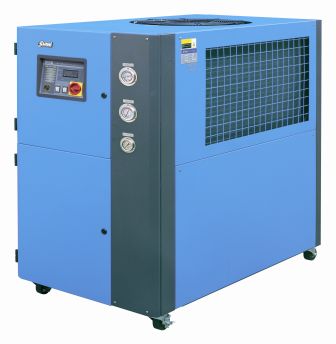
Air-Cooled Chillers – Use ambient air to dissipate heat.
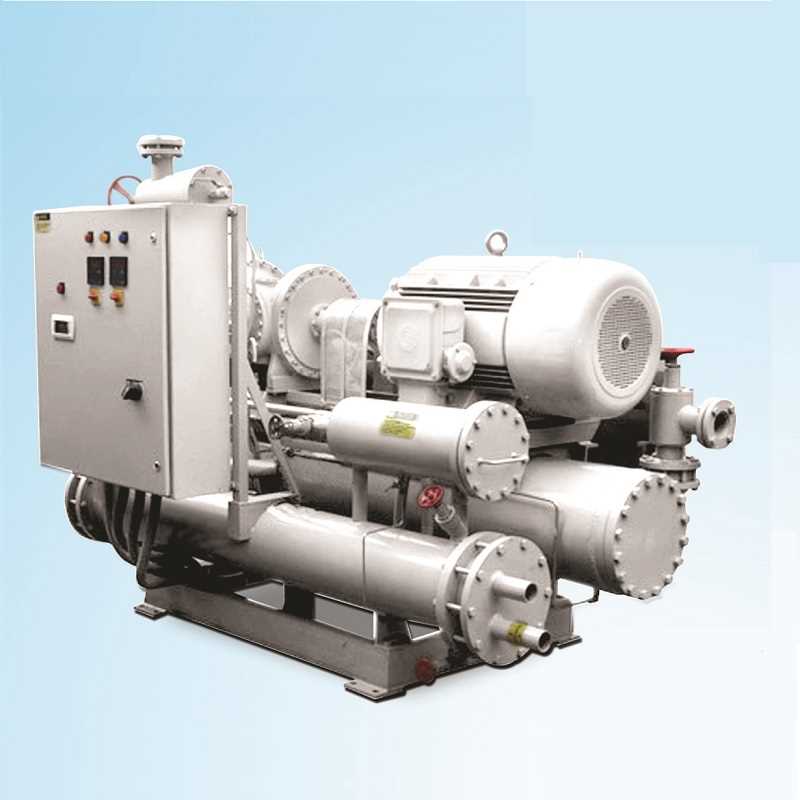
Water-Cooled Chillers – Use water from a cooling tower to reject heat.
Absorption Chillers – Use heat as energy input, often for waste heat recovery.
By Material
Steel Body Chillers – Strong, durable, and widely used.
Aluminum Chillers – Lightweight but less durable.
Copper Tube Chillers – Excellent thermal conductivity.
Applications in Various Industries
Plastic Industry – Injection molding cooling.
Pharmaceutical Industry – Temperature-controlled processing.
HVAC Systems – Commercial and industrial buildings.
Food & Beverage – Cooling in bottling and storage.
Laser and Welding Machines – Thermal control.
Material Selection Considerations
Everything you need to know about chillers
Types of Industrial Chillers
The three main types of industrial chillers in use today are air-cooled chillers, water-cooled chillers, and absorption chillers. We will also briefly touch on cooling towers (an alternative or supplemental cooling system) and special chillers like glycol and centrifugal chillers.
Selecting the right chiller for your application will help you to save costs, reduce downtime, and improve operational efficiency.
Water-Cooled Chillers
Water-cooled chillers use water from an external cooling tower to reject heat from a gaseous refrigerant in the condenser before it undergoes a phase change into a liquid.
Air-Cooled Chillers
In place of the cooling water, air-cooled chillers use ambient air to reject heat from the refrigerant in the condenser.
Vapor Compressor Chillers
This type of chiller uses refrigerants to cool process fluids and spaces. A compressor is used as the driving force to pump refrigerant around the system.
Vapor Absorption Chillers
Vapor absorption chillers have no compressor in the unit. Rather, they use a heat source e.g., solar energy or waste heat to drive the coolant through the system.
A chiller is a system that uses vapor compression, adsorption refrigeration, or absorption refrigeration to extract heat from a liquid. After that, the liquid can be circulated via a heat exchanger to cool equipment or another process source (such as air or process water).
A circulating device circulates cool water or a water/glycol solution from the chiller to the process in most process cooling applications. The warm fluid returns to the chiller while the cool fluid removes heat from the process. The process water is used to transport heat from the process to the chiller.