
HOTLINE: +91 851-114-2701
1 listings from verified sellers across India
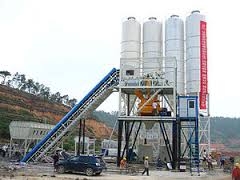
Concrete Batching Plant
A concrete batching plant (concrete plant) is a facility that combines cement, aggregates (sand/gravel), water, and additives to produce fresh concrete. It automates the weighing and mixing of the ingredients according to specified mix designs. In essence, “a concrete plant makes concrete through machinery, precisely batching and mixing cement, aggregates, water and admixtures”. The mixed concrete is then transported (usually via truck mixers) to construction sites or directly used on-site.
Type of Concrete Batching Plant
Concrete plants vary by design and mobility:
Ready-Mix Concrete Plants: These plants meter and partially mix ingredients, then load the concrete into transit mixers for transport. Mixing is completed en route or on delivery. Suitable for flexible deliveries over distances.
Central-Mix (Wet-Mix) Plants: Fully mix concrete in a stationary mixer before loading into non-agitating trucks. Provides consistent mix quality for large pours. Typically used for big projects on one site.
Mobile/Portable Plants: Mountable on trailers or skid frames for easy relocation between job sites. Ideal for remote or short-term projects. They trade off capacity for mobility.
Stationary Plants: Permanently installed for high-volume production, often with multiple aggregate bins (for different sand/gravel) and large silos for cement. Used in large ready-mix companies or precast yards.
Applications in Various Industries
Concrete plants are central to construction:
Building Construction: Supplying foundation, structural, and paving concrete for residential, commercial, and industrial buildings.
Infrastructure: Producing specialized concrete for roads, bridges, dams, tunnels, and airports.
Precast Concrete Manufacturing: Providing batched mixes for precast elements (blocks, pipes, panels).
DIY/Small Projects: Smaller portable batching plants can be used for mixing concrete on farms or for road maintenance.
Material Selection Considerations
Plant components must handle abrasive materials and weight:
Everything you need to know about concrete batching plant
Advantages of Dry Concrete Batching Plants:
It gives better quality of concrete as it is freshly prepared.
It provides fresh concrete from mixer trucks as it arrives on site.
It takes lower power consumption as compared to a wet mixer plant.
It requires less maintenance cost and a short period of time as compared to a wet mixer plant.
It is mixed without water on the plant so gives higher capacity & lower energy consumption.
Capacity of Concrete Batching is available in a wide range which can be used as per the requirement,
Stationery Type : 30 - 200M3/Hr
Mobile Type: 20 - 60M3/Hr
Portable Type : 10 - 20M3/Hr
Mini Batch Plant: 8 - 13M3/Hr
Concrete Batching Plant is a process starting from the feeding of aggregates, feeding of powders mainly consists of fly ash & expanding agents, water & admixtures for mixing the materials, conveyance & storage.
Concrete Batching plants are mainly composed of five systems, material weighing system, storage system, conveying system, control system & mixing host.
Concrete Batching is the process of measuring and adding concrete mixture materials either by volume or by mass. Concrete Batching is mostly preferred to be measured by volume, but now as per standard norms, it is measured by mass.