
HOTLINE: +91 851-114-2701
1 listings from verified sellers across India
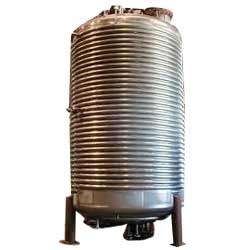
Cooling Coils
Heat exchangers designed to remove heat from an air stream or process fluid, typically by circulating a cold fluid (refrigerant, chilled water, or glycol) through a series of tubes with fins.
Types of Cooling Coils
Chilled Water Coils: Use chilled water or a glycol solution as the cooling medium. Common in HVAC.
Direct Expansion (DX) Coils: Use a refrigerant that expands and evaporates within the coil to absorb heat directly from the air. Used in air conditioners and refrigeration systems.
Condenser Coils: Release heat to the surroundings (part of a refrigeration cycle). (Often considered distinct from "cooling coils" in HVAC, which are evaporators).
Evaporator Coils: Absorb heat from the space/fluid to be cooled (another term for cooling coils in refrigeration).
Fin & Tube Coils: Most common design with fins attached to tubes to increase surface area.
Microchannel Coils: Newer design, smaller diameter tubes, potentially more efficient.
Applications in Various Industries
HVAC (Heating, Ventilation, Air Conditioning): Air conditioning systems for residential, commercial, and industrial buildings, air handling units (AHUs), fan coil units (FCUs).
Refrigeration: Refrigerators, freezers, cold rooms, display cases.
Industrial Processes: Cooling process fluids, gases, or air in chemical plants, food processing, data centers, power generation.
Dehumidification: As air passes over a cold coil, moisture condenses out.
Technology:
Fin Design: Louvered fins, corrugated fins for enhanced heat transfer.
Coil Circuits: Optimized for refrigerant/fluid flow and pressure drop.
Coating Technologies: Hydrophilic coatings (for improved condensate drainage), anti-corrosion coatings (e.g., epoxy, E-coat).
Leak Detection: Testing for leaks during manufacturing.
Computational Fluid Dynamics (CFD): For optimizing coil design.
Sensor Integration: For temperature and pressure monitoring.
Material Selection Considerations