
HOTLINE: +91 851-114-2701
1 listings from verified sellers across India
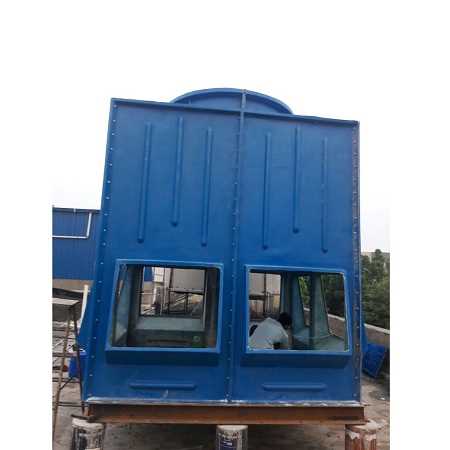
FRP Cooling Towers
FRP (Fiberglass Reinforced Plastic) cooling towers are ventilation structures that use fiberglass-reinforced polymer components for the frame, walls, and fill. They cool water by exposing it to air, relying on evaporation or heat exchange. FRP is highly corrosion-resistant and lightweight compared to traditional concrete or wood, making FRP towers durable and low-maintenance
Type of FRP Cooling Towers
Cooling towers are classified by airflow direction and draft type. Common configurations include forced-draft, induced-draft, and natural-draft towers, and by flow pattern as cross-flow or counter-flow designs
FRP towers typically come in rectangular or cylindrical shapes and in “package” sizes (prefabricated, shipped assembled) or field-erected. Cross-flow FRP towers direct air horizontally across falling water, while counter-flow designs direct air counter to the flow of falling water for efficient heat exchange. Most FRP cooling towers are induced-draft (mechanical fans pull air) because FRP’s light weight is suited to fan-supported designs
Applications in various Industries
These towers are used in industrial and HVAC settings worldwide. Typical applications include cooling for power plants, chemical and petrochemical facilities, oil refineries, steel mills, HVAC in large buildings (hospitals, schools, campuses), and process cooling in manufacturing
In India’s hot climate, FRP towers provide corrosion-resistant cooling solutions, for example in thermal power plants and chemical industries. Globally, FRP towers are preferred for smaller- to medium-capacity cooling needs where concrete towers are impractical.
Material Selection Considerations
FRP towers use fiberglass-reinforced polyester or vinyl ester resins. The material offers high corrosion resistance to moisture and chemical exposure
FRP is lighter than concrete (facilitating easier installation), has low maintenance needs, and is non-conductive, making it safe. However, material cost and fire-resistance (FRP is flammable unless treated) are considerations. Fill and louvers may use PVC or composite materials. Design choices balance cost, durability, and local climate; for example, marine or industrial sites may use higher-quality resins or coatings to withstand harsh environments.
Everything you need to know about frp cooling towers
Three critical roles are served by the cooling system. It does three things: first, it eliminates excess heat from the engine; second, it keeps the engine operating temperature where it is most efficient; and third, it quickly brings the engine up to the proper operating temperature.
A cooling tower is used to extract heat from a building or facility by spraying water down the tower and exchanging heat with the building's interior.
TOWERS MADE OF FRP FOR COOLING. Counter-Flow Cooling Towers with FRP Induced Draft: The tower casing is made of fiberglass reinforced plastic (FRP), which is highly corrosion resistant and provides enough structural strength to withstand high wind velocity and vibration.