
HOTLINE: +91 851-114-2701
1 listings from verified sellers across India
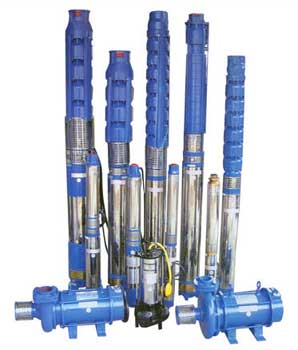
Indian Trade Bird provides a wide range of Submersible Pumps Manufacturers and Suppliers, offering high-quality Submersible Pumps designed to meet diverse customer requirements. We connect buyers with trusted Submersible Pumps Manufacturer companies delivering durable, energy-efficient, and performance-driven pump systems engineered for residential, agricultural, commercial, and industrial applications. Our listed Submersible Pumps are built to operate fully submerged in water, ensuring superior pumping efficiency, silent operation, and longer service life. A Submersible Pump is an electric pump designed to operate while completely submerged in water or other fluids. These pumps push fluid to the surface by converting electrical energy into mechanical energy within a sealed, waterproof casing. A Submersible Pumps Manufacturer specializes in designing pumps that offer high efficiency, strong water-lifting capability, and resistance to corrosion, wear, and harsh operating environments. Submersible Pumps are widely used for borewells, wells, sewage systems, drainage, irrigation, dewatering, and industrial water supply.
Core Functions and Purpose of Submersible Pump
Efficient Water Lifting - Designed to pump water from deep sources like borewells, underground tanks, wells, and reservoirs.
Operate Fully Submerged - Ensures minimal energy loss, reduced cavitation, and higher pumping efficiency.
High Flow and High Head Performance - Ideal for long-distance water supply, agricultural irrigation, and high-rise buildings.
Reliable in Harsh Conditions - Built with robust materials for muddy water, sewage, slurry, or chemically contaminated environments.
Energy Efficient - Consumes less power due to close proximity to the water source and reduced friction loss.
Silent and Vibration-Free Operation - Designed for noise-free performance because the motor runs underwater.
Low Maintenance Requirements - A sealed motor prevents mechanical damage and reduces routine service needs.
Product Types & Specifications
1. Borewell Submersible Pumps
Used for deep wells and boreholes
High discharge and high head applications
Power Range: 0.5 HP – 50 HP
Material: Stainless Steel / Cast Iron
2. Openwell Submersible Pumps
Ideal for rivers, canals, and open water bodies
Suitable for irrigation and domestic water supply
High efficiency and wide voltage tolerance
3. Sewage Submersible Pumps
Built to handle solids, sludge, and wastewater
Suitable for STPs, ETPs, drainage systems, and municipal useHeavy-duty impellers and anti-clog design
4. Dewatering Submersible Pumps
Lightweight and portable
Used at construction sites, mines, basements, and tunnelsHigh flow rate and continuous operation capability
5. Industrial Submersible Pumps
Designed for chemical, manufacturing, and processing industriesCompatible with corrosive and abrasive fluids
Key Benefits of Our Submersible Pumps
High Discharge Capacity for large-scale water movement
Energy-Efficient Motor Design that reduces power consumption
Corrosion-Resistant Build for long-term durability
Low Noise and Vibration Levels due to submerged operation
Minimal Maintenance with sealed motor and protected components
Reliable Performance in Harsh Conditions
Why Choose Submersible Pumps from Indian Trade Bird?
Verified, trusted, and certified manufacturers
High-performance pumps with guaranteed reliability
Competitive pricing for cost-efficient procurement
Wide range of models, capacities, and applications
Quick, safe, and on-time delivery through robust logistics
Popular Search
Submersible Pumps | Borewell Submersible Pumps | Openwell Submersible Pumps | Sewage Submersible Pumps | Drainage Submersible Pumps | Agricultural Submersible Pumps | Industrial Submersible Pumps | Water Filled Submersible Pumps | Oil Filled Submersible Pumps | High Head Submersible Pumps | Submersible Pump Price In Hoshiarpur | Submersible Pump Dealers | Submersible Pump Suppliers | Submersible Pump Exporters | Submersible Pumps Manufacturer | Borewell Submersible Pump Manufacturer | Openwell Submersible Pump Manufacturer | Sewage Submersible Pump Manufacturer | Drainage Submersible Pump Manufacturer | Agricultural Submersible Pump Manufacturer | Domestic Submersible Pump Manufacturer | Industrial Submersible Pump Manufacturer | High Head Submersible Pump Manufacturer | Water Filled Submersible Pump Manufacturer | Oil Filled Submersible Pump Manufacturer | Submersible Pump Supplier In Hoshiarpur | Submersible Pump Exporter In Hoshiarpur
Everything you need to know about submersible pumps
Submersible pumps are found in many applications. Single-stage pumps are used for drainage, sewage pumping, general industrial pumping, and slurry pumping. They are also popular with pond filters. Multiple stage submersible pumps are typically lowered down a borehole and used for residential, commercial, municipal and industrial water extraction (abstraction), water wells and in oil wells. Other uses for submersible pumps include sewage treatment plants, seawater handling, firefighting, water well and deep well drilling, offshore drilling rigs, artificial lifts, mine dewatering, and irrigation systems.
However, while using a submersible pump it is still recommended you keep an eye on children and pets to ensure they are kept at a safe distance to prevent any harm. Submersible pumps are also safe from electrical shorts as water is prevented from leaking into the unit by a hermetically sealed watertight gasket.
Pumps that are designed to be submersible are placed within the reservoir of water that needs pumping out. As such, they are often used for drainage in floods, sewerage pumping, emptying ponds or even as pond filters.
A submersible pump pushes water to the surface by converting rotary energy into kinetic energy into pressure energy. This is done by the water being pulled into the pump: first in the intake, where the rotation of the impeller pushes the water through the diffuser. From there, it goes to the surface.