
HOTLINE: +91 851-114-2701
1 listings from verified sellers across India
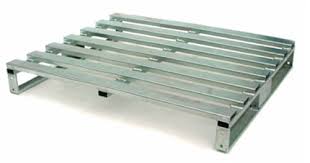
Industrial Pallet
An industrial pallet is a flat, portable platform used as a base for assembling, storing, stacking, handling, and transporting goods as a unit load. It is designed to be lifted by forklifts, pallet jacks, or other lifting equipment, facilitating efficient material handling and storage in warehouses, manufacturing facilities, and supply chains. Pallets are standardized in various sizes to enable interoperability across different industries and logistics systems.
Types of Industrial Pallet
By Material:
Wooden Pallets: Most common type, made from various hardwoods or softwoods.
Stringer Pallets: Have wooden boards (stringers) running between the top and bottom decks, creating openings for forks.
Block Pallets: Use solid blocks instead of stringers, offering more robust construction and often allowing four-way entry for forks.
Plastic Pallets: Made from virgin or recycled HDPE, PP, or other polymers. Lightweight, durable, washable, and resistant to moisture, chemicals, and pests.
Metal Pallets: Typically steel or aluminum. Extremely durable, high load capacity, fire-resistant, and suitable for harsh environments or heavy-duty applications.
Paper Pallets (Corrugated): Made from pressed corrugated cardboard. Lightweight, recyclable, and suitable for light to medium loads, often for one-way shipping.
Composite Pallets: Made from a mix of materials, e.g., wood and plastic, or wood and resin, to combine properties.
By Design/Entry Type:
Two-Way Entry Pallets: Can be entered by forks from two opposing sides (common with simple stringer pallets).
Four-Way Entry Pallets: Can be entered by forks from all four sides (common with block pallets or plastic/metal designs).
Single-Face Pallets: Have a top deck and no bottom deck.
Double-Face Pallets: Have both a top and bottom deck, often reversible.
Applications in Various Industries:
Warehousing & Logistics: Fundamental for stacking and organizing goods in warehouses, distribution centers, and during transportation (trucks, trains, ships, air cargo).
Manufacturing: Moving raw materials, work-in-progress, and finished goods within production facilities.
Retail: Moving products from distribution centers to stores.
Food & Beverage: Hygienic plastic pallets are preferred for food safety, cold chain management.
Pharmaceuticals: Cleanroom-compatible pallets, often plastic, for sterile environments.
Chemical Industry: Resistant to spills and corrosion, often plastic or metal.
Automotive: Heavy-duty metal pallets for parts and components.
Technology:
Automation Compatibility: Pallets designed for use with automated guided vehicles (AGVs), robotic palletizers, and automated storage and retrieval systems (AS/RS).
RFID/Barcode Integration: For tracking and inventory management.
Nestable & Rackable Designs: Plastic pallets are often designed to nest when empty (saving space) or to be rackable (allowing safe storage in pallet racking systems).
Fire Retardant Materials: For specific fire safety requirements.
Customization: Pallets can be designed with specific dimensions, load capacities, or features for unique product requirements.
ISPM 15 Compliance (for wooden pallets): International standard for phytosanitary measures, requiring heat treatment or fumigation of wooden pallets for international shipping to prevent pest spread.
Material Selection Considerations