
HOTLINE: +91 851-114-2701
1 listings from verified sellers across India
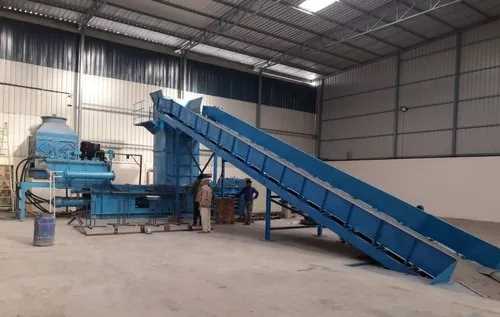
Baling Machines
A baling machine, or baler, is a compacting device used to compress and bind loose materials into dense, manageable bales. This process reduces volume, simplifies handling, lowers transportation and disposal costs, and facilitates recycling.
Types of baling machine
Based on Orientation:
Vertical Balers: Operate by compressing waste materials vertically. Ideal for businesses with limited space or smaller volumes of waste. They produce smaller, more manageable bales.
Horizontal Balers: Designed for heavy-duty applications and high-volume operations. They process larger quantities of waste efficiently and produce denser, larger bales.
Based on Operation:
Manual Balers: Requires significant manual input for loading, tying, and operating.
Semi-Automatic Balers: Features some automated functions (e.g., compaction), but bale tying may still be manual.
Automatic Balers: Fully automated, including feeding, compaction, and bale tying, for high-throughput operations.
Based on Material Type:
Cardboard Balers: Specifically designed for compacting cardboard.
Plastic Balers: For plastic films, bottles, and other plastic waste.
Paper Balers: For various types of paper and office waste.
Textile Balers: For compressing rags, clothing, and fabric scraps.
Metal Balers: For light metals like aluminum cans or thin steel scrap.
Hay/Silage Balers (Agricultural): Used in agriculture to compact hay, straw, and silage for storage and transport.
Applications in Various Industries
Waste Management & Recycling Centers: Compacting municipal solid waste, cardboard, plastics, paper, and other recyclables for efficient transport and processing.
Retail & Supermarkets: Managing large volumes of cardboard packaging and plastic films.
Manufacturing Facilities: Compacting production waste, scrap materials, and packaging waste.
Agriculture: Baling hay, straw, and silage for animal feed and bedding.
Hotels & Restaurants: Compressing food waste, cardboard, and plastic for improved waste disposal.
Printing & Packaging: Baling paper trimmings and waste.
Textile Industry: Compacting fabric scraps and used clothing.
Material Selection Considerations