
HOTLINE: +91 851-114-2701
1 listings from verified sellers across India
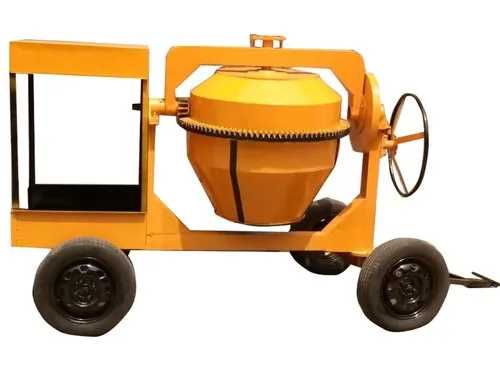
Concrete Mixers
Concrete mixers (cement mixers) are machines that homogeneously combine cement, aggregates (sand/gravel), and water to form concrete
They typically use a rotating drum or blades to mix materials. Small portable mixers are used on-site for minor construction, while large stationary or mobile mixers handle high volumes.
Type
Drum Mixers: Common in construction. These use a revolving drum with internal blades. Subtypes include tilting drum (the drum tilts to discharge mixed concrete) and reversing drum (drum rotates in reverse to discharge)
Pan/Planetary Mixers: Stationary mixers with a horizontal pan and rotating paddles or planetary arms, used for high-quality or small batches (e.g. precast concrete)
Twin-Shaft Mixers: Heavy-duty mixers for large volume and high-strength concrete (e.g. ready-mix plants); they mix intensively and quickly
Continuous Mixers: Constantly feed and discharge material (used for asphalt, mortar, or continuous production)
Transit Mixers (Concrete Trucks): Mixen route to construction sites, with rotating drums mounted on trucks
Application
Concrete mixers are used across all construction sectors: building construction (foundations, walls, slabs), roads, bridges, dams, and any project requiring concrete. Ready-mix plants rely on large stationary mixers for mass concrete supply, while precast factories use pan or planetary mixers for precise mixes. India’s booming infrastructure and housing sectors use mixers everywhere from small construction sites to large RMC (ready-mix concrete) plants.
Material Considerations
Mixers are built of high-strength steel to withstand abrasive aggregates and high torque. Drums and blades often use alloy steels (or manganese steel liners) for wear resistance
Corrosion resistance is less critical since concrete is not highly corrosive, but components exposed to weather may use galvanized or painted steel to prevent rust. Portability (for small mixers) demands lighter frames (thin steel or aluminum), whereas high-capacity plant mixers use massive steel structures and concrete foundations. Durability (against wear and fatigue) is paramount.
Everything you need to know about concrete mixers
Concrete mixers is typically one which has gravel, and is comparitavely thick with chunky mixture, whereas Mortar consists of materials madeup from sand as an aggregates, which results the mixtures with relatively smooth finish.
Concrete Mixers are mainly of two types, Batch Mixers & Continuous Mixers.
Batch mixers are of two types Drum Type Mixers & Pan Type Mixers
Concrete Mixer consists of mixing drum which consists of blades facilating mixability by its rotationon a certain angle, once the ingridients are mixed enough and concrte is peprared it discahrges on opposite direction for its discharge. Reversing drum mixers are more convinient to prpare dry concrete.
A Concrete Mixer is a machine that combines cement with aggregates, sand, gravel, water, aggregates, admixtures to prepare good quality of concrete as per required on the site itselef. It consists of drum which mixes all this ingridientts and pepares concrete of required quantity which runs either on electricitry or fuel.