
HOTLINE: +91 851-114-2701
1 listings from verified sellers across India
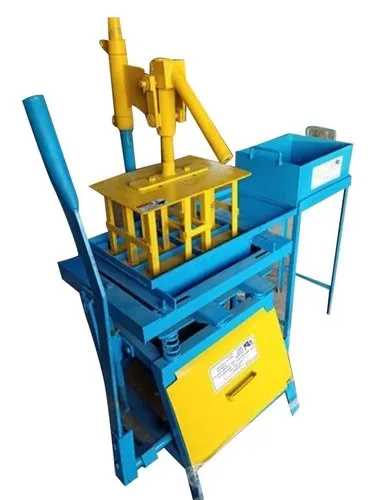
Manual Brick Making Machine
A manual brick-making machine (often called a hand-operated block press) is a press that molds and compresses raw material (clay, concrete or fly ash mix) into bricks or blocks by manual force (lever or hand screw). The operator fills a Mold on the machine, then pulls a lever or uses a screw to compact the mix into a solid brick. Once formed, the brick is ejected by sliding the Mold. These machines are simple, portable and used where power is limited, making them ideal for small-scale production or rural construction. For example, mobile models (with wheels) allow on-site block making; Lontto’s machines have “sturdy frames made of strong iron” for durability.
Types of Manual Brick Making Machine
Single Lever Manual Machines: Basic machines operated by a single hand lever.
Double Lever Machines: Provide more pressing force; higher output.
Hydraulic Manual Machines: Manual input with hydraulic assist for better compaction.
Interlocking Brick Machines: Make bricks with interlocking edges.
Fly Ash Brick Machines: Specifically designed to make bricks using fly ash.
Application in Various Industries
Used in low-cost construction and small building projects. They are common in developing regions for making building blocks on-site, since they require no electricity and have low capital cost. Typical uses include producing bricks for houses, boundary walls or rural structures. Because the brick is pressed (and often later sun-dried), these machines yield strong, uniform bricks suitable for wall construction. They are also used in training programs on natural building (e.g., stabilized earth bricks).
Material Selection Considerations
The press must be very robust: the frame and body are heavy steel or cast iron to resist the high compaction forces. Lontto notes “sturdy frames made of strong iron” on its mobile units. The mold surfaces and compacting plate are made of hardened steel or cast iron, since they endure abrasion from raw mixes. The lever and hinge pins are steel to resist bending. All steel parts are typically painted or powder-coated to resist rust (machines often stored outdoors). Wear components (mold liners, ejector plates) may be softer steel or even replaceable inserts. In essence, materials are chosen for strength, wear resistance and toughness; the mold and press surfaces must not deform over time, and the heavy frame must remain square under repeated pounding.