
HOTLINE: +91 851-114-2701
7 listings from verified sellers across India

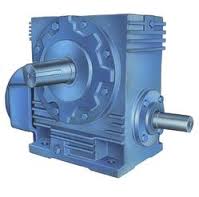
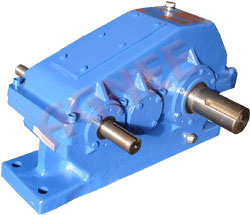
Gear Box
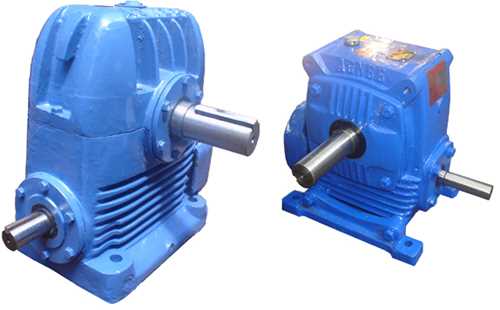
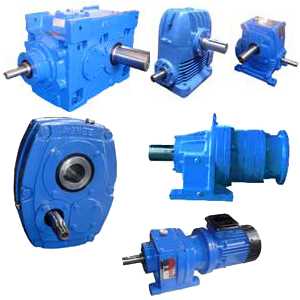
A gearbox (or speed reducer/gear reducer) is a mechanical device that modifies torque and speed between a power source (like an electric motor) and an output load. It typically consists of a series of intermeshed gears housed within a casing. Its primary functions are to reduce the speed of the input shaft while increasing the output torque, or vice-versa, allowing the power source to operate at its optimal speed while delivering the required power to the application.
Types of Gear Box
Spur Gearboxes: Simplest type, uses straight-cut gears. Efficient but can be noisy at high speeds.
Helical Gearboxes: Uses helical gears with teeth cut at an angle to the axis. Quieter and can transmit more torque than spur gears due to more gradual engagement.
Bevel Gearboxes: Uses conical gears for power transmission between intersecting shafts, typically at 90 degrees.
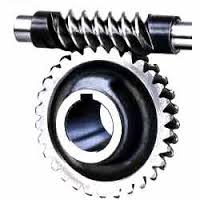
Worm Gearboxes: Uses a worm (screw-like gear) engaging with a worm wheel. Offers high reduction ratios in a compact space and self-locking capabilities (prevents back driving).
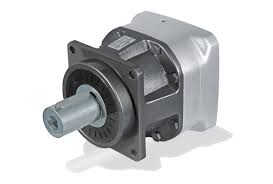
Planetary Gearboxes (Epicyclic Gearboxes): Uses a central sun gear, planetary gears, and an outer ring gear. Offers very high torque density, high efficiency, and compact size, making them ideal for robotics and precision applications.
Harmonic Drive Gearboxes: Ultra-compact, high-ratio, zero-backlash gearboxes, often used in robotics and precision motion control.
Cycloidal Gearboxes: High reduction ratio, high shock load capacity, and robust design.
Parallel Shaft Gearboxes: Input and output shafts are parallel. Includes spur and helical gearboxes.
Right Angle Gearboxes: Input and output shafts are at 90 degrees. Includes bevel and worm gearboxes.
Variable Speed Gearboxes: Allow the output speed to be adjusted, either mechanically (e.g., belt-driven variators) or electronically (e.g., through a motor and VFD).
Applications in Various Industries:
Manufacturing: Conveyors, mixers, extruders, machine tools, packaging machinery, textile machinery, material handling equipment.
Automotive: Transmissions in vehicles (manual, automatic), differential gearboxes.
Wind Power: Large gearboxes in wind turbines to step up the low rotational speed of the rotor to the high speed required by the generator.
Mining & Construction: Earthmovers, crushers, conveyor systems, hoists, cranes.
Marine: Propulsion systems for ships and boats.
Robotics: Precision planetary and harmonic drive gearboxes for joint articulation.
Agriculture: Tractors, irrigation pumps, processing equipment.
Aerospace: Actuator systems, control surfaces.
Technology:
Gear Geometry Optimization: Advanced software for designing gear tooth profiles for maximum efficiency, quiet operation, and load bearing capacity.
Heat Treatment: Carburizing, nitriding, induction hardening to increase gear hardness and wear resistance.
Precision Machining: CNC gear cutting (hobbing, shaping, grinding) for high accuracy and smooth operation.
Bearing Technology: High-quality ball, roller, or thrust bearings for low friction and high load capacity.
Lubrication Systems: Oil splash, forced lubrication, or grease lubrication depending on speed, load, and orientation.
Vibration Analysis: Used in manufacturing and maintenance to detect imbalances or gear wear.
Finite Element Analysis (FEA): For stress analysis of gearbox housing and gears to optimize design and predict performance under load.
Condition Monitoring: Integration of sensors for temperature, vibration, and oil quality for predictive maintenance.
Material Selection Considerations:
Gears:
Gearbox Housing: