
HOTLINE: +91 851-114-2701
1 listings from verified sellers across India
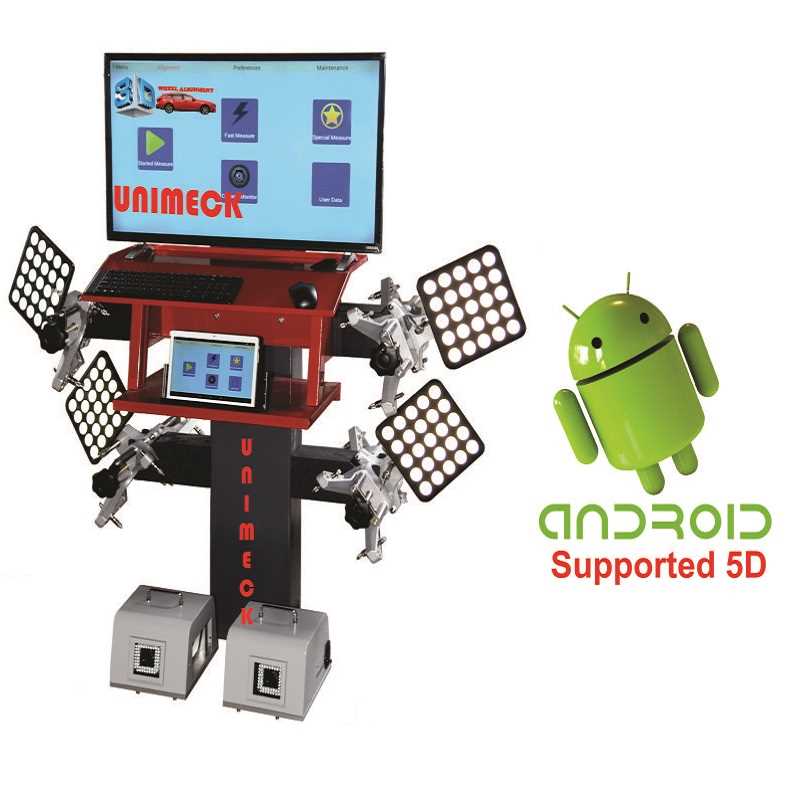
3D Wheel Alignment Machine
A 3D wheel alignment machine is an advanced diagnostic system used to measure and correct the alignment of vehicle wheels using high-resolution digital cameras and sophisticated software. Unlike traditional wheel alignment systems, the 3D version uses three-dimensional imaging technology to provide real-time data on camber, caster, toe angles, and other alignment parameters with high accuracy.
This system plays a crucial role in the automotive industry, ensuring that wheels are properly aligned for optimal vehicle performance, safety, tire longevity, and fuel efficiency. Its fast measurement capabilities, minimal operator intervention, and visual interface make it suitable for modern automotive workshops and service centre’s.
Types of 3D Wheel Alignment Machine
Standard 3D Wheel Alignment Machine
Description: Utilizes a pair of high-resolution cameras and wheel-mounted targets (passive or active) to capture wheel position and angles.
Features: Basic software, automatic compensation, user-friendly interface.
Usage: Commonly used in small and mid-sized garages.
High-Speed 3D Alignment System
Description: Designed for faster processing and accurate measurements with advanced sensor arrays and software algorithms.
Features: Touchless operation, instant imaging, vehicle recognition.
Usage: Ideal for high-throughput service centers and dealerships.
Mobile 3D Wheel Alignment Machine
Description: A compact and portable version of a 3D aligner, easily movable across bays or workshop floors.
Features: Wireless communication, space-saving design, battery operation.
Usage: Perfect for mobile alignment services and small workshops with space constraints.
Automatic 3D Wheel Alignment Machine
Description: Fully automated version equipped with robotic arms or motorized camera movements to align without manual adjustment.
Features: Fully guided procedure, automatic lift tracking, minimal human intervention.
Usage: High-end automotive service centers and luxury vehicle workshops.
Truck & Bus 3D Wheel Alignment System
Description: Specialized for heavy commercial vehicles with larger wheelbases and weights.
Features: Extended measuring range, heavy-duty clamps, reinforced software modules.
Usage: Fleet service stations, transportation depots, and commercial vehicle garages.
Applications in Various Industries
Automotive Service & Repair Workshops
Used for regular vehicle maintenance to correct wheel misalignment and improve road safety and handling performance.
Automotive Dealerships
Integral in pre-delivery inspection (PDI) processes to ensure newly sold vehicles meet alignment standards.
Tire Retail & Installation Centers
Assists in maintaining proper alignment after new tire installation, ensuring even tire wear and extended lifespan.
Transport & Fleet Management
Used to monitor and maintain alignment on commercial fleets, minimizing operational costs and reducing fuel consumption.
Automotive Manufacturing Plants
Employed in production lines to verify wheel alignment during vehicle assembly and quality control stages.
Racing & Motorsport Industry
Ensures precision wheel alignment to maximize performance, handling, and tire grip on racing tracks.
Material Selection Considerations
Material: Powder-coated steel or aluminum alloy.
Reason: Must provide rigidity and structural stability to house cameras and electronic components while resisting corrosion and workshop wear.
Material: ABS plastic or aluminum.
Reason: Lightweight and durable, protects sensitive optical components from dust, vibration, and accidental impact.
Material: High-strength aluminum, carbon fiber-reinforced polymer (CFRP), or impact-resistant plastics.
Reason: Needs to be lightweight for easy handling, yet durable and accurate to maintain proper positioning on wheels.
Material: Copper wiring with PVC or Teflon insulation, polycarbonate display casings.
Reason: Ensures reliability of data transmission and long-term electrical safety under varying temperature and workshop conditions.
Material: Stainless steel or heavy-duty powder-coated metal.
Reason: Offers mechanical stability and vibration resistance for precise alignment measurement.
Material: Polyurethane or rubber-coated metal.
Reason: Smooth mobility and resistance to wear and oil spills commonly found in garage environments.
Material: Tempered glass screen, aluminum or plastic bezel.
Reason: Ensures user interface durability and a clear, scratch-resistant view during operation.
Material: Lightweight polymer with high-reflectivity coatings.
Reason: Required for accurate image capture and analysis by 3D cameras.