
HOTLINE: +91 851-114-2701
4 listings from verified sellers across India
Centrifuge Machine
A centrifuge machine is a device that utilizes centrifugal force to separate components of a mixture based on differences in density. By spinning a sample at high speeds, it generates a centrifugal force that is significantly stronger than gravity, causing denser components to move away from the axis of rotation and lighter components to move towards it. This principle allows for the efficient separation of solids from liquids, liquids from liquids, or even different components within a liquid (e.g., blood cells from plasma).
Types of Centrifuge Machine
Centrifuges vary greatly in size, speed, and application.
Laboratory Centrifuges:
Microcentrifuges: Small, high-speed centrifuges for small sample volumes (e.g., DNA, RNA, protein separation).
Benchtop Centrifuges: General-purpose centrifuges for a range of lab applications, often refrigerated.
High-Speed Centrifuges: Achieve higher G-forces for more demanding separations (e.g., bacterial cells, subcellular fractions).
Ultracentrifuges: Very high-speed centrifuges capable of separating macromolecules and viruses, often vacuum-sealed and refrigerated.
Clinical Centrifuges: Specifically designed for blood and urine sample processing in medical labs.
Industrial Centrifuges:
Filter Centrifuges (Basket Centrifuges):
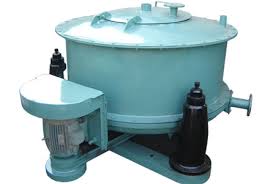
Vertical/Horizontal Basket Centrifuges: Perforated baskets with a filter cloth or screen, used for dewatering slurries (e.g., pharmaceuticals, fine chemicals, textiles).
Pusher Centrifuges: Continuous filtering centrifuges for high-volume solid-liquid separation.
Sedimentation Centrifuges:
Decanter Centrifuges: Horizontal bowl centrifuges for continuous separation of solids from liquids, often with scroll conveyors for solids discharge (e.g., wastewater treatment, food processing, drilling mud).
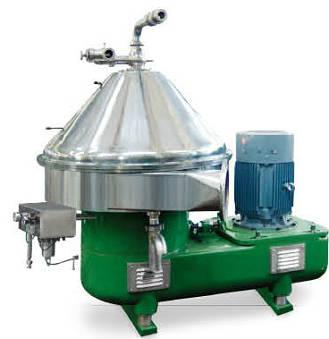
Disk-Stack Centrifuges (Disc Bowl Centrifuges): High-speed centrifuges with a stack of conical disks to increase separation area, used for liquid-liquid or liquid-solid separation with fine solids (e.g., milk skimming, oil purification, biotech harvesting).
Tubular Bowl Centrifuges: Very high G-forces, used for separating small amounts of fine solids from large volumes of liquid, or for liquid-liquid separation (e.g., clarifying oils, vaccine production).
Solid Bowl Centrifuges: Simple design, used for separating larger solids from liquids.
Applications in Various Industries
Biotechnology & Pharmaceuticals:
Applications: Cell harvesting (bacteria, yeast, mammalian cells), protein purification, vaccine production, blood component separation, DNA/RNA extraction, drug purification.
Technology: High-speed ultracentrifuges, continuous flow centrifuges (e.g., tubular bowl, disk stack), sterile and GMP-compliant designs, integrated cleaning-in-place (CIP) systems, advanced rotor dynamics.
Food & Beverage Industry:
Applications: Milk skimming/clarification, juice clarification, wine/beer clarification, oil refining (e.g., olive oil), starch processing, yeast separation.
Technology: Sanitary design (stainless steel), continuous decanter and disk-stack centrifuges, precise speed control, minimal product damage.
Chemical Industry:
Applications: Separation of catalysts, pigments, polymers, and other solids from liquids; dewatering of slurries; crystal separation; solvent recovery.
Technology: Wide range of industrial centrifuges (decanters, basket, pusher), corrosion-resistant materials, explosion-proof designs for flammable solvents, process automation.
Environmental & Wastewater Treatment:
Applications: Dewatering of sewage sludge, industrial wastewater treatment, separation of oil from water, soil remediation.
Technology: Large decanter centrifuges, robust construction, flocculant dosing systems to enhance separation.
Oil & Gas Industry:
Applications: Drilling mud treatment, crude oil dehydration, fuel purification (e.g., marine fuel oil).
Technology: High-performance decanter and disk centrifuges capable of handling abrasive solids and viscous liquids.
Mining & Minerals:
Applications: Dewatering mineral concentrates, tailings management.
Technology: Heavy-duty decanter and basket centrifuges designed for abrasive slurries.
Research & Academia:
Applications: All aspects of scientific research requiring sample preparation, component separation, and analysis.
Technology: A wide array of lab centrifuges, precision speed control, refrigeration, programmable cycles.
Material Selection Considerations
Rotor/Bowl (the spinning part):
Centrifuge Housing/Casing:
Bearings:
Seals:
Wear Parts (e.g., scrolls in decanters, nozzles):
Motor:
Lining/Coatings: