
HOTLINE: +91 851-114-2701
1 listings from verified sellers across India
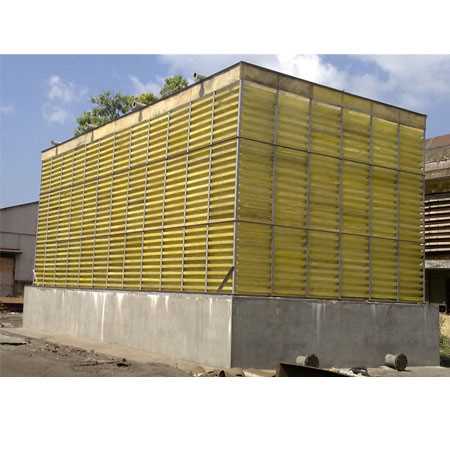
Fanless Cooling Tower
A type of cooling tower that dissipates waste heat to the atmosphere without the use of mechanical fans. This is typically achieved through natural draft principles or by utilizing hybrid designs with passive cooling elements.
Types of Fanless Cooling Tower
Natural Draft Cooling Towers: Utilize the chimney effect (buoyancy of warm, moist air) to draw air through the tower. These are typically very tall and large.
Hybrid/Passive Cooling Towers: May incorporate elements like indirect contact heat exchangers (dry cooling) or rely more on natural convection, potentially with smaller footprints than pure natural draft towers. (Note: True "fanless" implies no mechanical air movement).
Dry Cooling Towers (often fanless): Use finned tubes to dissipate heat without evaporating water, relying purely on convective heat transfer to the ambient air.
Applications in Various Industries:
Power Plants: Large natural draft towers are common in thermal power plants to cool steam from turbines.
Industrial Processes: Where large heat rejection is required and fan noise/energy consumption is a concern.
Data Centers: Potentially for free cooling strategies in certain climates, though often with hybrid fan-assisted systems.
Technology:
Natural Draft: Chimney design for stack effect, large open structures.
Dry Cooling: Finned tube bundles (air-cooled heat exchangers), often with V-shaped or A-frame configurations to maximize surface area.
Materials: Emphasis on corrosion resistance due to water exposure (for wet cooling) or outdoor exposure (for dry cooling).
Energy Efficiency: Zero fan energy consumption is the primary benefit.
Noise Reduction: Significantly quieter than fan-driven towers.
Material Selection Considerations: