
HOTLINE: +91 851-114-2701
1 listings from verified sellers across India
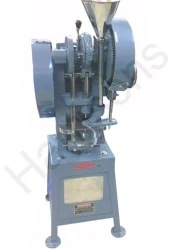
Tablet compression machines are crucial equipment in pharmaceutical manufacturing, designed to convert powders and granules into uniform, high-quality tablets. These machines ensure accurate dosage, consistent hardness, and precise weight for tablets, meeting stringent regulatory and quality standards. Tablet compression machines are widely used in pharmaceutical, nutraceutical, and herbal industries to produce round, oval, or oblong tablets efficiently and safely.
Modern tablet compression machines combine high-speed rotary systems, precise punch and die assemblies, and advanced automation. They allow manufacturers to achieve high output while reducing material waste and labor dependency. Their versatility makes them suitable for single-layer, multi-layer, and coated tablets, supporting both small-scale and large-scale production lines.
Tablet compression machines are available in single-punch, rotary, and multi-layer configurations. Single-punch machines are ideal for small-batch or pilot production, providing accurate tablet formation at lower speeds. Rotary machines are suitable for large-scale production with high-speed operation, producing thousands of tablets per hour with consistent weight and hardness. Multi-layer machines can compress multiple layers into a single tablet, allowing combination formulations or coated tablets.
Construction and Build: Most machines are constructed from stainless steel and corrosion-resistant materials for durability and hygiene. Die and punch systems are made from high-grade tool steel to maintain precision and prevent wear. Machines include adjustable compression force, speed control, and safety mechanisms to prevent overloading or damage.
Capacity and Speed: Tablet compression machines range from 2,000 to over 100,000 tablets per hour depending on the model. Automatic machines include PLC systems for real-time monitoring, automatic lubrication, and synchronized tablet ejection, ensuring high-speed and uninterrupted operation.
Versatility: Machines can produce tablets of different shapes, sizes, and coatings. They are compatible with film coating, sugar coating, and enteric coating processes. Adjustable parameters allow manufacturers to handle various formulations, including herbal, nutraceutical, and pharmaceutical powders.
• Ensure precise dosage, consistent hardness, and uniform tablet weight.
• Increase production efficiency by reducing manual labor and cycle times.
• Minimize tablet defects such as capping, lamination, or chipping.
• Durable stainless steel construction ensures hygiene, corrosion resistance, and long-term use.
• Compliant with GMP and FDA regulations for pharmaceutical manufacturing.
• Flexible for multiple tablet shapes, sizes, and multi-layer formulations.
• Pharmaceutical Industry: Tablet compression machines are used for producing medicinal tablets, vitamins, and dietary supplements with consistent quality and dosage accuracy.
• Nutraceutical and Herbal Products: Used for herbal formulations, vitamin tablets, and combination supplements, ensuring uniformity and stability.
• Research and Pilot Production: Small-scale single-punch machines support formulation testing, R&D batches, and clinical trial tablet production.
• Large-Scale Manufacturing: Rotary and multi-layer machines enable high-speed, high-volume production, suitable for domestic and international pharmaceutical markets.
• Coating Compatibility: Machines can integrate with coating systems to produce sugar-coated, film-coated, or enteric-coated tablets for improved stability, taste masking, or controlled release.
• Pharmaceutical companies, nutraceutical manufacturers, and contract manufacturing organizations (CMOs) rely heavily on tablet compression machines for efficient tablet production. Small-scale labs and pilot plants use single-punch machines for experimental formulations and batch testing. Large-scale manufacturers prefer rotary or multi-layer machines for high-speed production lines, ensuring consistent output, regulatory compliance, and reduced material waste.
• Demand for tablet compression machines is growing In New Delhi, Europe, North America, and Asia-Pacific due to the expanding pharmaceutical and nutraceutical sectors. The rising need for vitamins, supplements, and prescription medicines drives adoption. Manufacturers invest in advanced tablet compression machines to maintain production efficiency, meet stringent quality standards, and scale operations for domestic and export markets.
Investing in a high-quality tablet compression machine allows manufacturers to produce consistent, high-precision tablets, optimize workflow, reduce labor costs, and maintain compliance with international pharmaceutical standards. These machines are an indispensable part of modern pharmaceutical production lines.
Tablet Compression Machine Manufacturer | High-Speed Tablet Press Supplier | Rotary Tablet Compression Machine | Single-Punch Tablet Machine Exporter | Multi-Layer Tablet Press for Pharma | GMP Compliant Tablet Compression Machine | Automatic Tablet Press for Production | Pharmaceutical Tablet Machine Supplier | Nutraceutical Tablet Press | Affordable Tablet Compression Machine In New Delhi | Best Tablet Press Machine for Manufacturing Plants | Laboratory Tablet Compression Equipment
Everything you need to know about tablet compression machine
Tablet Compression Machines work mainly on the principle of compression of the upper & lower punch in a die hole where hydraulic pressure plays a vital role. This pressure is transmitted through the static fluid without being decreased. Any externally applied pressure is transmitted in the same proportion to all directions through the static fluid.
There are mainly two types of Tablet Compression Machines 1. Single Station & 2. Multi-Station.
Compression: The top and bottom punches inside the die are pressed together to form the tablet during the compression stage. The top and bottom punches pass between two wide wheels called compression rolls as the punches reach the compression point.