HOTLINE: +91 851-114-2701
1 listings from verified sellers across India
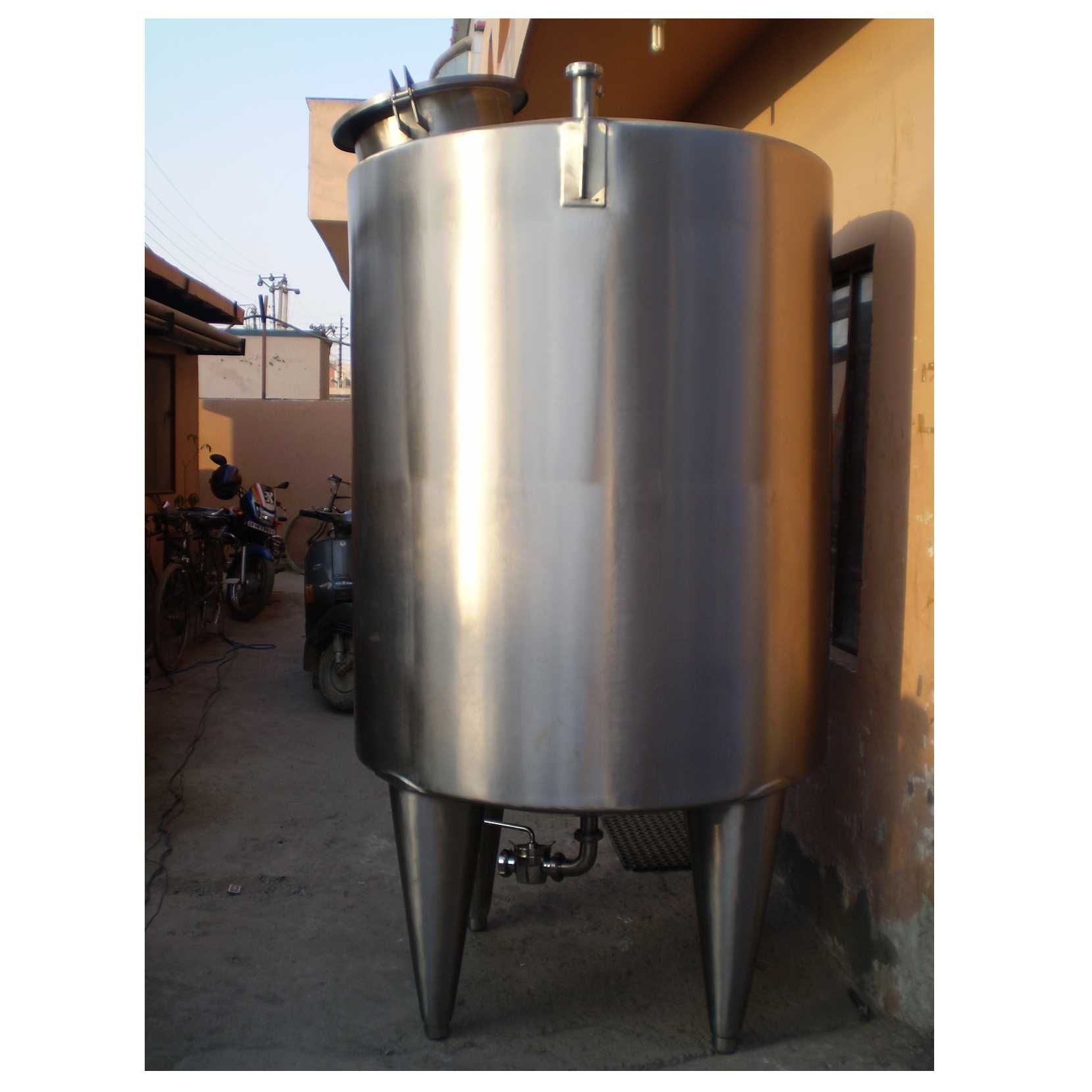
Stainless Steel Storage Tank
A stainless-steel storage tank is a robust and highly durable container primarily used for storing liquids, gases, or solids in various industrial and commercial settings. Their primary advantage lies in the exceptional corrosion resistance and hygienic properties of stainless steel, making them suitable for a wide range of substances, including food, pharmaceuticals, chemicals, and water.
Types of Stainless Steel Storage Tank
Vertical Tanks: Most common for liquid storage, maximizing capacity in a limited footprint.
Horizontal Tanks: Often used for lower-density liquids or when space constraints dictate horizontal placement. Can be single-wall or double-wall.
Atmospheric Tanks: Designed for storage at ambient pressure.
Pressure Vessels: Designed to withstand internal or external pressure, used for gases or liquids under pressure.
Mixing Tanks/Agitated Tanks: Equipped with internal agitators or stirrers for blending and homogenizing contents.
Jacketed Tanks: Feature an outer "jacket" that allows for heating or cooling of the tank's contents.
Insulated Tanks: Have an insulation layer to maintain specific temperatures.
Fermentation Tanks: Specialized for biological processes, often seen in breweries and pharmaceutical industries.
Process Tanks: Integrated into a production line for specific stages of manufacturing.
Water Tanks: For raw water, deionized (DM) water, purified water, or WFI (Water for Injection).
Applications in Various Industries
Food and Beverage Industry: Storage of milk, juice, oils, syrups, wine, beer, and other processed foods. Used in dairies, breweries, wineries, and food processing plants.
Pharmaceutical Industry: Essential for storing pharmaceutical raw materials, intermediates, and finished products, requiring high hygiene standards (often polished to a mirror finish).
Chemical Industry: Storage of various chemicals, acids, alkalis, and solvents due to stainless steel's excellent chemical resistance.
Petrochemical Industry: Large-scale storage of crude oil, refined products, and various hydrocarbons.
Water Treatment: Storage of treated water, wastewater, and chemicals used in water purification.
Cosmetics and Personal Care: Storage of ingredients and finished products.
Biotechnology: For fermentation and cell culture processes.
Dairy Industry: Specialized tanks for milk collection, storage, and processing.
Material Selection Considerations
The choice of stainless steel grade is paramount and depends on the stored material's corrosiveness, temperature, and required hygiene:
Austenitic Stainless Steels (most common):
304/304L: Most widely used for general-purpose storage, food, dairy, and less corrosive chemicals. "L" indicates low carbon, improving weldability and reducing sensitization.
316/316L: Provides superior corrosion resistance, especially against chlorides and acids. Preferred for pharmaceuticals, more aggressive chemicals, and marine environments.
Duplex Stainless Steels (e.g., 2205, 2507): Offer higher strength and even better corrosion resistance than austenitic grades, particularly against stress corrosion cracking. Used for highly demanding applications.
Ferritic Stainless Steels (e.g., 409, 430): Less common for storage tanks due to lower corrosion resistance and weldability, but can be used for less critical applications.
Surface Finish: Determines cleanability and hygiene. Higher polish (e.g., Ra < 0.8 µm for pharmaceuticals) is more expensive but crucial for preventing microbial growth and cross-contamination.
Gaskets and Seals: Materials like EPDM, Viton, or PTFE, chosen based on chemical compatibility and temperature resistance to ensure leak-proof operation.