
HOTLINE: +91 851-114-2701
2 listings from verified sellers across India
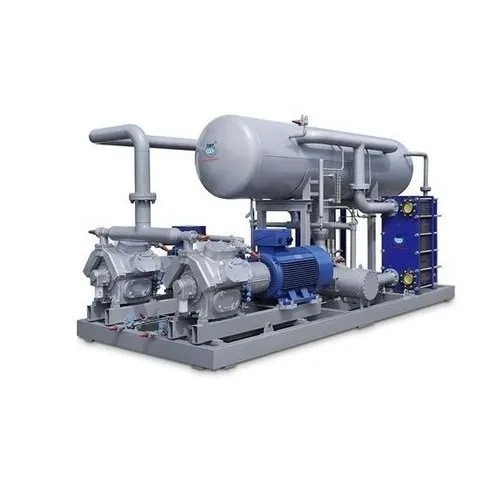
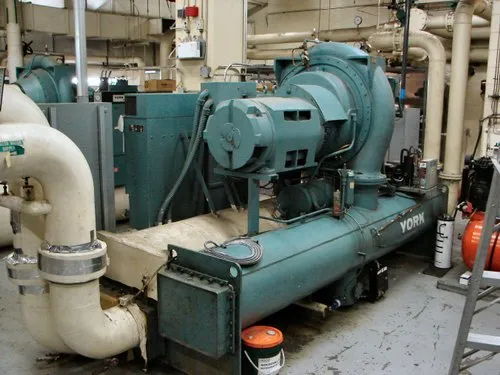
Water Chillers
A water chiller is a refrigeration system that removes heat from a liquid (typically water or a water/glycol solution) through a vapor-compression or absorption refrigeration cycle. This chilled liquid is then circulated through a process or facility to cool equipment, products, or an entire building's air.
Types of Water Chillers
By Refrigeration Cycle:
Vapor Compression Chillers: Most common, use a compressor, condenser, expansion valve, and evaporator.
Air-Cooled Chillers: Reject heat to the ambient air using fans. Easier to install, lower maintenance.
Water-Cooled Chillers: Reject heat to a separate cooling water loop (requires a cooling tower). More efficient, higher capacities.
Absorption Chillers: Use a heat source (e.g., steam, hot water, natural gas) to drive the refrigeration cycle, often used where waste heat is available or electricity is expensive.
By Compressor Type (for Vapor Compression):
Scroll Chillers: Compact, energy-efficient for small to medium capacities.
Reciprocating Chillers: Older technology, less common now.
Screw Chillers: For medium to large capacities, good part-load efficiency.
Centrifugal Chillers: For very large capacities, highly efficient.
By Application:
Process Chillers: For industrial processes (e.g., plastics molding, laser cooling, food processing, medical equipment).
HVAC Chillers: For cooling buildings via air handling units.
Portable Chillers: Compact, mobile units for temporary cooling needs.
Modular Chillers: Designed to be combined for larger capacities.
Applications in Various Industries
HVAC (Heating, Ventilation, Air Conditioning): Cooling large commercial buildings, industrial facilities, hospitals, data centers, and arenas.
Plastics Industry: Cooling molds, hydraulic systems in injection molding machines.
Food & Beverage: Cooling ingredients, chilling processes (e.g., breweries, dairies), cold storage, blast chilling.
Pharmaceutical Industry: Temperature control for chemical reactions, vaccine storage, laboratory equipment.
Manufacturing: Cooling laser cutting machines, welding equipment, induction furnaces, machine tools.
Medical & Healthcare: Cooling MRI machines, CT scanners, surgical equipment.
Data Centers: Maintaining optimal temperature for server rooms and electronic equipment.
Printing Industry: Cooling printing presses.
Technology:
Refrigeration Cycle: The fundamental principle of vapor compression (or absorption) to transfer heat.
Heat Exchangers: Evaporator (chills water) and Condenser (rejects heat) are critical components.
Compressors: The workhorse of the system, determining capacity and efficiency.
Control Systems: Microprocessor-based controls for precise temperature regulation, energy management, safety interlocks, and remote monitoring.
Refrigerants: Various types (e.g., R-134a, R-410A) with environmental considerations (GWP, ODP).
VFDs (Variable Frequency Drives): For compressors and pumps to optimize energy consumption based on load.
Material Selection Considerations
Heat Exchangers (Evaporator & Condenser Coils):
Piping (Chilled Water & Refrigerant Lines):
Casing/Frame: Galvanized steel (often powder-coated) or aluminum for outdoor units, or painted mild steel for indoor units.