
HOTLINE: +91 851-114-2701
6 listings from verified sellers across India

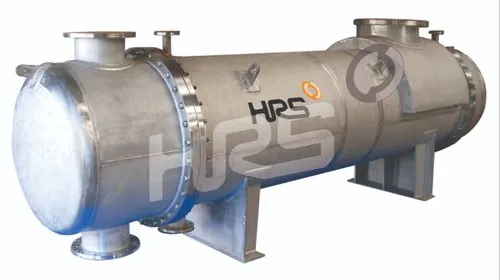
Tube Heat Exchangers
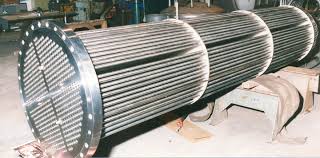
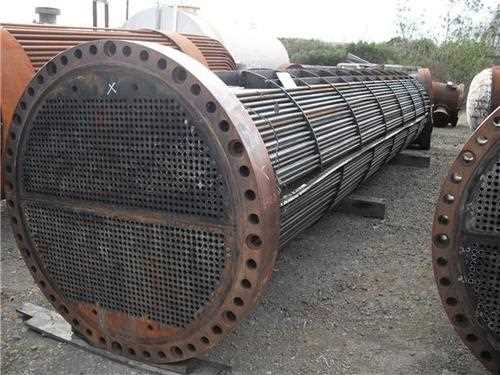
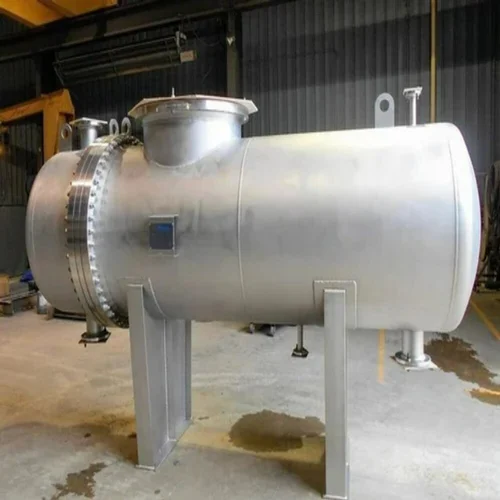
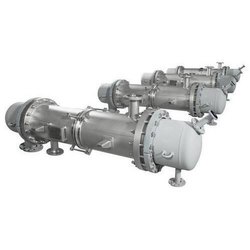
A tube heat exchanger is a device that efficiently transfers heat between two or more fluids at different temperatures, typically without allowing them to mix. They are fundamental components in a wide range of industrial processes, used for heating, cooling, condensing, evaporating, and recovering heat.
Types of Tube Heat Exchangers
Shell and Tube Heat Exchangers:
The most common type. One fluid flows inside a bundle of tubes, while the other fluid flows over the tubes, inside a shell.
Fixed Tubesheet: Tubes are welded to tubesheets at both ends.
U-Tube: Tubes are bent into a U-shape, allowing for thermal expansion.
Floating Head: One tubesheet is allowed to move relative to the shell, accommodating thermal expansion and making cleaning easier.
Double Pipe Heat Exchangers:
Consist of two concentric pipes. One fluid flows through the inner pipe, and the other flows through the annulus between the pipes. Simple, good for high pressures, but low heat transfer area.
Finned Tube Heat Exchangers:
Tubes have extended surfaces (fins) on the outside to increase the heat transfer area, commonly used for gas-to-liquid heat exchange.
Air-Cooled Heat Exchangers (Fin-Fan Coolers): Use fans to move air over finned tubes to cool process fluids.
Coil Heat Exchangers: Tubes coiled into a compact shape (e.g., condenser coils in refrigerators).
Coiled Tube Heat Exchangers:
Tubes are helically coiled, offering a compact design and good heat transfer.
Applications in Various Industries
Petrochemical & Chemical Processing: Heating and cooling process streams, condensation of vapors, reboiling in distillation columns, heat recovery.
Oil & Gas: Crude oil heating, gas cooling, refining processes.
Power Generation: Condensers in steam power plants, feedwater heaters, oil coolers.
HVAC & Refrigeration: Evaporators and condensers in air conditioning systems, chillers.
Food & Beverage: Pasteurization, sterilization, cooling beverages, heating water for cleaning. (Sanitary designs are crucial).
Pharmaceuticals: Process fluid temperature control, sterile applications.
Marine: Engine cooling, oil coolers, cargo heating.
Material Selection Considerations
Tubes:
The most critical component.
Shell:
Tubesheets: Typically the same material as the tubes or shell, but often thicker for strength.
Baffles: Usually carbon steel or stainless steel.
Gaskets & Seals: Elastomers (e.g., EPDM, Viton, PTFE) or graphite, selected for fluid compatibility, temperature, and pressure.
Fins (for finned tubes): Aluminum, copper, or stainless steel depending on application and cost.