
HOTLINE: +91 851-114-2701
2 listings from verified sellers across India
EOT Cranes
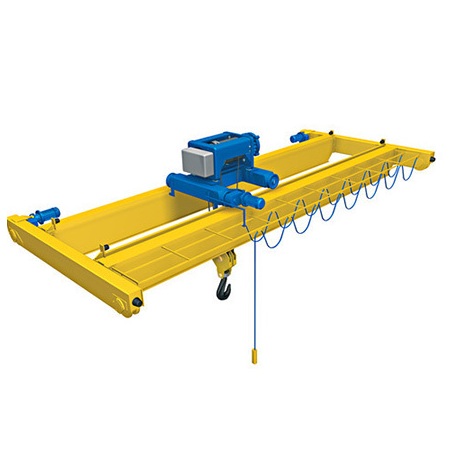
An EOT crane (Electric Overhead Travelling crane), also called a bridge crane, is a type of overhead crane in which the bridge (carrying the hoist) travels along elevated runways on either side of an industrial building. Powered by electricity, it lifts and moves heavy loads in a factory or warehouse. As described in industry sources, “EOT crane stands for electric overhead traveling crane. This is the most commonly used crane for lifting and shifting heavy loads”. It has three main movements: trolley (hoist) up/down, bridge lateral (X-axis), and crane along the runway (Y-axis).
Type of EOT Cranes
EOT cranes are often classified by construction:
Single-Girder vs Double-Girder: A single-girder crane has one main beam and the trolley runs on top of it. It is lighter and typically used for lower capacity (up to ~20 tons). Double-girder cranes have two main beams and a trolley running between them, supporting heavier loads (up to 100+ tons) and providing a higher hook height.
Underhung vs Top-running: Top-running (wheels on top of the runway beam) is most common. Underhung (wheels under the runway) is used in situations with low headroom.
Control Mode: Operated via pendant, radio remote, or in-cab operator cabin. Modern cranes may have variable-speed inverter controls for smooth motion.
Auxiliary Features: Some EOT cranes include features like indexing, slew, and rotation capabilities; maintenance platforms; dust-proofing; or flameproof design for hazardous areas.
Applications in Various Industries
EOT cranes are ubiquitous in industries requiring heavy lifting overhead:
Steel Plants and Foundries: Moving steel ingots, coil, heavy rolls, and scrap. (Hooks and tongs on EOTs handle large loads.)
Manufacturing: Lifting molds, engines, large assemblies (automotive, aerospace production).
Power Plants: Handling turbine rotors and generator stators during maintenance.
Shipbuilding and Shipyards: Lifting ship sections and engines.
Construction Material Plants: Cement, ceramics, and concrete products (e.g. precast) often use EOTs (even in “ceramic industries” and “cement industry” as listed).
Warehousing and Logistics: Loading/unloading heavy pallets or machinery.
Energy Sector: In petrochemical, chemical, and refinery plants for equipment installation and maintenance.
Material Selection Considerations
Components of an EOT crane are heavy-duty: