
HOTLINE: +91 851-114-2701
5 listings from verified sellers across India
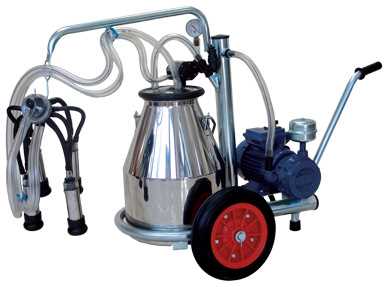
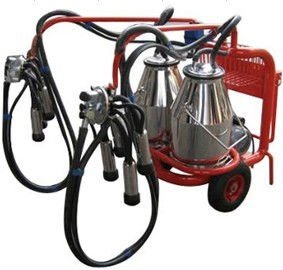
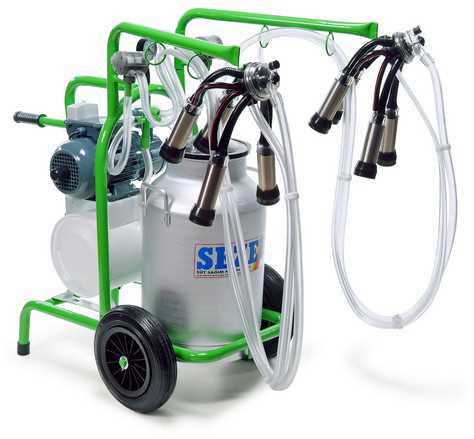

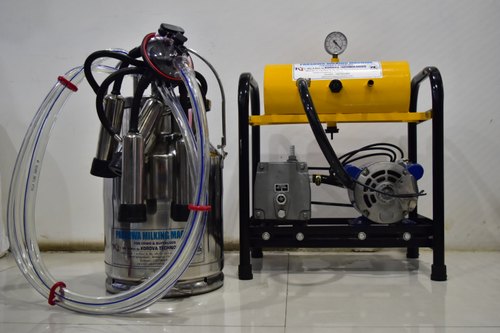
Milking Machine
A milking machine is a device used to extract milk from the udders of dairy animals (primarily cows, but also goats, sheep, and buffalo) mechanically. It simulates the sucking action of a calf or lamb, providing a more efficient and hygienic alternative to hand milking, especially in commercial dairy operations.
Types of milking machine
Bucket Milking Machines: Portable units with a single milking cluster that milk into a bucket directly. Suitable for small herds.
Pipeline Milking Systems: Milk is transferred through a pipeline from the cow to a central milk tank, often in a milking parlor.
Tandem Milking Parlors: Cows stand in individual stalls in a line.
Herringbone Milking Parlors: Cows stand at an angle to the milker, allowing more cows in a smaller space.
Parallel Milking Parlors: Cows stand perpendicular to the milker, offering quick entry and exit.
Rotary Milking Parlors: A large circular platform where cows enter, are milked as the platform rotates, and exit automatically. High throughput.
Robotic Milking Systems (Automatic Milking Systems - AMS): Fully automated systems where cows voluntarily enter a milking stall, are identified, and milked by a robot.
Applications in Various Industries
Applications: Dairy farms (small to large scale), milk processing industries (supply chain).
Technology:
Pulsation System: Creates a vacuum and release cycle (pulsation) that mimics the natural suckling action, massaging the teat to prevent congestion and allow blood flow. This is crucial for udder health.
Vacuum Pump: Generates the vacuum necessary for milk extraction and teat cup attachment.
Teat Cups & Liners (Inflations): The part that attaches to the cow's teats. Liners are typically made of rubber or silicone and provide the massage action.
Milk Claw: Collects milk from the four teat cups before it enters the milk line.
Automatic Cluster Removers (ACRs): Detect when milking is complete and automatically detach the cluster, preventing over-milking and protecting udder health.
Milk Meters: Measure individual cow milk yield.
Milk Quality Sensors: Can detect abnormalities in milk (e.g., conductivity for mastitis, fat/protein content).
Farm Management Software: Integrates data from milking machines for herd health management, breeding, feeding, and production optimization.
Robotics & Vision Systems: In AMS, robots use cameras and laser sensors to locate teats and attach the cluster automatically.
Cleaning-in-Place (CIP) Systems: Automated washing and sanitizing of the milking equipment after each milking session.
Material Selection Considerations
Parts in Contact with Milk:
Parts Not in Contact with Milk: