
HOTLINE: +91 851-114-2701
2 listings from verified sellers across India
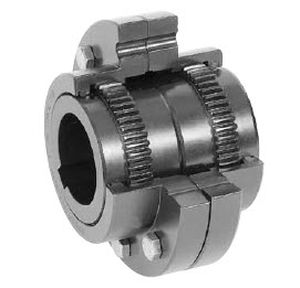
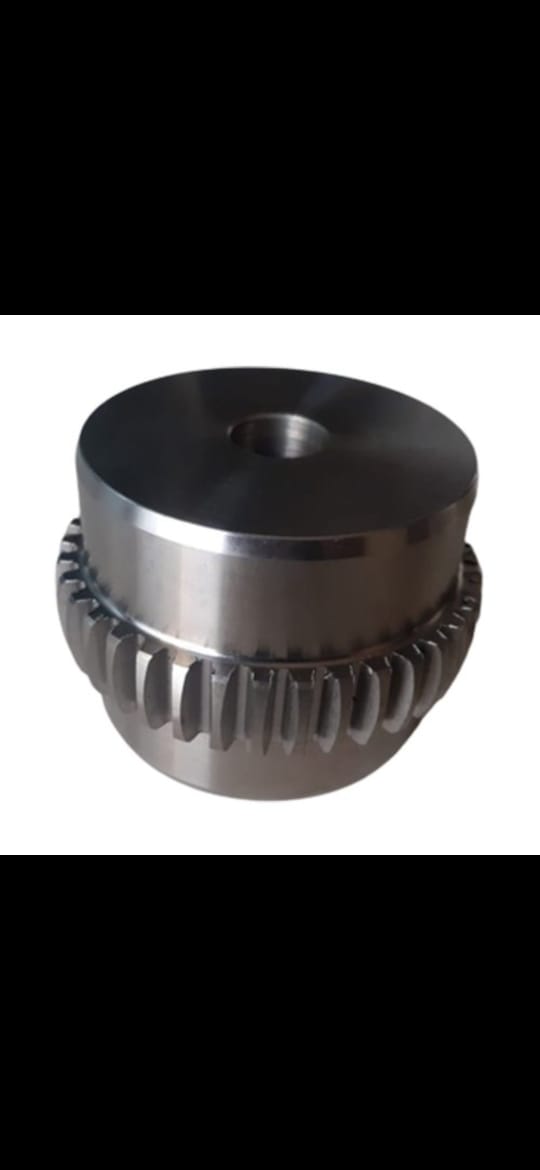
Gear Coupling
A gear coupling is a mechanical power transmission device designed to transmit torque between two shafts that are often misaligned. It belongs to the family of flexible couplings and is specifically engineered to accommodate angular, parallel, and axial misalignment while ensuring efficient and reliable power transfer, particularly in heavy-duty applications.
Types of Gear Coupling
Full Gear Coupling (Double-Engagement Gear Coupling): Consists of two flexible hubs (each with external gear teeth) connected by a single sleeve with internal gear teeth, or two sleeves with internal teeth joined by a flange connection. This design provides two flex planes, allowing it to accommodate both angular and parallel misalignment. Most common type.
Half Gear Coupling (Single-Engagement/Flex-Rigid Gear Coupling): Combines one flexible gear hub and sleeve with a rigid hub that is rigidly connected to one shaft. It provides one flex plane and is typically used when one shaft is precisely aligned and the other requires flexibility (e.g., pump-motor assemblies where one shaft is rigidly mounted).
Flanged Gear Coupling: The most prevalent type, where the internal gear sleeve is split into two halves and bolted together at a flange, allowing for easier assembly and disassembly.
Continuous Sleeve Gear Coupling: Features a single, unbroken sleeve. Offers higher torque capacity but can be more challenging to install.
High Misalignment Gear Couplings: Designed with specific tooth profiles (e.g., crowned teeth) to accommodate larger angular misalignments.
Applications in Various Industries
Heavy Industrial Machinery: Transmitting power in rolling mills, cement mills, paper mills, and steel plants where high torque and shock loads are common.
Power Generation: Connecting turbines to generators, or generators to auxiliary equipment.
Mining & Aggregate: Drives for crushers, conveyors, grinding mills.
Marine Propulsion: Connecting engines to propeller shafts.
Oil & Gas: Pumps, compressors, and mixing equipment drives in refineries and production facilities.
Material Handling: Heavy-duty conveyors, hoists, and cranes.
Pump & Compressor Drives: When robustness and high torque transmission are required.
Material Selection Considerations
Hubs and Sleeves:
Gear Teeth: The teeth on the hubs and sleeves are often surface hardened (e.g., by induction hardening, carburizing) after machining to achieve high wear resistance while maintaining a ductile core.
Fasteners (Bolts & Nuts): High-strength alloy steel bolts (e.g., Grade 8.8, 10.9) to secure the flanged halves of the sleeve.
Seals: Buna-N (nitrile), Viton, or other elastomers for O-rings and lip seals to retain lubricant and exclude contaminants.
Lubricants: High-viscosity industrial greases or oils specifically designed for gear applications, capable of operating under high pressure and temperature.