
HOTLINE: +91 851-114-2701
1 listings from verified sellers across India
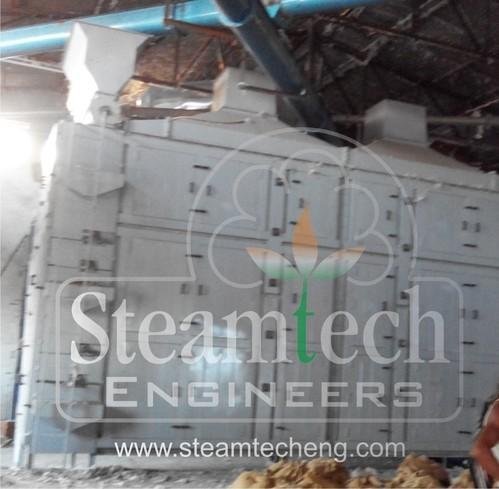
Industrial Dryers
Industrial dryers are specialized machines designed to remove moisture or other volatile substances from various materials in manufacturing and processing industries. The goal is to prepare materials for further processing, storage, or transportation, enhance product performance, prevent spoilage, or maintain specific material properties.
Types of Industrial dryers
Batch Dryers: Process a fixed quantity of material at a time.
Tray/Cabinet Dryers: Materials placed on trays in a heated chamber, often with forced air circulation. Suitable for delicate or small-batch materials.
Bin Dryers: Air blows through a heated bin or silo containing the material.
Vacuum Dryers: Operate under reduced pressure to lower the boiling point of moisture, suitable for heat-sensitive or solvent-laden materials. (e.g., vacuum shelf dryers, vacuum drum dryers).
Continuous Dryers: Process materials on a continuous basis for high throughput.
Rotary Dryers: Inclined rotating drum through which hot air or gas flows. Material tumbles and dries as it moves down. Used for granular, non-viscous materials (e.g., minerals, grains, animal feed).
Fluidized Bed Dryers: Hot air is blown upwards through a bed of particles, causing them to behave like a fluid. Excellent for uniform drying of granular materials.
Flash Dryers (Pneumatic Dryers): Wet material is introduced into a hot airstream, drying rapidly as it is conveyed through ducts. High-speed, suitable for light, fine materials.
Belt Dryers: Material is spread on a permeable conveyor belt and passes through heated zones. Suitable for fragile or sticky materials (e.g., food products, chemicals).
Spray Dryers: Liquid feed is atomized into fine droplets and contacted with hot air, resulting in dry powder. Used for milk powder, pharmaceuticals, detergents.
Drum Dryers: Liquid or slurry is applied to the surface of a heated rotating drum, drying quickly and scraped off. Used for pastes, slurries, and viscous liquids.
Tunnel Dryers: Materials move through a long tunnel on carts or conveyors with controlled air flow.
Applications in Various Industries
Food Processing: Drying grains, fruits, vegetables, nuts, snacks, milk powder, coffee. (Technology: Belt dryers, spray dryers, fluidized bed dryers, cabinet dryers).
Pharmaceuticals: Drying active pharmaceutical ingredients (APIs), excipients, and granulated products. (Technology: Fluidized bed dryers, vacuum dryers, tray dryers).
Chemical Industry: Drying pigments, fertilizers, polymers, catalysts, various powders. (Technology: Rotary dryers, flash dryers, spray dryers, fluid bed dryers).
Mining & Minerals: Drying ores, concentrates, sand, and aggregates. (Technology: Rotary dryers, fluidized bed dryers).
Wood & Biomass: Drying wood chips, sawdust, biomass for fuel or further processing. (Technology: Rotary dryers, belt dryers).
Ceramics: Drying clay, ceramic powders, and shaped products.
Textile Industry: Drying fabrics, yarns, and fibers.
Wastewater Treatment: Drying sludge for disposal or reuse.
Material Selection Considerations
Contact Parts:
Surfaces that come into direct contact with the product.
Non-Contact Parts:
Fans & Blowers:
Steel, often coated or stainless steel for corrosive gases.
Ducting:
Galvanized steel, stainless steel, or aluminum.
Seals & Gaskets:
High-temperature elastomers (e.g., silicone, Viton) or ceramic fibers.
Wear-Resistant Liners:
For abrasive materials, specialized alloys or ceramic liners might be used in rotary dryers.
Heating Elements:
Nichrome or other resistant alloys for electric heaters.