
HOTLINE: +91 851-114-2701
1 listings from verified sellers across India
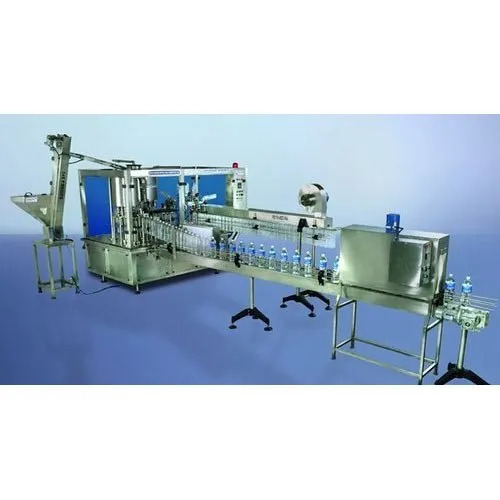
Mineral Water Bottling Plant
A mineral water bottling plant is an integrated production line that purifies drinking water and fills it into bottles for sale. It typically includes water treatment units (e.g. sediment filters, activated carbon, reverse osmosis, UV/ozone disinfection) followed by automatic rinsing, filling and capping machines. In operation, pre-treated water is conveyed into a sterile environment, bottles are rinsed, then filled with the purified mineral water and sealed. The entire process is controlled to preserve water quality (e.g. maintaining sterilization) while achieving high output.
Types of Mineral Water Bottling Plant
Fully Automatic Plants: Automated washing, filling, capping, labelling, and packaging.
Semi-Automatic Plants: Manual feeding with automatic capping and rinsing.
Small-Scale Bottling Units: Compact systems for low-volume production.
Large-Scale Plants: High-speed rotary filling machines and advanced automation.
Blow Molding Machines: For PET bottle production in-house.
Applications in Various Industries
Primarily used in the packaged beverage industry. Bottling plants are found in food/beverage factories, bottled water companies, and packaged goods facilities. They ensure potable water meets hygiene standards by integrating purification (e.g., RO, ozone) with automated filling. The process cycle is: filtration/purification →rinse bottles →fill liquid →cap and label. Each step is often monitored by PLC controls.
Material selection Considerations
Hygiene and corrosion resistance are paramount. Food-grade stainless steel (typically AISI 304 or 316) is used for all water-contact parts – including tanks, pipes, valves, nozzles and the filling chamber. For example, Comac’s saturation and thermal tunnels are made of AISI 304 SS. Machine frames and supports may be stainless or painted steel. Aluminium or stainless sheet often forms outer panels. Tempered glass or polycarbonate is used for safety windows. Seals and gaskets are FDA-approved elastomers (EPDM, silicone) to resist sanitizers. Non-contact parts (conveyor frames) can be mild steel. Material choice balances durability, ease of cleaning, and cost: stainless surfaces prevent rust and bacterial harbouring, while plastics (PE, PP) may be used in some parts (e.g. drainage piping) to save expense.