
HOTLINE: +91 851-114-2701
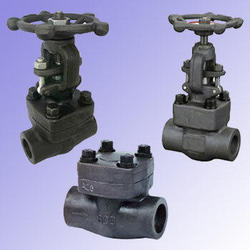
Steel Valves
Mechanical devices made primarily from steel, used to control the flow, pressure, and direction of fluids (liquids, gases, slurries) within a pipeline system.
Types of Steel Valves
Ball Valves: Quarter-turn valve with a spherical disc to control flow. Excellent for tight shut-off.
Gate Valves: Multi-turn valve with a wedge-shaped gate that moves perpendicular to the flow. Good for on/off service, poor for throttling.
Globe Valves: Multi-turn valve with a globular body and a disc that moves perpendicular to the seat. Excellent for throttling.
Check Valves: Allow fluid flow in one direction only, preventing backflow. (Swing, Lift, Dual Plate, Tilting Disc).
Butterfly Valves: Quarter-turn valve with a disc that rotates within the flow path. Lightweight, compact, good for large pipe sizes.
Plug Valves: Quarter-turn valve with a cylindrical or tapered plug with a passage through it.
Diaphragm Valves: Use a flexible diaphragm to control flow. Good for corrosive fluids and slurries.
Needle Valves: Small, precision valves for fine flow control.
Applications in Various Industries:
Oil & Gas: Pipelines, refineries, offshore platforms.
Chemical & Petrochemical: Process control, hazardous fluid handling.
Power Generation: Steam, water, fuel lines.
Water & Wastewater Treatment: Pumping stations, distribution networks.
HVAC: Heating and cooling systems.
Mining: Slurry lines.
Technology:
Actuators (manual, pneumatic, electric, hydraulic), smart valve technology (positioners, diagnostics, remote control), fugitive emissions control (low emission packing), severe service designs, fire-safe designs, cryogenic capabilities, corrosion-resistant coatings, specific industry standards (API, ASME, ISO).
Material Selection Considerations:
Body: