
HOTLINE: +91 851-114-2701
1 listings from verified sellers across India
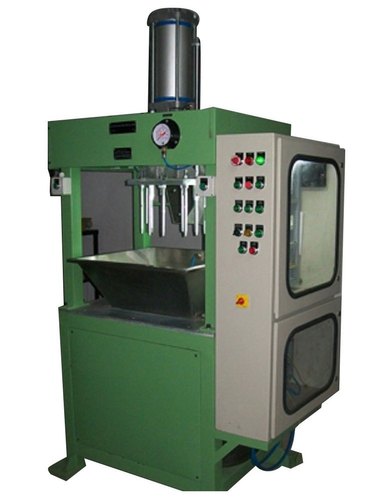
Leak Testing Machine
A leak testing machine is a specialized industrial device used to detect and quantify leaks in products or systems. It plays a critical role in quality control and assurance by ensuring that manufactured components, assemblies, or sealed environments meet specific leak tightness specifications, preventing material loss, product contamination, or safety hazards.
Types of Leak Testing Machine
Pressure Decay/Vacuum Decay Leak Testers:
The most common automated method.
Principle: The test part is pressurized (or evacuated) and then isolated. A leak is detected by monitoring the pressure drop (or rise in vacuum) over a set time.
Machines: Integrated systems with pressure transducers, valves, and a control unit.
Mass Flow Leak Testers:
Principle: Measures the actual flow rate of gas escaping from the test part or into a reference volume, providing a direct measurement of leak rate. Highly sensitive.
Machines: Include sensitive flow sensors (e.g., laminar flow elements).
Differential Pressure Leak Testers:
Principle: Compares the pressure in the test part to a sealed reference volume. A pressure difference indicates a leak. Highly sensitive and compensates for temperature variations.
Machines: Utilize differential pressure transducers.
Bubble Leak Testers (Manual/Automated):
Principle: The part is pressurized with air and submerged in water. Leaks are observed as visible bubbles.
Machines: Simple tanks, pressure regulators, and sometimes automation for dipping/removing parts.
Helium Leak Detectors (Mass Spectrometer Leak Detectors):
Principle: Uses helium as a tracer gas and a mass spectrometer to detect extremely small leaks. Very high sensitivity.
Machines: Complex, expensive systems with vacuum pumps, mass spectrometers, and helium gas supply.
Ultrasonic Leak Detectors:
Principle: Detects the ultrasonic sound generated by escaping air or gas from a leak. Portable handheld devices are common.
Machines: Acoustic sensors, signal processing unit.
Tracer Gas Leak Detectors (e.g., Hydrogen, SF6):
Principle: A non-flammable tracer gas (e.g., 5% H2 in N2) is used to pressurize the part, and a sniffer probe detects the escaping gas.
Machines: Gas supply, pressure regulators, and a gas-specific detector.
Burst Testing Machines:
Ramps pressure until the part ruptures, determining burst strength. Can be destructive or non-destructive if used to proof test below burst.
Applications in Various Industries
Automotive Industry: Fuel tanks, radiators, braking systems, engine components, air conditioning systems, airbags.
Medical Devices: Catheters, IV bags, surgical instruments, drug delivery devices, sterile packaging. (Critical for patient safety and product integrity).
HVAC & Refrigeration: Air conditioning coils, compressors, refrigeration lines.
Electronics: Sealed enclosures, hermetic components, battery casings.
Packaging Industry: Food packaging (MAP, vacuum), pharmaceutical blisters, cosmetic containers. (Ensuring freshness and preventing contamination).
Consumer Goods: Sporting goods, inflatable products, household appliances.
Aerospace: Fuel lines, hydraulic systems, cabin pressure systems.
Industrial Components: Valves, fittings, pressure vessels, castings, pumps.
Material Selection Considerations
Test Fixtures:
Pneumatic Components:
Sensors: Materials compatible with the gas being used (e.g., stainless steel for pressure transducers).
Machine Enclosure: Painted steel or aluminum for durability and protection of internal components.
Internal Plumbing: Stainless steel or copper tubing for pressure lines where accuracy and cleanliness are paramount.
Mass Spectrometer Components (for Helium): High vacuum compatible materials, often stainless steel, specialized ceramics, and noble metals.