
HOTLINE: +91 851-114-2701
1 listings from verified sellers across India
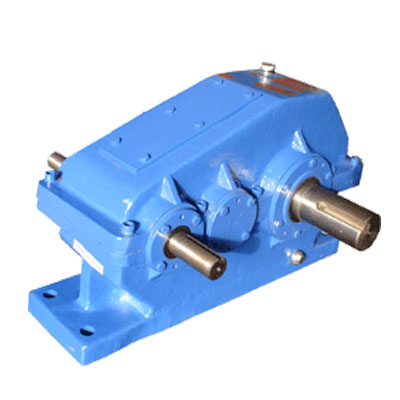
Helical Gear Box
A helical gearbox (also known as a helical gear unit or helical speed reducer) is a type of gear train that uses helical gears to transmit power and motion between shafts. Its defining characteristic is the angled teeth on the gears, which provide smoother, quieter operation, and higher torque capacity compared to spur gears, making them a classic for power transmission in various industrial applications.
Types of Helical Gear Box
Based on Stages:
Single-Stage Helical Gearboxes: For lower reduction ratios.
Multi-Stage Helical Gearboxes: Combine multiple helical gear sets to achieve higher reduction ratios and torque multiplication.
Based on Shaft Configuration:
Parallel Shaft Helical Gearboxes: Input and output shafts are parallel to each other. Most common type.
Right-Angle Helical Gearboxes (Helical-Bevel Gearboxes): Combine helical gears with bevel gears (typically spiral bevel gears) to change the direction of rotation by 90 degrees.
Helical Worm Gearboxes: Combine helical gears with a worm gear arrangement. Offers high reduction ratios and often a compact design.
Based on Mounting:
Foot-Mounted: Designed to be bolted to a flat surface.
Flange-Mounted: Designed to be directly attached to the driven machine or motor.
Shaft-Mounted: Slips directly onto the driven shaft.
Integrated Gearmotor:
Gearbox directly integrated with an electric motor as a single unit.
Applications in Various Industries
Material Handling: Conveyor belts, hoists, cranes, stacker-reclaimers. (High torque, smooth operation, robustness).
Manufacturing & Automation: Machine tools, packaging machinery, textile machinery, plastic processing machinery (extruders), woodworking machinery, robotics. (Precise motion transmission, quiet operation).
Automotive: Manual transmissions in vehicles (though often using a combination of helical and other gear types).
Power Generation: Drives for cooling towers, pumps, and other auxiliary equipment.
Pulp & Paper: Drives for paper machines, pulp processing equipment.
Food & Beverage: Mixers, agitators, processing equipment (often requiring hygienic designs).
Pumps & Compressors: Drives for industrial pumps and compressors.
Material Selection Considerations
Gears:
Shafts:
Housing (Casing):
Bearings:
High-grade bearing steels (e.g., 52100 steel) for rolling elements and races.
Seals:
Elastomers (e.g., NBR, Viton) for oil seals to prevent lubricant leakage and contaminant ingress.
Fasteners:
High-strength steel bolts.
Lubricants:
High-quality industrial gear oils chosen for viscosity, thermal stability, and extreme pressure (EP) additives.