
HOTLINE: +91 851-114-2701
3 listings from verified sellers across India
Testing Machines
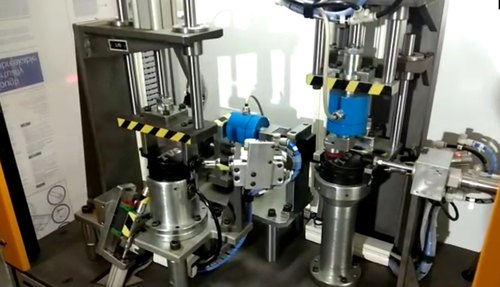
Similar to "Testing Equipment," this refers to mechanical or electromechanical devices designed to apply forces, deformations, or other physical stresses to a specimen or product to determine its properties or performance limits.
Types of Testing Machines
Universal Testing Machines (UTM): Perform tensile, compression, shear, and bend tests.
Hardness Testers: Rockwell, Brinell, Vickers, Shore.
Impact Testers: Izod, Charpy.
Fatigue Testing Machines: Apply cyclic loads to determine fatigue life.
Creep Testing Machines: Measure deformation under sustained load at elevated temperatures.
Abrasion Testing Machines: Assess wear resistance.
Torsion Testing Machines: Measure resistance to twisting.
Applications in Various Industries:
Metallurgy: Characterizing metals and alloys.
Plastics & Polymers: Evaluating mechanical properties, optimizing formulations.
Textiles: Strength, elongation, tear resistance testing.
Building Materials: Testing concrete, wood, composites.
Automotive: Component strength and durability.
Technology:
Servo-hydraulic or servo-electric drive systems, high-precision load cells and extensometers, sophisticated software for test control and data acquisition, closed-loop control, automated specimen handling.
Material Selection Considerations:
.jpg)