
HOTLINE: +91 851-114-2701
2 listings from verified sellers across India
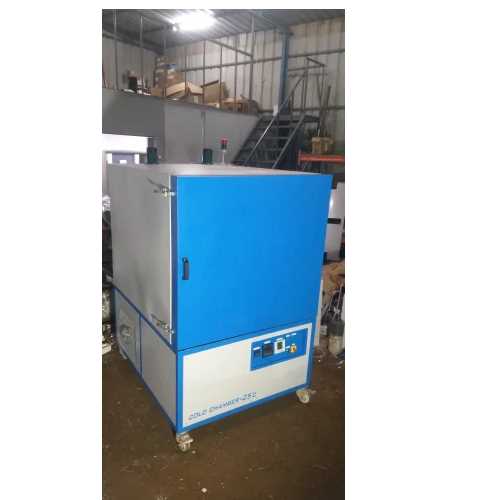

Environmental Test Chambers
An environmental test chamber (also known as a climatic chamber or environmental chamber) is an enclosed space used to simulate various environmental conditions to test the reliability, durability, and performance of products or materials. These conditions can include temperature, humidity, vibration, altitude, solar radiation, and corrosive atmospheres.
Types of Environmental Test Chambers
Temperature Chambers: Simulate high and low-temperature extremes.
Humidity Chambers (Temperature & Humidity Chambers): Control both temperature and relative humidity.
Thermal Shock Chambers: Rapidly cycle between extreme hot and cold temperatures to test for material fatigue.
Vibration Chambers (Shakers): Simulate mechanical stresses like vibration and shock. Often integrated with temperature chambers for combined testing.
Altitude Chambers (Vacuum Chambers): Simulate high-altitude atmospheric pressure conditions.
Salt Spray Chambers (Salt Fog Chambers): Simulate corrosive environments to test corrosion resistance.
Walk-in Chambers: Large chambers that can accommodate larger products or allow personnel to enter for testing or assembly.
Accelerated Weathering Chambers: Simulate outdoor weathering effects like UV radiation, rain, and temperature cycles.
Custom/Specialty Chambers: Designed for specific test requirements (e.g., dust chambers, rain chambers, battery test chambers).
Applications in Various Industries
Electronics: Testing circuit boards, components, devices for performance in extreme temperatures, humidity, and vibrations.
Automotive: Testing vehicle components (e.g., engine parts, infotainment systems) for durability under various road conditions and climates.
Aerospace & Defense: Simulating high altitude, extreme temperatures, and vibration for aircraft components, satellites, and military equipment.
Pharmaceuticals: Stability testing of drugs and medical devices under controlled temperature and humidity conditions (ICH guidelines).
Materials Science: Evaluating the aging, degradation, and performance of new materials under various environmental stresses.
Food & Beverage: Shelf-life testing, packaging integrity under different conditions.
Technology:
Advanced refrigeration systems (mechanical, often cascade for very low temps), precise heating elements, humidification and dehumidification systems, sophisticated control systems (PLCs, touchscreen HMI) for programming complex test profiles, data logging, and remote monitoring. Vibration chambers use electromagnetic or hydraulic shakers.
Material Selection Considerations