
HOTLINE: +91 851-114-2701
3 listings from verified sellers across India
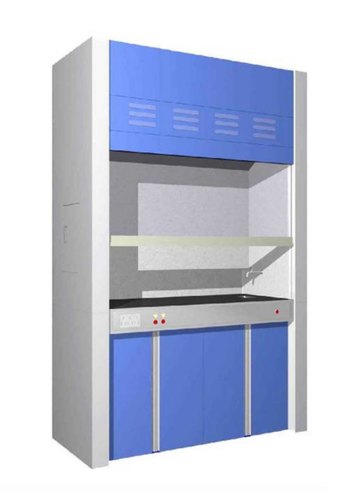
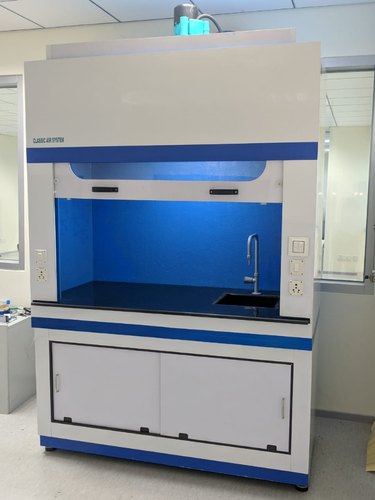
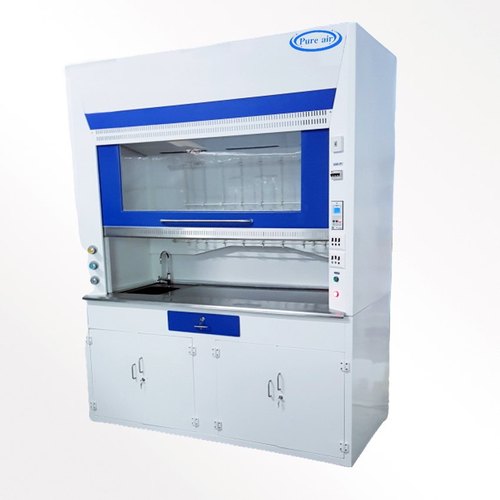
A fume hood is a ventilated enclosure designed to capture, contain, and exhaust hazardous airborne substances generated during laboratory, industrial, or production processes. It provides a controlled workspace where chemicals, vapours, dusts, gases, and particulates can be safely manipulated while protecting personnel, products, and the environment. Typical fume hoods include a work chamber, a movable sash (the front window), an exhaust plenum, ductwork (or a recirculating filtration module for ductless types), and controls for air volume and safety interlocks.
Core functions and purpose
Product Types & Specifications
1. Ducted Fume Hood
2. Ductless / Recirculating Fume Hood
3. Bench-Top / Mini Fume Hood
4. Walk-In / Large Fume Hood
5. Laboratory Radioactive / Special Fume Hoods
Common Specifications
Indian Trade Bird is one of the leading fume hood manufacturers, suppliers, and exporters In Chennai. Our range includes Laboratory Chemical Fume Hoods, Fume Hood Cabinets, Partition Hoods, and Industrial Fume Scrubbers. Designed with advanced technology and premium materials, these fume hoods ensure maximum safety by effectively removing hazardous fumes, vapours, and particles. Durable, efficient, and low-maintenance, they are ideal for laboratories and industrial workplaces.
Fume Hoods | Fume Hood Cabinet | Laboratory Chemical Fume Hood | Chemical Laboratory Fume Hood | Partition Hoods | Industrial Fume Scrubbers | Fume Hoods Manufacturer | Fume Hoods Supplier | Fume Hoods Exporter
Everything you need to know about fume hoods
Yes, fume hoods can be customized in terms of size, airflow capacity, material, filtration system, and additional features like alarms, lighting, and automation.
Modern
fume hoods use variable air volume (VAV) systems to adjust airflow based on
usage, reducing energy consumption while maintaining safety.
Fume
hoods are typically made from corrosion-resistant materials such as
powder-coated steel, stainless steel, or chemical-resistant plastics, with
tempered glass sashes for visibility.
Fume
hoods draw contaminated air through an exhaust system, often passing through
filters (like HEPA or carbon filters), and then release it outside or
recirculate it after purification. The sash (glass window) acts as a barrier
between the user and harmful substances.
A
fume hood is a ventilation device used in laboratories to safely capture,
contain, and exhaust hazardous fumes, vapors, or dust, protecting users and the
surrounding environment.