
HOTLINE: +91 851-114-2701
1 listings from verified sellers across India
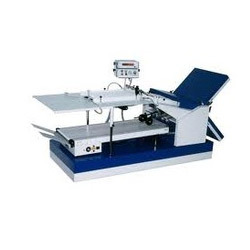
Folding Machine
A folding machine is a device used to fold paper or other sheet materials into various configurations. They are widely used in printing, packaging, and mailing industries to process documents, brochures, leaflets, and other printed matter.
Types of Folding Machine
Paper Folding Machines:
Friction Feed Folders: Best for smaller volumes and lighter paper.
Air Feed Folders: Use air to separate sheets, suitable for larger volumes, heavier paper, and coated stocks.
Knife Folders: Use a blade to push paper into rollers for precise folds.
Buckle Folders: Use a series of buckles and rollers to create folds.
Combination Folders: Combine buckle and knife folding for complex folds.
Map Folders: Specialized for folding large maps.
Pouch Folders: For folding small items like labels or sachets.
Metal Folding Machines (Brake Presses): Used in sheet metal fabrication to bend metal sheets. While also called "folding machines," they are distinct from paper folding machines. (Assuming the request is for paper folding, but noting the ambiguity).
Textile Folding Machines: Used in garment manufacturing to fold fabrics.
Applications in Various Industries
Applications (Paper Folding): Print shops, binderies, mail houses, offices, schools, direct mail campaigns, bookbinding, pharmaceutical packaging (package inserts), financial institutions (statements).
Automated Feed Systems: Ensures continuous and accurate paper feeding.
Programmable Fold Types: Microprocessor control allows for various standard and custom fold patterns (e.g., letter fold, Z-fold, gate fold, double parallel fold).
Creasing and Perforating Units: Integrated for pre-creasing heavy stock or adding tear-off sections.
Batch Counting and Delivery Systems: For efficient output stacking.
Sensors: To detect misfeeds or double feeds.
Touchscreen Interfaces: For easy setup and operation.
Integration with other finishing equipment: In-line with collators, staplers, or perfect binders.
Material Selection Considerations