
HOTLINE: +91 851-114-2701
1 listings from verified sellers across India
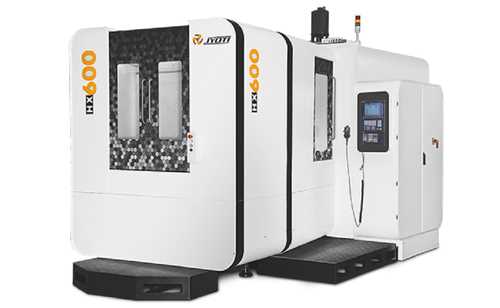
A CNC (Computer Numerical Control) milling machine is a precision metalworking tool that removes material from a workpiece using rotating cutting tools guided by computer-controlled motions. These machines can perform drilling, slotting, contouring, and complex 3-D surface cutting with repeatable accuracy, making them central to modern manufacturing. CNC mills range from compact benchtop units for prototyping to large, heavy-duty machining centres for aerospace and automotive components.
Core functions include automated multi-axis toolpath machining, tool changing, spindle speed control, and integration with CAD/CAM toolchains. The purpose is to convert digital designs into precise physical parts with high repeatability, reduced human error, and faster throughput compared with manual milling.
Historically, milling began with manually operated machines and evolved with the introduction of numerical control (NC) in the mid-20th century; CNC technology took off as microprocessors and software matured, enabling complex 3- to 5-axis machining and integration with Industry 4.0 workflows. Today’s CNC mills are the workhorses of precision engineering, combining mechanical rigidity with advanced control systems and software.
Product Types & Specifications
By orientation
By axis capability
By size & capacity
Control & technology tiers
Applications & Use Cases
Primary industries
Common usage scenarios
Benefits and efficiencies
CNC Milling Machine Manufacturer, Supplier & Exporter
Indian Trade Bird is a Leading CNC Milling Machine Manufacturers, Suppliers & Exporters, offering high-precision and efficient milling solutions for diverse industrial applications. Our CNC milling machines are engineered for accuracy, durability, and superior performance, making them ideal for manufacturing, metalworking, and engineering industries. With advanced technology and reliable construction, we deliver machines that improve productivity and ensure consistent quality. Choose Indian Trade Bird for dependable and high-quality CNC milling solutions.
CNC Milling Machine | Vertical Machining Center | Horizontal Machining Center | 5-Axis CNC Milling | CNC Milling Machine Manufacturer | CNC Milling Machine Supplier | CNC Milling Machine Exporter | High-Precision Milling | CNC Machine Tools India | Industrial Milling Machines | CNC Milling Applications | Best CNC Milling Brands | Milling Machine Price India
Everything you need to know about cnc milling machine
Because of the artistic flexibility it offers, CNC machining is rapidly gaining momentum in the fashion industry. It has the ability to create many products such as earrings, bracelets, cufflinks, belt heads, necklaces, clips, rings, brooches, bow ties, etc.
The CNC Milling process includes, Designing the parts in CAD, Translating the CAD files into code for machining, Setting up the machinery, Producing the parts.
CNC Milling Machine materials could be adopted for a wide range of different materials, in which it can be done according to the requirements, as it depends on various conditions like the creation of geometrical part, based on materials, based on cost efficiency, based on properties of the materials. Also, metals that are suitable for CNC Milling machines are Aluminium, Stainless Steel, Mild Steel, Brass, Tool Steel. It can be adopted on plastics like Polycarbonate, Nylon, PTFE, ABS, HDPE, PEEK, POM.
The most common types of milling machines are, Planer-Type, Ram-Type, Knee-Type, Bed-Type, etc.